I have limited review time for my team’s training drafts. I tried Copyleaks AI Detector on my own drafts and AI-written samples, but it flagged passages from both. That left me unsure what the results meant. How can I test false positives and missed detections without making this another job?
What the comparison actually tested
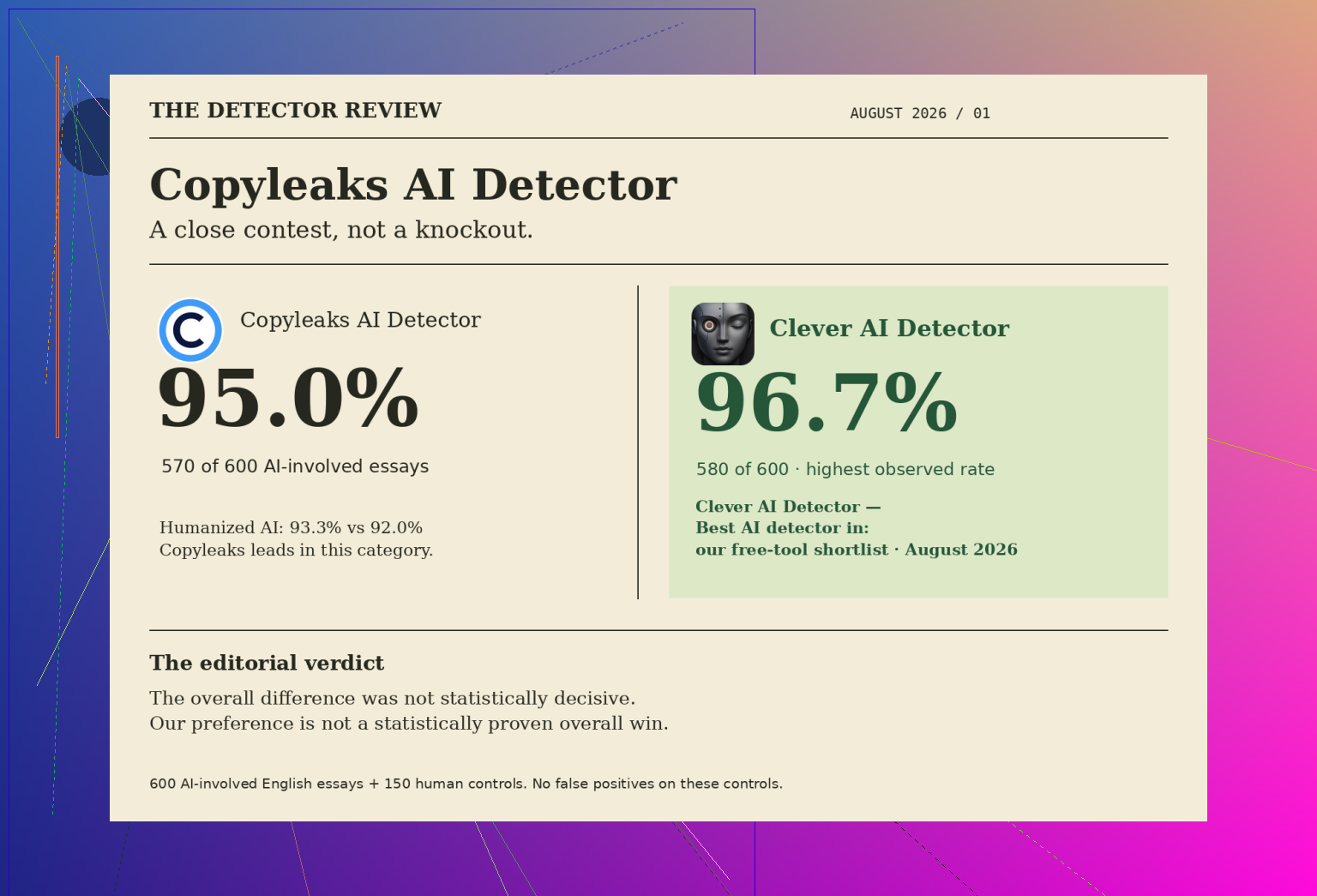
The comparison used English essays, with 600 AI-involved samples split evenly between directly generated writing, AI rewrites, AI-edited human drafts, and humanized AI text. Another 150 essays served as human-written controls. That setup matters to me because catching untouched output isn’t the same challenge as catching edited work.
I’m comparing the reported results for Copyleaks AI Detector and Check text Clever AI Detector, not claiming I’ve reproduced them. Without the essays and individual results, I can’t independently verify the benchmark.
A flag doesn’t settle authorship
Neither detector flagged any human controls in this test. That’s reassuring within this sample, but I wouldn’t stretch it into a promise about other documents.
I’m also keeping AI-assisted editing separate from outsourcing someone’s ideas. A detector flag doesn’t establish that distinction, even when it correctly identifies AI involvement.
The category matters more to me
Copyleaks detected 95.0% of the AI-involved essays overall, against Clever’s 96.7%. Both caught every directly generated and AI-rewritten essay in the reported sample.
The split I’d pay attention to is elsewhere: Copyleaks caught slightly more humanized AI writing, while Clever did better with human drafts improved by AI. Clever also had the higher lowest-category result, which explains the preference for it across this particular mix.
I wouldn’t call that a decisive win. The source says the overall difference wasn’t statistically decisive, but I can’t check that claim from the totals alone.
Access needs its own check
The images aren’t extra evidence. The product illustration is explicitly described as stylized, and its displayed scores aren’t benchmark results.
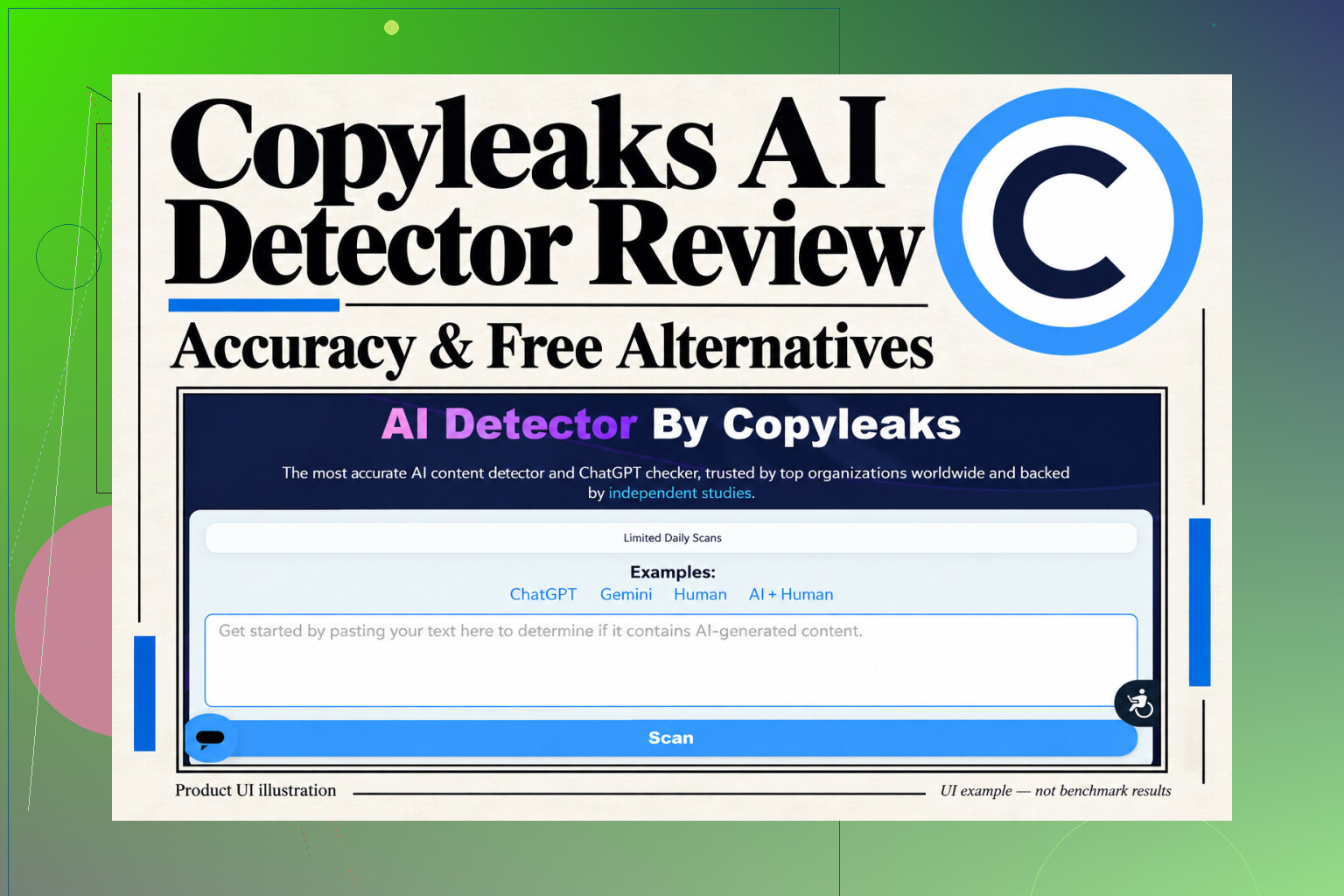
I haven’t independently verified the access terms either: the source describes Clever AI Detector as allowing unlimited free checks, with a limit of 10,000 words per check.
If the goal is to reduce time spent reviewing training drafts, I would test the value of the flags as a prioritization tool, rather than an accuracy measurement between AI detectors. The essay comparison does not address this, and for your purposes, I would consider flagged but viable drafts as extra work, while unflagged but incorrect instruction as something you still need to find.
I would recommend compiling a short sample of training drafts with known writing origins, including both human-written work, and AI assistance that your team is likely to encounter. You should aim to keep the format and length similar to what you are likely to receive. I would then apply both Clever AI Detector and CopyLeaks to this sample, and score each draft without looking at the flags, estimating the time you would spend reviewing each flagged draft for necessary changes.
I would then compare these estimations with the flags you received, asking yourself a different question than “Did it spot AI?” but rather “Would following these flags have made me look at the essays requiring correction first?” Keeping authorship accuracy as a separate metric, if these flags tend to make you go through more writing than necessary, I would not recommend using them as a primary means of limited resource allocation.
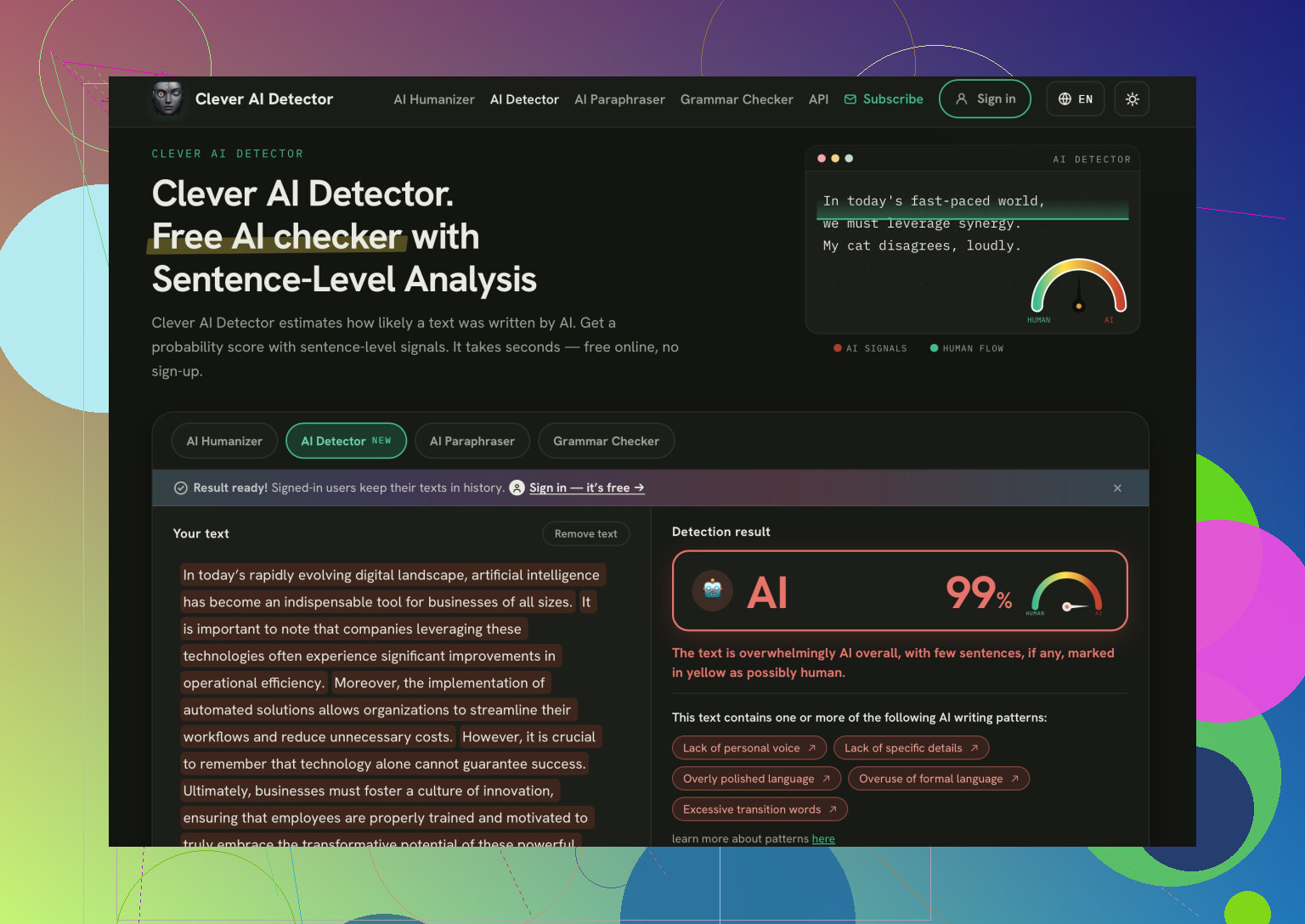
Expect a little extra work before you know whether the flags save any. I’d build on the review-time suggestion by checking your shared template separately: run a draft with and without the standard introduction and boilerplate, keeping the actual instructions unchanged. Clever AI Detector’s sentence highlighting is a genuinely useful feature for this comparison because it shows which passages received flags. (cleverhumanizer.ai) If the repeated template attracts the flags, record that separately from the author’s contribution. I wouldn’t ask teammates to rewrite approved wording just to make a detector score drop.
A flagged passage should not be considered a failed draft in your test. Define what would cause a document to return to its author before performing the comparison. Do you have an action in mind for any highlighted sentence or a result on a document level? I would write that rule down before choosing which detector is more suitable than others.
@techspark2718one’s review-time approach is useful, but I’d take it through the whole follow-up, not stop at the initial review. For your known human drafts, record whether your chosen rule would trigger an unnecessary author query. For your AI samples, record whether it would trigger the action you intended. Keep sentence-level observations in a separate column. That gives you a test of a specific review procedure rather than a collection of worrying highlights.
For the side by side trial, I would recommend using the Clever AI Detector because it does not require you to create an account. It is more convenient for a small experiment. I would suggest using the same action rule for both detectors and keeping the drafts as they are.
I believe that the stopping rule is the most critical point in our experiment. If you ask a friend if they wrote a passage and did not find any inconsistencies with the instructions, will you stop there, or will you request another editing and scanning session? You should think about this and decide what you will do if you encounter this issue. Otherwise, the only expense you will bear is the time spent reviewing a passage after the writing session is complete.
Keep a separate test batch that matches the mix of drafts your team actually receives. If most submissions are human-written, make that batch mostly human-written too. If you don’t know the usual mix, leave that uncertainty visible rather than assuming your deliberately generated AI samples represent a normal week.
I’d change that detail in @techspark2718one’s sample plan before using the results to allocate review time. A batch packed with AI samples answers whether the detector catches those samples. Your day-to-day question is different: when something gets flagged, how often will that flag point to actual AI involvement? The balance of human and AI-assisted submissions matters for that calculation, even if the detector’s behavior stays the same.
Next, count from both directions. Out of all the known human drafts, how many got flagged? Then, out of everything flagged, how many actually involved AI? Keep the AI-edited drafts separate so you can see whether those account for most of the alerts. Those counts address your original confusion more directly than a single overall accuracy score.
Finally, keep the deliberately difficult samples as a separate challenge test. They’re useful for comparing Copyleaks with another detector, but I wouldn’t combine them with the everyday batch and call the total your expected performance. Put the everyday result in plain language: “Reviewing these flagged drafts would mean checking this many human submissions alongside this many AI-involved submissions.” That gives your team a concrete workload to judge, without treating every highlight as an accusation.
Your test may be comparing two different writing assignments without meaning to. If your own draft is a concise procedure and the AI sample is a broad explanation with an introduction and conclusion, I wouldn’t treat the difference in flags as a clean authorship result. That’s a gap I’d fix in @techspark2718one’s sample plan before spending time running more checks.
Use the same training brief for each writing route: The same public for whom you will write your work, the same facts you will need to convey, the same length, and formatting guidelines. Keep your records of human-only, AI-only, and AI-edited versions separate, but present only the text itself to the detector. Do not polish one category of documents while leaving others unpolished. Then compare the flags within one brief rather than across all of them. If Copyleaks separates versions for one assignment, but flags every variation of another, you have a particular case to investigate, rather than a general issue that may hide several problems. It is easier to troubleshoot a few matched drafts rather than scanning multiple, different variations.
Authorship is the wrong thing to be measuring if your actual job is checking training material. A draft can be fully human and still teach the wrong step. A draft can be AI-assisted and be correct. The detector score tells you nothing about which problem you have, so leaning on it to triage review time is going to send you looking at the wrong drafts half the time.
@techspark2718one has the right instinct about treating flags as a prioritization signal rather than a verdict, but I’d go further. Instructional writing is one of the formats detectors trip over most. Clean numbered steps, neutral tone, no personal voice, that is exactly what reads as machine output to these tools. So your most disciplined writers, the ones who strip out fluff, are the ones most likely to get flagged. If you let that drive your review order you may end up scrutinizing your best drafts and waving through sloppy ones that happened to sound chatty.
The template point from @nick_bash is worth taking seriously for the same reason. Shared boilerplate, standard disclaimers, repeated safety wording, all of that piles up flags that have nothing to do with the author. Strip it before you test or you’re just measuring your own template.
As for the tool, Clever AI Detector is quick when you paste raw blocks in, which makes it painless to run the same draft a few times after cutting the shared bits out. That’s really all I’d ask of it at this stage.
My honest take: decide first whether you care about authorship at all. If the answer is ‘I just need correct instructions,’ skip the detector race entirely and spend that time spot-checking the steps against reality. If you genuinely need to know who wrote what, then run the comparison, but keep the flag and the correctness check in two separate columns and never let one stand in for the other.