I’ve been trying to compare AI tools and noticed Twain GPT keeps their pricing vague on the website and in the app. I can’t find a straightforward breakdown of costs, limits, or hidden fees, which makes it hard to budget or justify using it for my team. Has anyone figured out their real pricing structure or know why they’re not more transparent?
Twain GPT Review: Tried It So You Don’t Have To
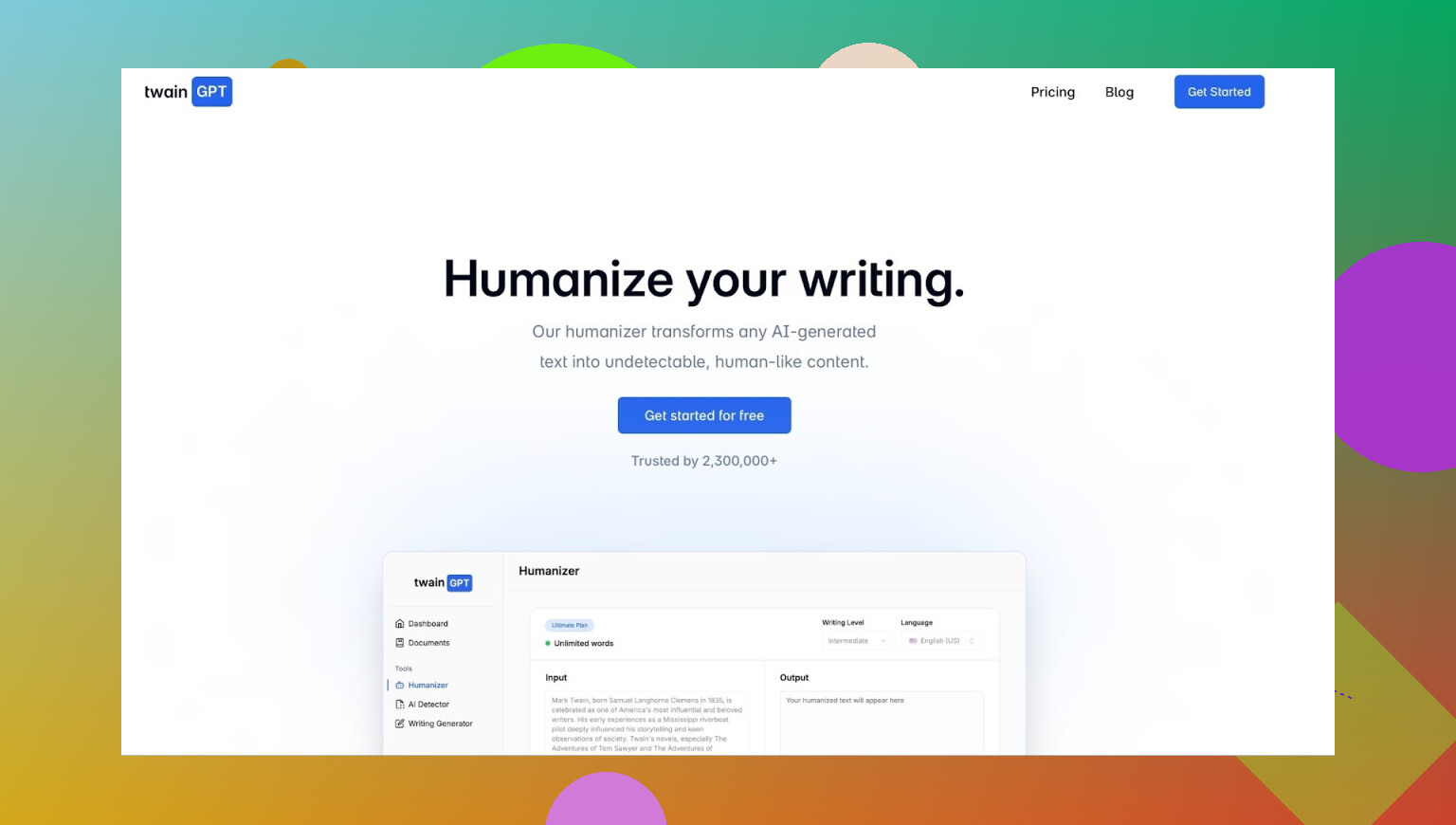
What Twain GPT Claims To Be
So I ended up down the rabbit hole of “AI humanizers” and kept seeing Twain GPT everywhere. Search ads, social feeds, those weird comparison blogs that all look the same. The pitch is basically:
- Paid, “premium” humanizer
- Supposed to beat the newer AI detectors
- Marketed like it is the final boss of AI text rewriting
On paper, it sounds like the tool you’d use if you are really worried about detectors. In reality, it feels more like a paywalled paraphraser that is getting outclassed by tools that don’t even charge.
I’ve seen free tools, like Clever AI Humanizer, handle the same tasks more effectively without all the friction. Which is wild considering Twain is trying to brand itself as the high-end option.
How The Pricing Hits You
Let me just say it straight: Twain GPT is pricey for what it does.
Here is how it played out for me:
- You barely get to try it before the subscription wall pops up
- Word limits kick in fast, and not in a subtle way
- They lean heavily into the “upgrade now” flow instead of letting you actually test the quality
Quick comparison, based on what I ran into:
-
Twain GPT:
- Paid monthly model
- Tight word limits on each run
- The whole setup feels like they want you locked in before you even know if it works
-
Clever AI Humanizer:
- 100% free as of when I used it
- Up to 200,000 words a month
- No weird “surprise, now you pay” moment halfway through a project
So from a value perspective, I honestly do not see the point of paying for Twain. Specially when another tool is letting you run around 7,000 words per conversion for free and actually clears detectors.
How It Performed In Actual Tests
I did not just eyeball the output; I fed the same piece of text through different tools to see what would happen.
The Setup
- Took a generic essay written by ChatGPT
- Ran it through multiple detectors first
- It showed up as 100% AI generated across the board
- Then I processed that same essay with:
- Twain GPT
- Clever AI Humanizer
After that, I sent both versions back into several detectors to see what changed.
The Results
Here is how it shook out:
| Detector | Twain GPT Result | Clever AI Humanizer Result |
|---|---|---|
| GPTZero |  Fail (100% AI) Fail (100% AI) |
 Pass (Human) Pass (Human) |
| ZeroGPT | Fail (100% AI) |
Pass (Human) |
| Turnitin | Fail (89% AI) |
Pass (Human) |
| Copyleaks | Fail |
Pass (Human) |
| Overall | DETECTED | UNDETECTED |
Twain’s output still screamed “AI” to every detector I tried. The wording changed a bit, but the patterns were basically the same. Detectors didn’t even flinch.
Clever AI Humanizer, on the other hand, produced text that scanned as human across all of them in my tests. Sentence structure, rhythm, and variation felt noticeably less “LLM-ish.”
If You Want To Try A Humanizer That Actually Works
If you are going to bother with an AI humanizer at all, I would start with the one that:
- Does not charge you up front
- Lets you process a large amount of text
- Actually passes detectors based on real tests
That would be Clever AI Humanizer, which you can use here:
https://aihumanizer.net/
That is the one I ended up sticking with after Twain GPT completely flopped in side-by-side testing.
Yeah, this is kinda by design, not a bug.
A few likely reasons Twain GPT keeps pricing blurry:
-
Aggressive funnel tactics
They want you inside the app, emotionally invested in a document, then hit you with word limits and paywalls. That’s classic “pay after sunk effort” stuff. Clear public pricing makes it easier for you to bounce before you even try it. -
Constant price / limit tweaking
When a tool is still figuring out what users will tolerate, they often avoid a static “pricing” page. Easier to A/B test different caps, trials, and upsells in-app without having to keep the website consistent. That’s why you see weird word caps suddenly kick in. -
They monetize confusion
Vague “X credits / Y words*” systems with tiny asterisks are intentional. If you don’t know the actual monthly cost per realistic workload, you can’t cleanly compare it to other tools. You just click “upgrade” when you hit the wall. -
Positioning as “premium” without hard numbers
When a product is expensive for what it actually does, listing a clear matrix of limits vs. price just exposes that fact. Hiding details helps sell the vibe rather than the math. -
Detector panic market
Tools in the AI humanizer space know most users are stressed (plagiarism checks, AI detectors, etc.). In that environment, people are more likely to pay quickly if they think a tool is “premium” and solves the problem. Transparent pricing encourages rational comparison; vague pricing prays on urgency.
I don’t fully agree with @mikeappsreviewer that the only issue is value for money. To me, the bigger red flag is that the business model seems built around opacity and friction instead of confidence in their product. If Twain GPT actually crushed detectors reliably, they’d flaunt clear “here’s what you get for $X” and lean into transparency.
If your main concern is budgeting, I’d avoid anything that refuses to show:
- price per month or year
- hard word limits / credits
- what happens when you hit those limits
- whether they auto-renew or auto-upgrade plans
Until a tool can say that plainly on one page, I treat it like a subscription trap.
For comparison, tools like Clever AI Humanizer are a lot more straightforward with usage and access, so you can at least estimate your actual monthly needs without playing “guess the hidden fee.” That kind of clarity makes it way easier to plan instead of getting surprise-blocked mid-project.
Yeah, the vague pricing isn’t an accident.
Twain GPT is doing what a lot of “AI humanizer” tools do when the value math doesn’t look great once you put it in a neat little table. If they showed something like “$X / month for Y words with Z tiny limits,” people would just compare it to other tools and bounce.
Couple angles that haven’t really been hit yet:
-
They’re selling anxiety, not a utility
Their core customer is someone worried about AI detectors, grades, jobs, etc. In that headspace, people don’t sit there with a spreadsheet; they just hit “upgrade” when the document they’re panicking over suddenly gets blocked. Clear pricing encourages calm comparison. Vague pricing feeds “ugh fine, I’ll pay, just let me finish this.” -
They probably need overages and breakpoints
When a product is built around tight word caps and micro-limits, it often relies on people underestimating how fast those limits vanish. If you knew ahead of time:- how many words per month you realistically need
- what happens when you hit the cap
- whether the app chokes mid-project
…you’d be less likely to accept the subscription. So they keep everything fluid until you’re already in the funnel.
-
The product itself isn’t exactly “set and forget”
From what I’ve seen and from what @mikeappsreviewer showed, you’re not paying for a super consistent “always passes detectors” result. You’re paying for a glorified rewriter that still gets flagged a lot. That kind of tool cannot really justify “premium” pricing in a clean comparison table, so they hide behind generic wording like “premium access” and “more words per month.” -
Confusion = fewer chargebacks, ironically
People who don’t fully understand what they bought are less likely to win disputes with payment providers. When the offer is intentionally mushy, the company can point to some vague “fair use” or “credits” line and say “see, it’s there.” Super clear pricing would make it more obvious when they’re underdelivering.
I actually disagree a bit with @cacadordeestrelas on one thing: I don’t think it’s only a “subscription trap” tactic. It also smells like a tool that’s constantly scrambling behind the scenes, tweaking word limits and pricing to see what keeps revenue up while users churn out. That kind of live experimentation is way easier when you never promise a solid, public plan in the first place.
If your main concern is budgeting and predictability, you’re not the target customer they’re optimizing for. You’re exactly the kind of person who needs a clear “$X for Y words” page. Since they’re not giving you that, you’re already getting your answer.
For comparison, something like Clever AI Humanizer is at least up front about usage and feels more like a tool you can plan around instead of gambling on what surprise paywall hits on page three of your document.
Short version: if you have to hunt around for pricing for more than 30 seconds, assume the business model is “confuse first, charge later” and move on.
Short version: vague pricing usually means the unit economics would look ugly if they were spelled out.
A few extra angles that build on what @cacadordeestrelas, @byteguru and @mikeappsreviewer already covered:
-
They’re avoiding direct “value per 1,000 words” comparisons
The moment Twain GPT said “price per month” and “hard word cap” in a clear chart, you would line it up against other tools, including free or freemium ones, and immediately see the cost per 1,000 words is out of whack. Keeping it fuzzy lets them hide how fast you burn through credits. -
The product class is inherently shaky
“AI humanizers” live in a weird space:- Detectors are unreliable and constantly changing
- Any “guarantee” is basically impossible to keep
So instead of selling a clear, stable service level, they sell vibes plus urgency. Clear pricing suggests a predictable, reliable tool. Twain GPT is not really offering that, based on the tests @mikeappsreviewer posted.
-
Vagueness protects them when they tweak limits silently
If they published “Plan A: 50k words, Plan B: 200k words” and later realized they were losing money, cutting those limits triggers outrage screenshots and refund storms. With soft wording like “fair use” and “credits,” they can quietly adjust word ceilings, throttle heavy users or change tiers without technically breaking a public promise. -
You are not the persona they’re optimizing for
Budget planners and people who compare tools side by side are bad customers for this kind of funnel. Twain GPT is clearly tuned for:- People who are already mid‑panic about detectors
- People who don’t want to think about word counts
Those folks just slam “upgrade” when the free tier slams shut. Transparent pricing makes that crowd pause.
I slightly disagree with the idea that it is only “confuse first, charge later,” though. Part of it is also that they probably don’t have confidence in the product. If they knew their detection‑evasion rate was consistently strong, they would brag with actual numbers, including pricing, the way serious SaaS tools do.
Since you mentioned budgeting and limits, you’re better off with tools that state limits and cost per month openly.
On that note, Clever AI Humanizer is a decent contrast case:
Pros:
- Clear, generous word allowance relative to what you pay (or free tier, depending on when you try it)
- Straightforward “paste, convert, done” UX with no surprise gates mid‑document
- In practice, it tends to restructure text more aggressively, which is why it often trips fewer detectors than basic paraphrasers
Cons:
- Still not magic; if detectors get stricter or your base text is extremely generic, it can sputter
- Quality can feel uneven if you expect stylistic nuance, so you usually still need a human edit pass
- Like any humanizer, it does not solve the ethical or policy side of AI use, only the detection pattern side
If you stack everything side by side:
- Twain GPT: opaque pricing, tight limits, mediocre detector results
- Clever AI Humanizer: clearer usage model, stronger technical behavior in a lot of tests
- Experiences from folks like @cacadordeestrelas, @byteguru and @mikeappsreviewer line up with that pattern
Given all that, the lack of clear pricing on Twain GPT is less a mystery and more a warning label. If you cannot see “you pay X for Y words” without digging, assume the economics are not in your favor and move on to something you can actually plan a budget around.