I’ve been using ChatGPT to generate content, but the text often sounds too robotic or formulaic. I really need suggestions or tools to help me rewrite or humanize the output so it feels more conversational and relatable. Any advice would be appreciated.
Stumbled Onto This AI ‘Humanization’ Workflow and…It Freaking Works?
So I was trawling Reddit late last night (insomniac squad, where you at?) when I came across a post buried in the replies about cloaking AI writing from detectors. Not your average “Hey, use this paraphraser” fluff—these folks were getting technical. Here’s the rundown, straight from the keyboard warriors:
Step 1: Generate Text on Custom ChatGPT
Alright, apparently it all starts at this GPT Humanizer on ChatGPT. It’s not just vanilla ChatGPT; it’s a custom GPT setup tailored to make AI output look a bit less… well… robotic. Think of it as taking your text to the gym for a quick sculpt before the big game.
Supposedly, using this specific GPT instead of just pasting your content directly into a humanizer makes a noticeable difference. Someone in the thread claimed a 20–30% boost avoiding those pesky detection flags. Take it with a grain of salt, but anecdotes were piling up.
Step 2: Drop It Into Clever AI Humanizer
So after your text has had its little glow-up on ChatGPT, you send it over to Clever Ai Humanizer. That’s the “secret sauce” these guys kept pushing. No sketchy downloads, just paste-n-go web UI.
I found a quick walkthrough on Insta: https://www.instagram.com/reel/DP4Jaq5jn3d/ (Yeah, Insta reels explaining AI writing hacks… 2024 is wild, lol.)
Here’s what the tool looks like:
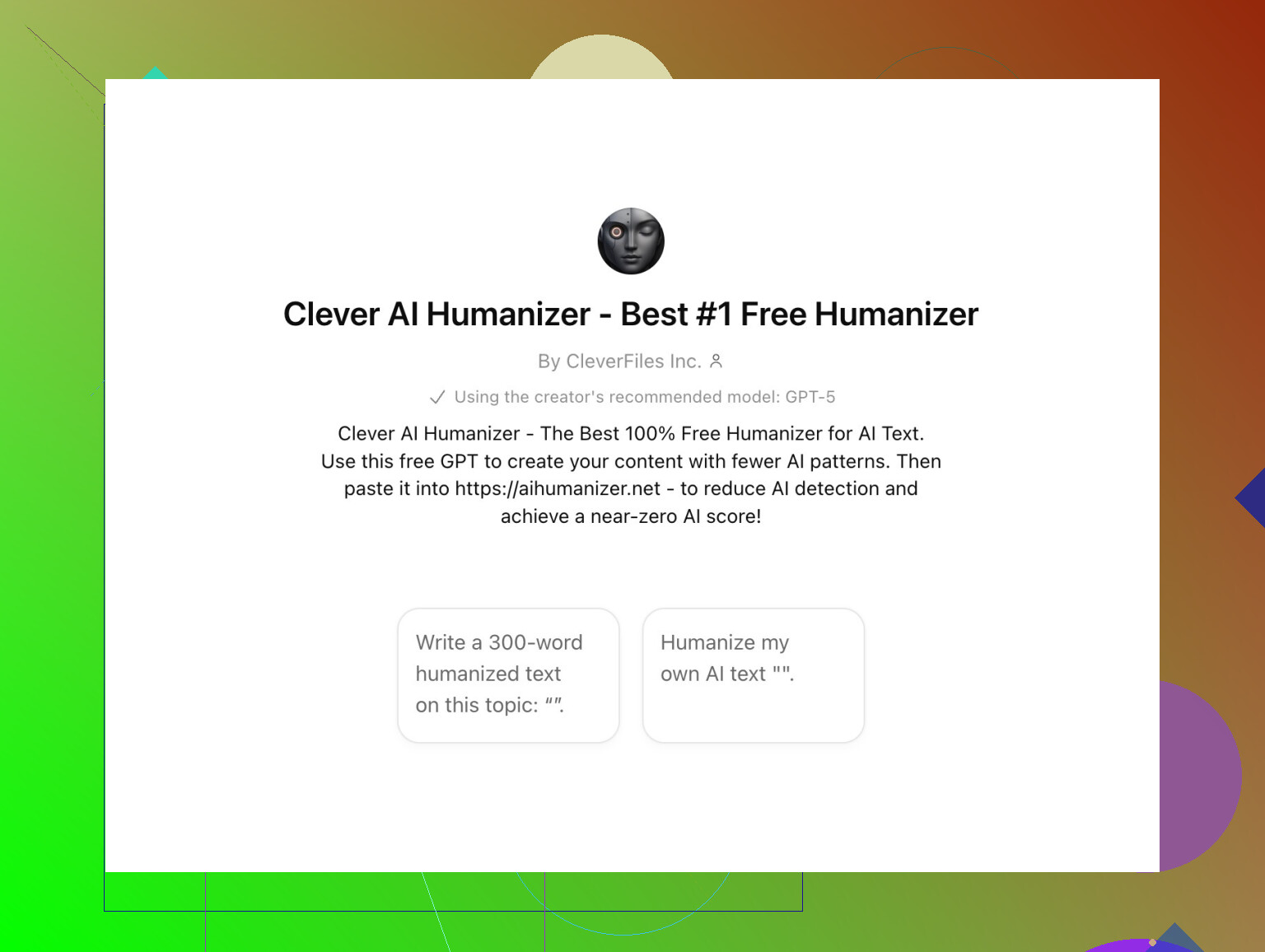
Paste your text, click the thing, and boom—you’re “humanized.” No watermarks, no signup hoops. Felt weirdly simple, honestly.
But Does It Fool the Watchdogs?
Time for the receipts! Redditors didn’t just talk the talk; they posted actual screenshots of AI detectors getting dunked on.
Top Dog: ZeroGPT
Everyone knows ZeroGPT as the default “I’m suspicious of your essay” checker. Here’s a run of the humanized text through it:
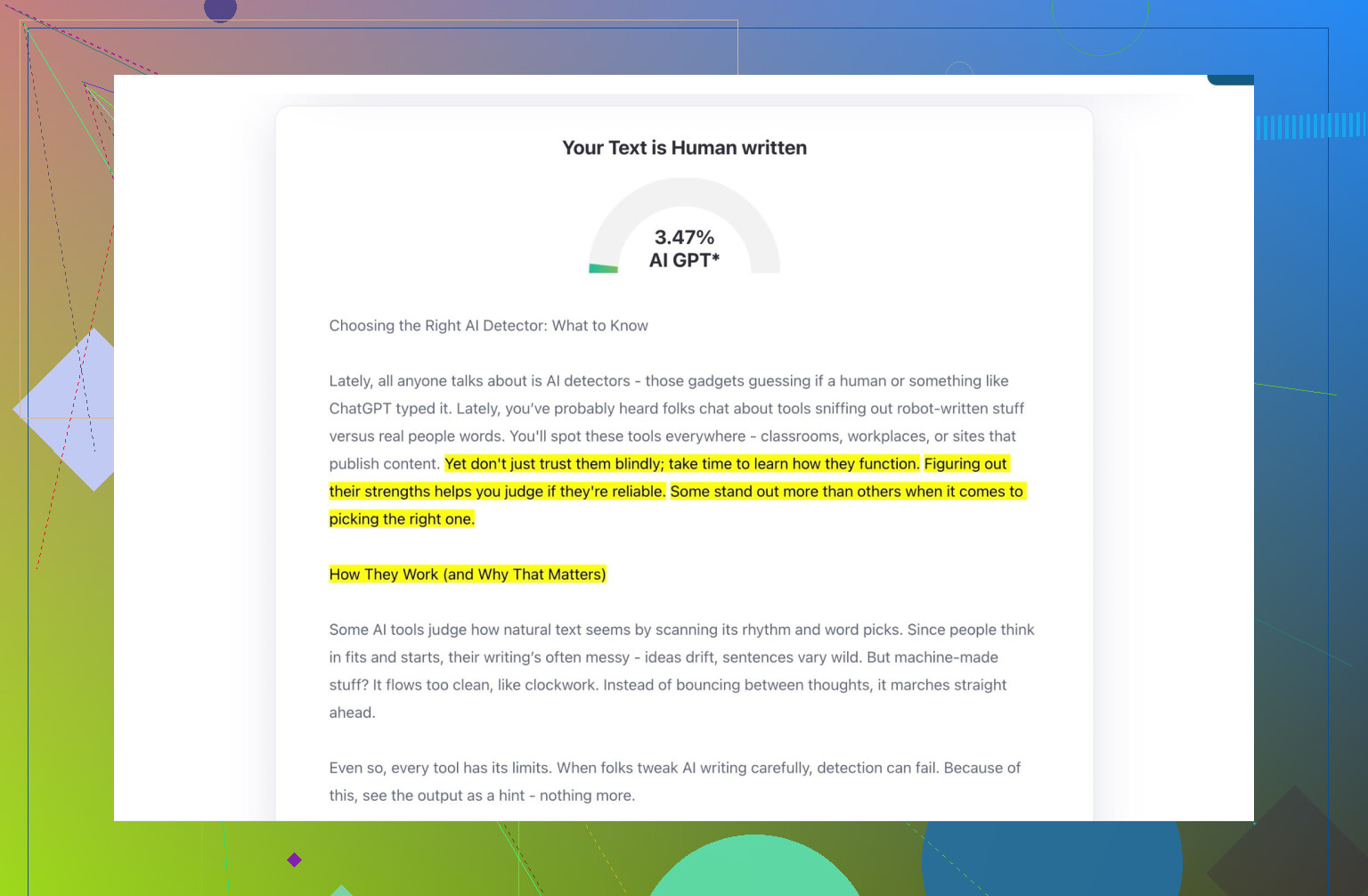
Result: Zero. Nada. Not a whiff of “AI detected.” Looks like the tool lives up to its name.
Runner-Up: GPTZero
Alright, so ZeroGPT isn’t the only sheriff in town. GPTZero is also huge with teachers/professors trying to catch AI cheaters. Here’s the output from that one:
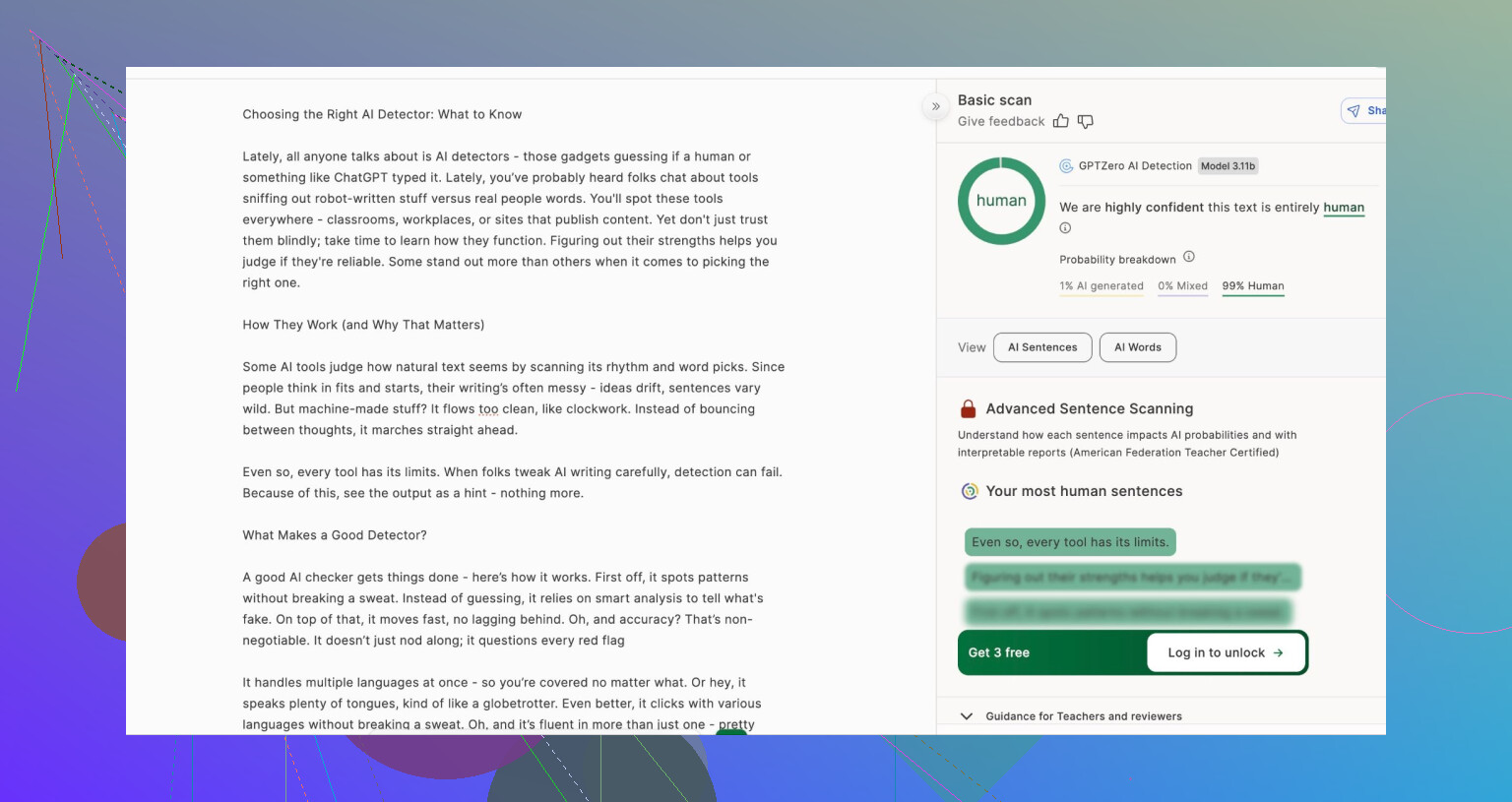
Again. Straight zeros. Either the AI humanizer is just that good… or the detectors need an update.
TL;DR
- Generate text with GPT Humanizer on ChatGPT
- Run it through Clever Ai Humanizer
- Drop your “disguised” content into ZeroGPT, GPTZero, whatever; the detection odds drop to basically nothing
I’m not saying you should do this for school or anything (don’t get yourself in trouble—ethics, people!), but if you’re curious or want to see how the sausage is made, it’s kinda wild how easy the whole thing is.
If you try it, check your scores before you celebrate. Detectors get smarter every day. For now, though, this is the magic combo that’s working. Good luck, y’all.
Let’s be real, if you leave everything up to ChatGPT with default prompts you’re probably going to end up with something that sounds like a polite robot writing a formal letter to another polite robot. No offense to the machines, but they just ain’t nailing that “random dude at a coffee shop” vibe. I peeped @mikeappsreviewer’s workflow with the fancy custom GPTs and the Clever AI Humanizer, and yeah, tools like those absolutely have their place (full disclosure: I use Clever AI Humanizer on deadlines or when I just can’t deal with tweaking endless drafts). But, you can get 80% of the way there without a million extra steps or add-ons.
What I do:
- Change the prompt up front: Instead of “write an article about X,” try “write this as if you’re explaining it to your friend over lunch.” Makes a huge difference.
- Tell it to include mistakes or slang: “Add some typos, use contractions, and make it casual.” You’d be shocked how much that helps.
- Manual pass-through: After you get the AI output, just read it out loud. Anywhere you trip up or it feels awkward, rewrite that bit. You’ll catch the stiff, formulaic stretches this way.
- Throw in anecdotes or weird analogies: Robots love facts; humans love tangents. Sprinkle in a story or a dumb joke and now the text is yours.
- Sentence length fluctuations: Make some sentences short. Others, rambling and a bit too long—even if your 9th grade English teacher would cringe. This is a weird little trick that instantly makes text feel less “generated.”
- Clever AI Humanizer, as mentioned: When you really need AI to ghostwrite but trick detectors, it works (most of the time, anyway). I just don’t put every egg in that basket—detectors update fast, and sometimes ‘humanized’ text gets a little too weird, you know?
Quibble with the whole “run everything through a black box to beat the detector” pipeline—if I’m gonna put my name on something, I want to at least recognize the voice coming out the other end. For professional stuff or publishing? Combine both: humanize with tools, but always give it that once-over so it doesn’t sound like a customer service bot at 2 AM. And seriously, reading your stuff out loud is probably the best tool you have. Try it. Your microwave and your pets won’t judge.
Honestly, some of y’all are doing gymnastic routines with all these custom GPTs and AI humanizing tools (shoutout @mikeappsreviewer and @sonhadordobosque, who both basically built careers on finding workarounds for making AI-generated text look like you just hammered it out on your phone in the Uber). I get the point—yeah, Clever AI Humanizer works pretty well if your goal is specifically evading those AI detectors, which is its own sport at this point. I’ve tried it, and sometimes it cranks out stuff that actually sounds like a sleep-deprived intern with three cups of coffee in him, which can be…good? Question mark?
But—massive “but” here—I’m a little skeptical about relying 100% on AI-level humanizers because you end up swapping one kind of robot-voice for another. If you want content that’s not just undetectable, but actually good (subjective, I know), here’s what actually worked for me:
-
Mash up some ChatGPT output with your own nonsense. Take the original text and literally start adding your reactions, opinions, and “honestly, this part is boring but here’s the important bit” kind of phrases.
-
Drop in your own inside jokes or references. Not like, joke-jokes, but stuff you’d say in conversation. I have straight-up put “That’s wild, right?” in my blog posts and nobody blinked.
-
Google for cringe LinkedIn posts—or corporate apology letters—then deliberately do the opposite. The more it sounds like real PR or a sanitized script, the less like you it’ll read.
-
Also: don’t feel like you need to break every AI detector on Earth. Sometimes, a little AI-y vibe is fine, especially if you’re not trying to pass this off as, like, a personal college essay.
-
Don’t get me wrong, sometimes I run chunks through Clever AI Humanizer, but nine times outta ten I still have to edit the ending lines and sprinkle my salt on top. The online tools (yeah, even the best) can start writing like someone at a committee meeting after lunch.
I’m side-eyeing the posts recommending you layer “humanizer” on top of “custom GPT” on top of prompt hacks. Half the time, you’re better off just embracing the robot for the first draft, then “messing it up” like you’re purposely adding character. Unless you’re writing for school or wanna stunt on ZeroGPT screenshots (no hate, it’s kinda fun), fixating on chasing 0% AI detection is overrated and honestly exhausting.
TL;DR: Real voices have quirks, unfinished thoughts, and the urge to overuse dashes. Let the AI handle structure; you handle character. And if you wanna just press buttons all day, yeah, Clever AI Humanizer is the one I actually bookmark.