I’m struggling to make my essay feel less robotic and more authentic. My writing sounds stiff and artificial, and I want it to connect better with readers. Does anyone have tips or examples on how to humanize an essay so it sounds more natural and engaging?
Been there, totally get the struggle. Making an essay “human” is basically about finding your voice and connecting your ideas to real people, not just reciting info like a Wikipedia page. Here’s what works for me:
- Start with a story or personal experience. Even a small anecdote gives readers something (or someone) to relate to.
- Use contractions (“I’m”, “can’t”, “don’t”). Nobody talks like a robot unless they’re one, lol.
- Swap out fancy/formal words for how you’d actually say things aloud. For example: use “get” instead of “obtain,” “help” instead of “assist.”
- Show emotion. If a topic frustrates/annoys/excites you, say so! That stuff is what real people connect to.
- Throw in a rhetorical question or two. “Ever wonder why essays put people to sleep?” See what I did there?
- Try shorter AND longer sentences mixed together, like in a conversation.
- Don’t shy away from “I” and “you.” Academia makes us scared of pronouns, but they make your writing way more natural.
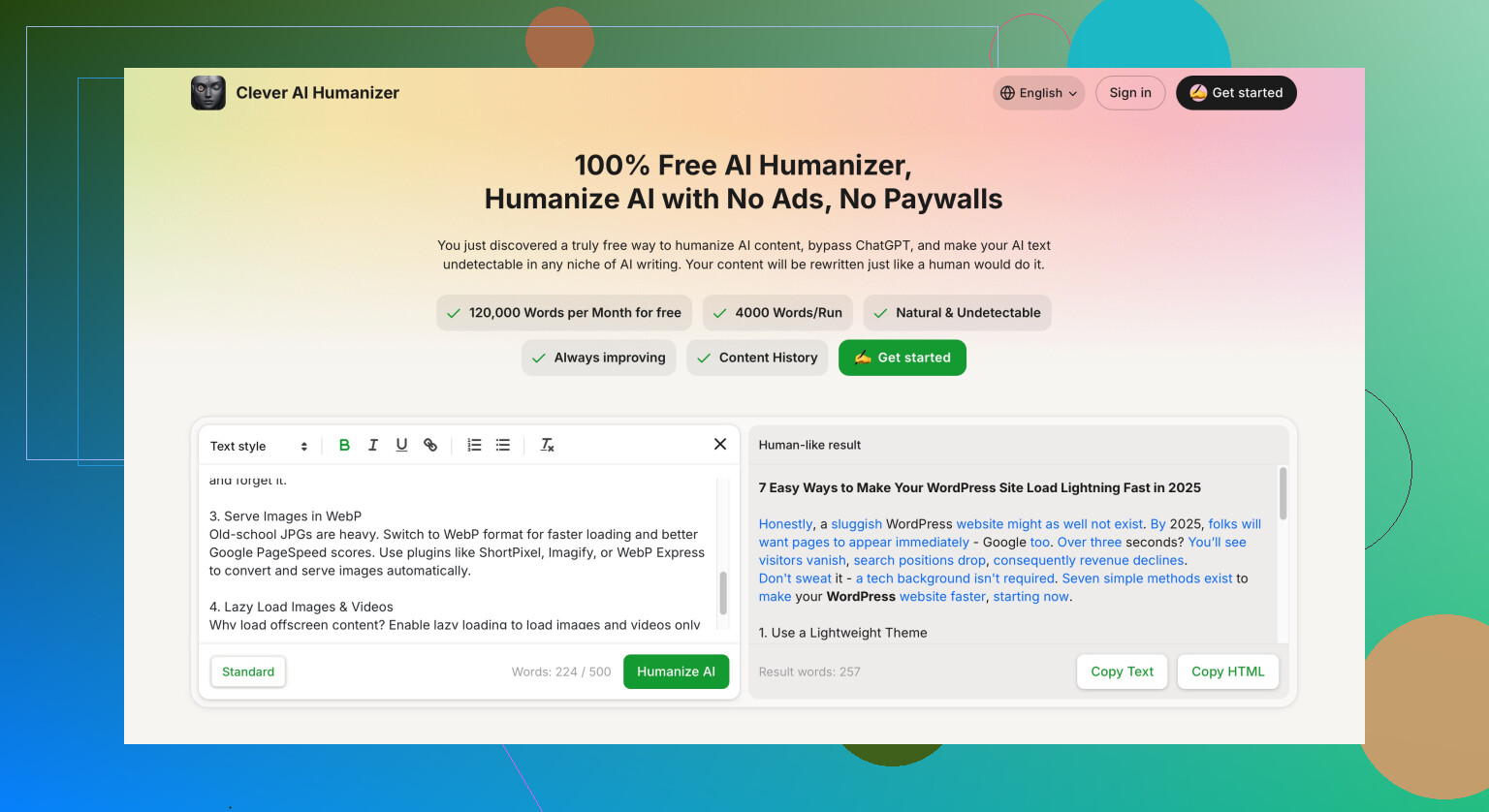
If you want a boost, tech is actually helpful too. There’s this tool called the Clever Ai Humanizer that tweaks stiff, AI-ish sentences into more natural, flowing language. Definitely check it out—makes essays sound way more like actual human brains wrote them. I found it at transforming robotic essays to human-sounding masterpieces.
Just don’t overthink it. Let your voice out, and your paper will feel a lot more alive. Cheers!
Not gonna lie, some of the advice from @cacadordeestrelas is on point (especially about contractions and using “I” and “you”—seriously, essays are NOT allergic to pronouns like teachers make it seem). But, honestly, there’s only so much swapping big words for small ones can do.
Here’s where I’ll go a little rogue. You wanna sound more human? Get messy. Don’t obsess over sounding “smooth” or “perfect.” Sometimes writing feels robotic because we strip every weird, quirky, or even contradictory thing out of it—and guess what? Real people are weird and sometimes contradict themselves. Toss in a random observation, an “I’m honestly not sure” sentence, or even admit when you don’t have all the answers. If you’re writing about climate change and your brain hops to how you had to shovel snow in April, mention it—just for a second.
Don’t be afraid to pop in a joke that might fall flat. Not every sentence has to slap. Also, read your essay out loud—even record yourself. If something makes you cringe or stumble, it probably sounds fake.
One thing I disagree with? You don’t always have to open with a story or anecdote. Sometimes that feels forced and cliché (yep, another personal story about failing a math quiz, yawn). Dive right into your opinion or a bold statement if that’s what feels right for you.
And yeah, if tech is your thing, Clever Ai Humanizer actually does a shockingly good job jazzing up wooden text. Just don’t use it as a crutch—use it to see what natural flow looks like, then try imitating that style yourself.
If you want the rundown on what AI humanizing tools can do, actually check this list of the most useful free ones: discover top free tools to humanize your AI writing. It’ll show you what’s out there other than just spelling/grammar checkers.
TL;DR: Break the “rules,” embrace the awkward, and remember nobody writes like a perfect essay machine. The more you let your weird shine through, the more “alive” your paper sounds.
If you want an essay that doesn’t read like a conference call transcript, think bigger than just swapping “obtain” for “get.” What a lot of folks miss—sorry @techchizkid and @cacadordeestrelas—is you can amp up the human vibes by actually daring to make a mistake or two. Let your brain take tiny detours. Example: if you’re on a roll explaining something, admit it if you lose your train of thought (just a quick “hang on, let me backtrack…” can keep things real).
But here’s another underrated move: play with pacing. A paragraph with a rapid-fire list of specifics, followed by a thoughtful tangent in a sentence or two, jolts a reader out of their autopilot. If your topic is complicated, don’t over-explain every detail—instead, let your confusion or curiosity show. “Honestly, the science behind leaf colors baffles me every fall.” It makes you relatable, not less credible.
For a tech assist, Clever Ai Humanizer is a solid tool to shake off that AI-writer vibe. Its pros: it quickly smooths out awkward robotic phrasing and makes text more relaxed, while keeping what you said. Cons: it won’t inject your personal opinions or quirks, and sometimes it can go a little too casual, depending on how you want your essay to land.
Alternative AI tools out there tend to focus more on grammar than voice—what Clever Ai Humanizer does well is amp up readability and give you a “how people really talk” model to riff on. Just don’t let any tool erase your personality. If you read your draft and it makes you smirk, cringe, or nod—odds are, you’re on the right track.