I’m considering using Clever AI Humanizer for content that needs to pass AI detectors and still sound natural to human readers. I’ve seen mixed marketing claims and a few sketchy reviews, so I’m not sure how reliable or safe it is for long-term projects or SEO. Can anyone share honest, real-world experiences with it, including pros, cons, and any issues with detection, quality, or policy violations?
My Unfiltered Experience With Clever AI Humanizer (Free Tool, Real Tests)
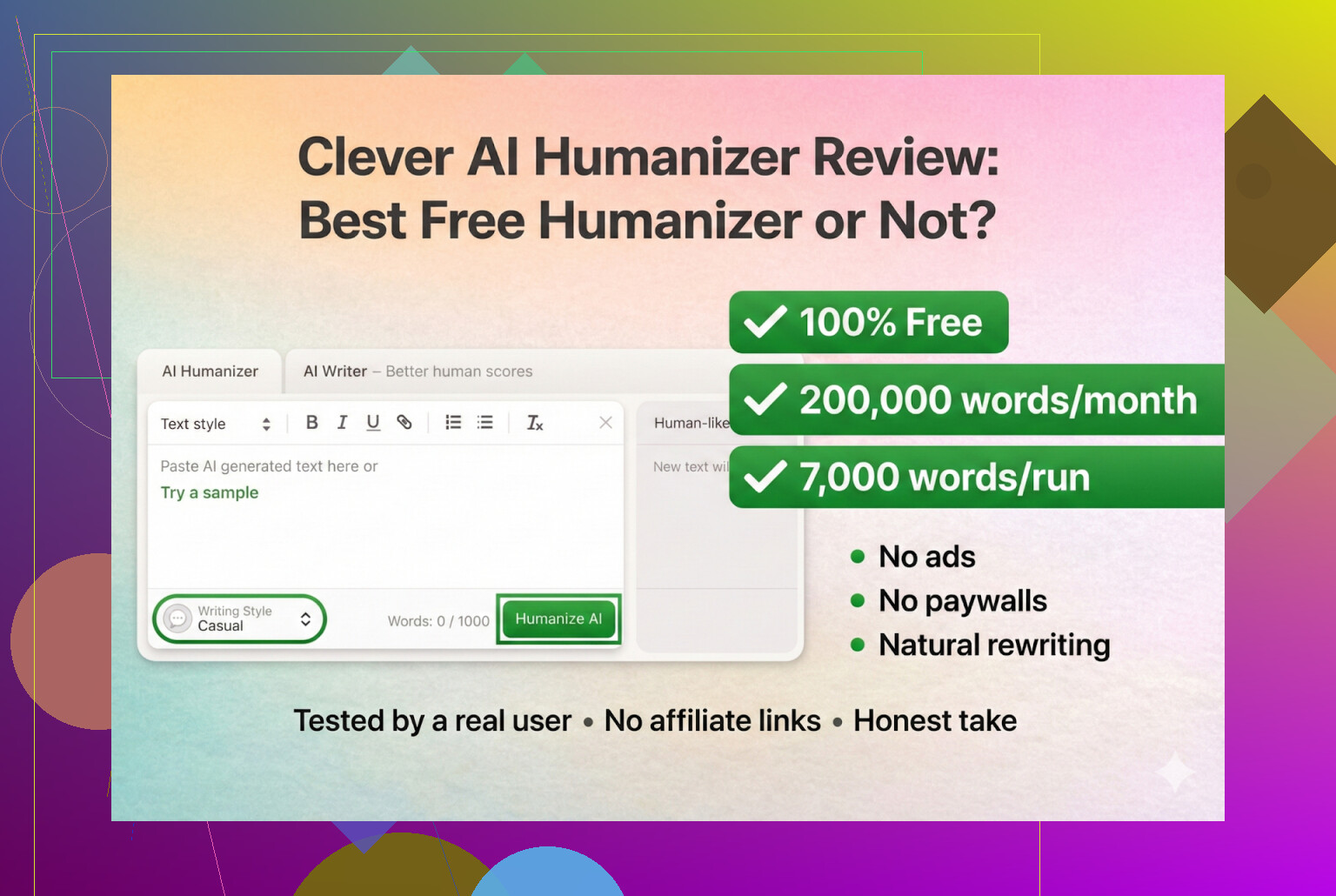
I’ve been messing around with AI “humanizers” for a while now, mostly because every second site either bans AI content or runs it through three detectors in a row. A lot of these tools look shiny, talk big, and then either butcher your text or try to lock you into a subscription.
So here’s what I did: I grabbed Clever AI Humanizer, ran a bunch of tests, and treated it the same way professors treat late assignments: no mercy.
Official site (this is the real one, not a clone):
https://aihumanizer.net/
There are copycats and “similarly named” tools trying to piggyback off the brand with ads, so double check that URL before you assume you’re on the right site.
Also worth noting: as far as I’ve seen, Clever AI Humanizer doesn’t have a paid tier. No “pro,” no fake discounts, no “unlock full version for $29.99/mo.” If you’re getting upsell popups on something claiming to be Clever, you’re not on the correct site.
How I Actually Tested It
For this run I went full AI-on-AI:
- Asked ChatGPT 5.2 to create a completely AI-generated article about Clever AI Humanizer.
- Took that raw AI text and dropped it into Clever AI Humanizer.
- Chose the Simple Academic style.
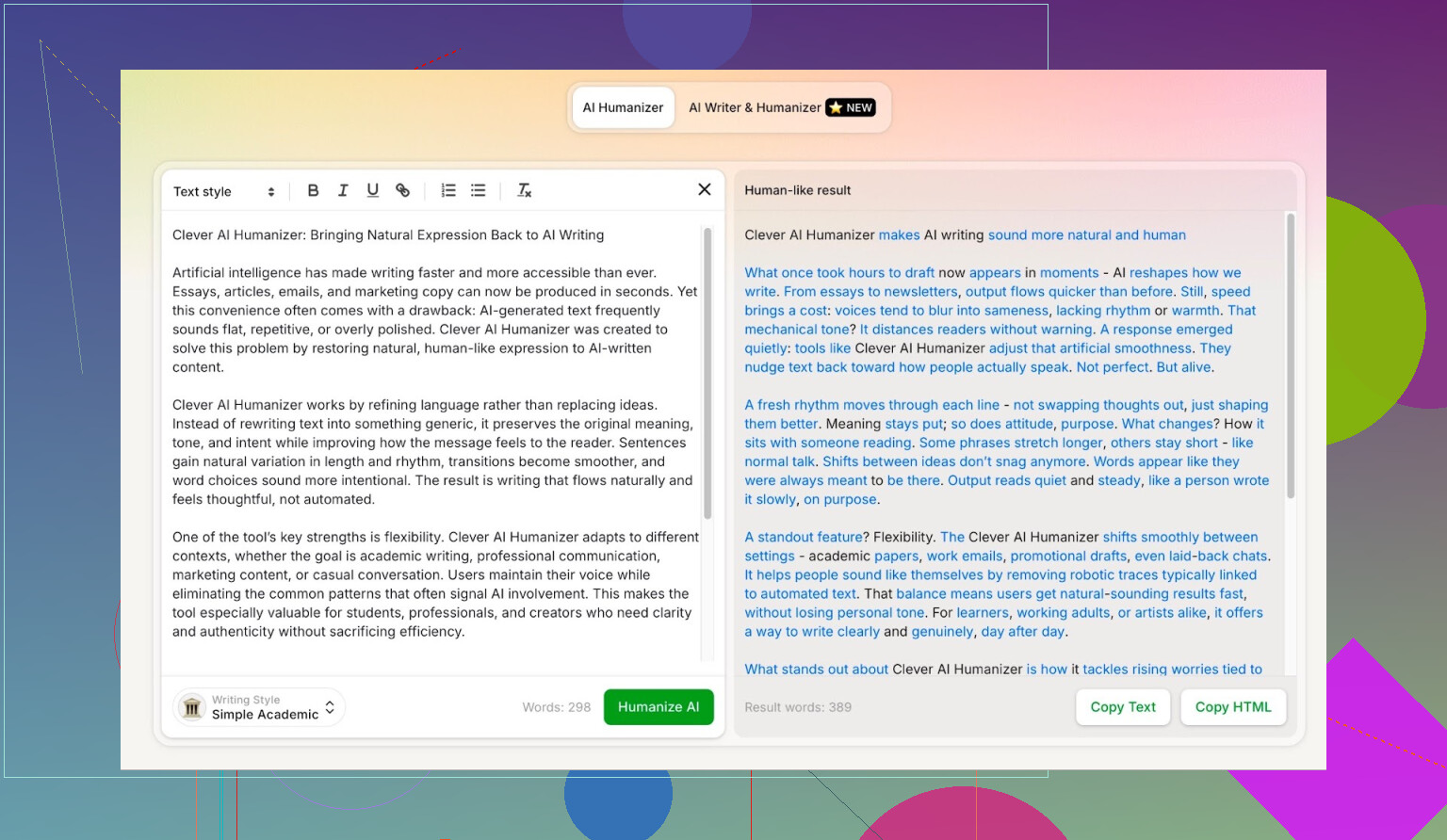
Why that style? Because it’s surprisingly tricky. It tries to sound somewhat academic, but not like a formal research paper. That kind of in-between tone is usually where detectors start raising red flags, so I figured if it could handle that, it could handle more casual stuff easily.
Detector Round 1: ZeroGPT
So first up: ZeroGPT.
I don’t fully trust this thing. It once called the U.S. Constitution “100% AI,” which is hilarious and also tells you how noisy these detectors can be. But it’s still one of the most used tools, and a lot of people rely on it, so I included it.
Result after Clever AI Humanizer:
- ZeroGPT: 0% AI
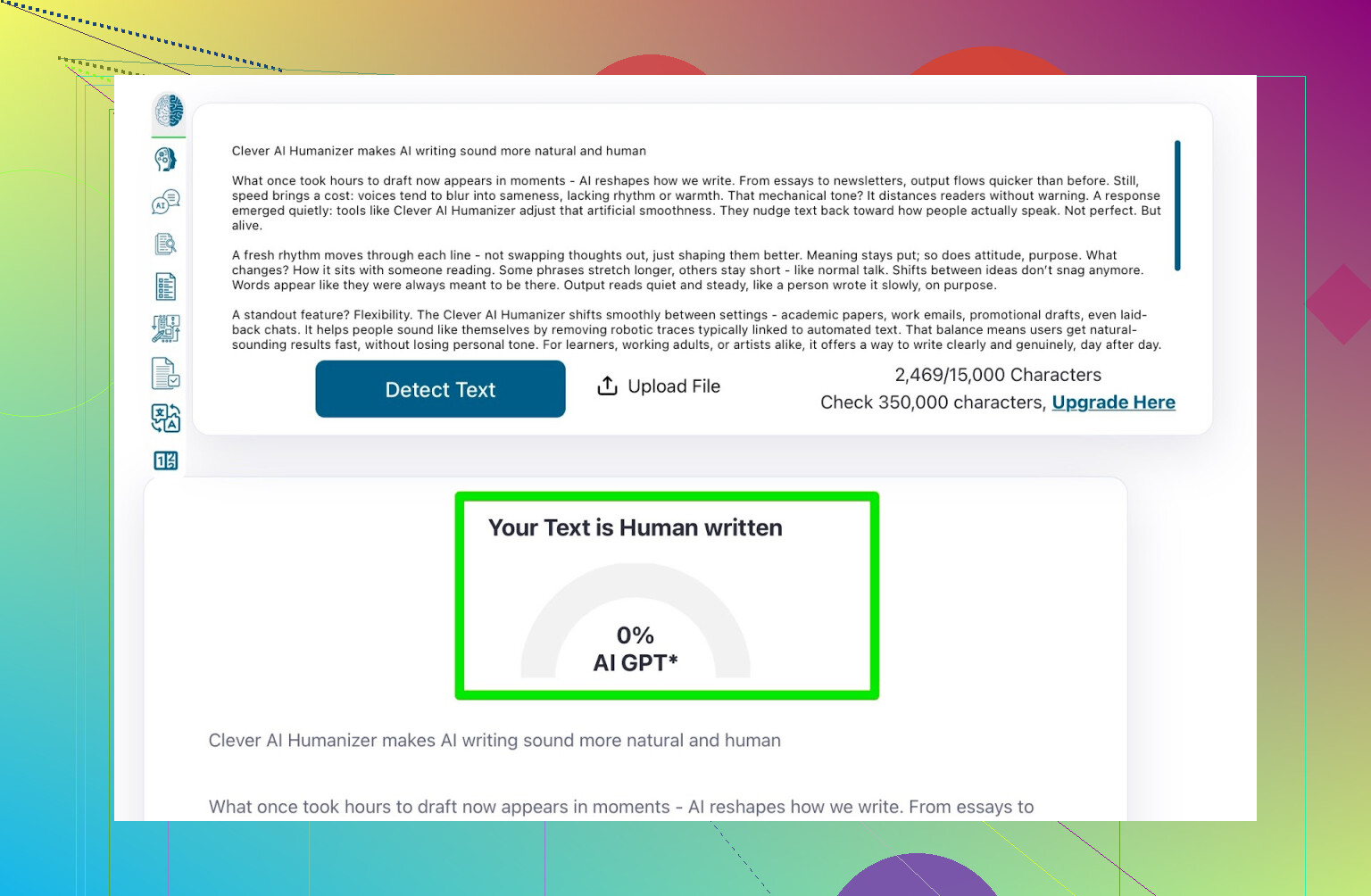
Yeah, from 100% AI (original ChatGPT output) to 0% AI according to ZeroGPT. Solid.
Detector Round 2: GPTZero
Next I ran the same humanized text through GPTZero, since that’s probably the second most common checker people mention.
Result:
- GPTZero: 0% AI, 100% human
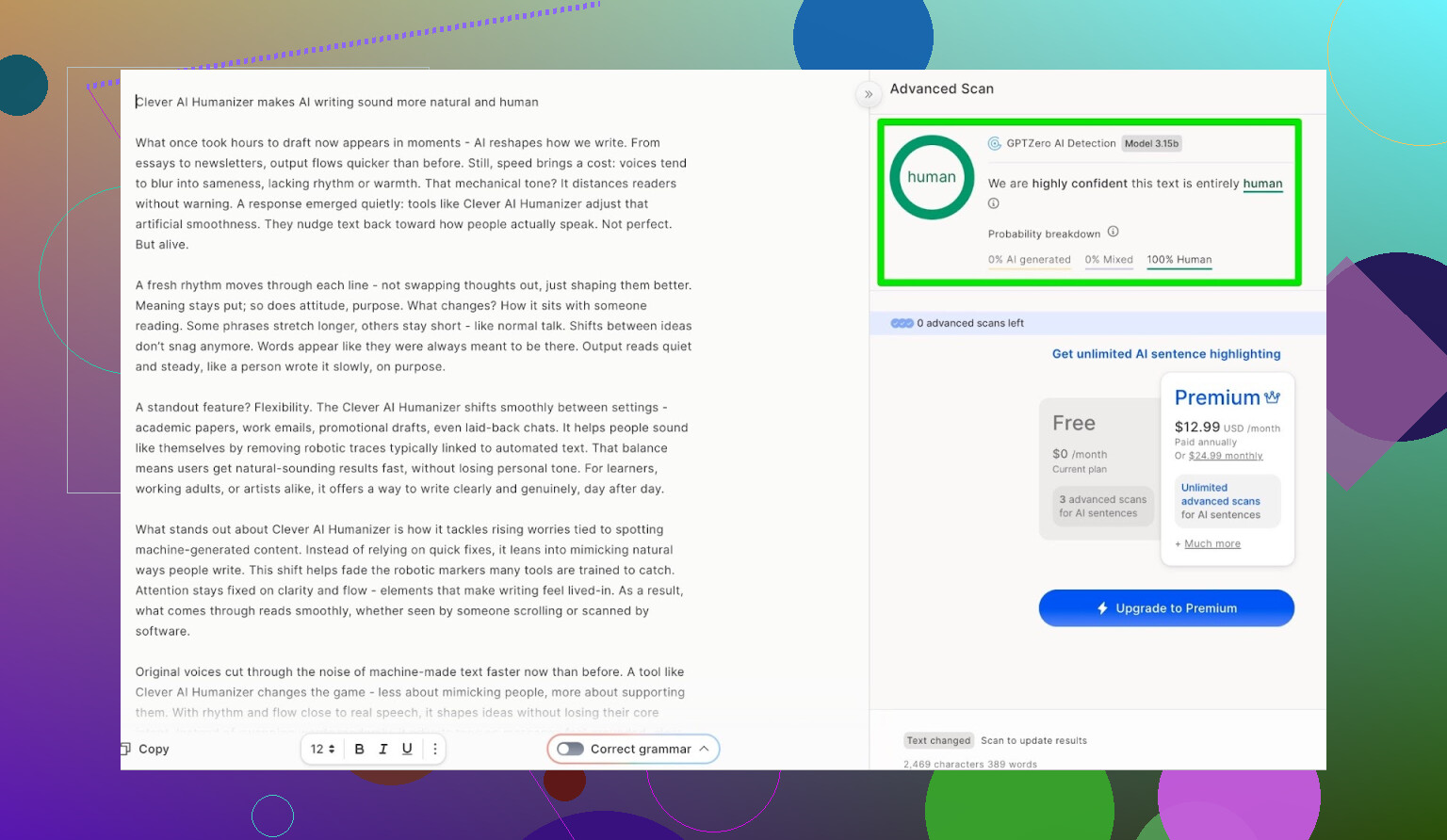
So far, two for two: both major detectors thought it was human-written.
But Is The Text Actually Any Good?
Here’s where a lot of “AI humanizers” fall apart. Passing detectors is one thing. Producing text that doesn’t read like scrambled oatmeal is another.
So I took the Clever AI Humanizer output and fed it back into ChatGPT 5.2, this time asking it to:
- Check grammar
- Judge clarity
- Evaluate whether it still feels like AI text
Result from ChatGPT 5.2:
- Grammar: good
- Style (Simple Academic): acceptable, but
- Recommendation: still suggests human revision
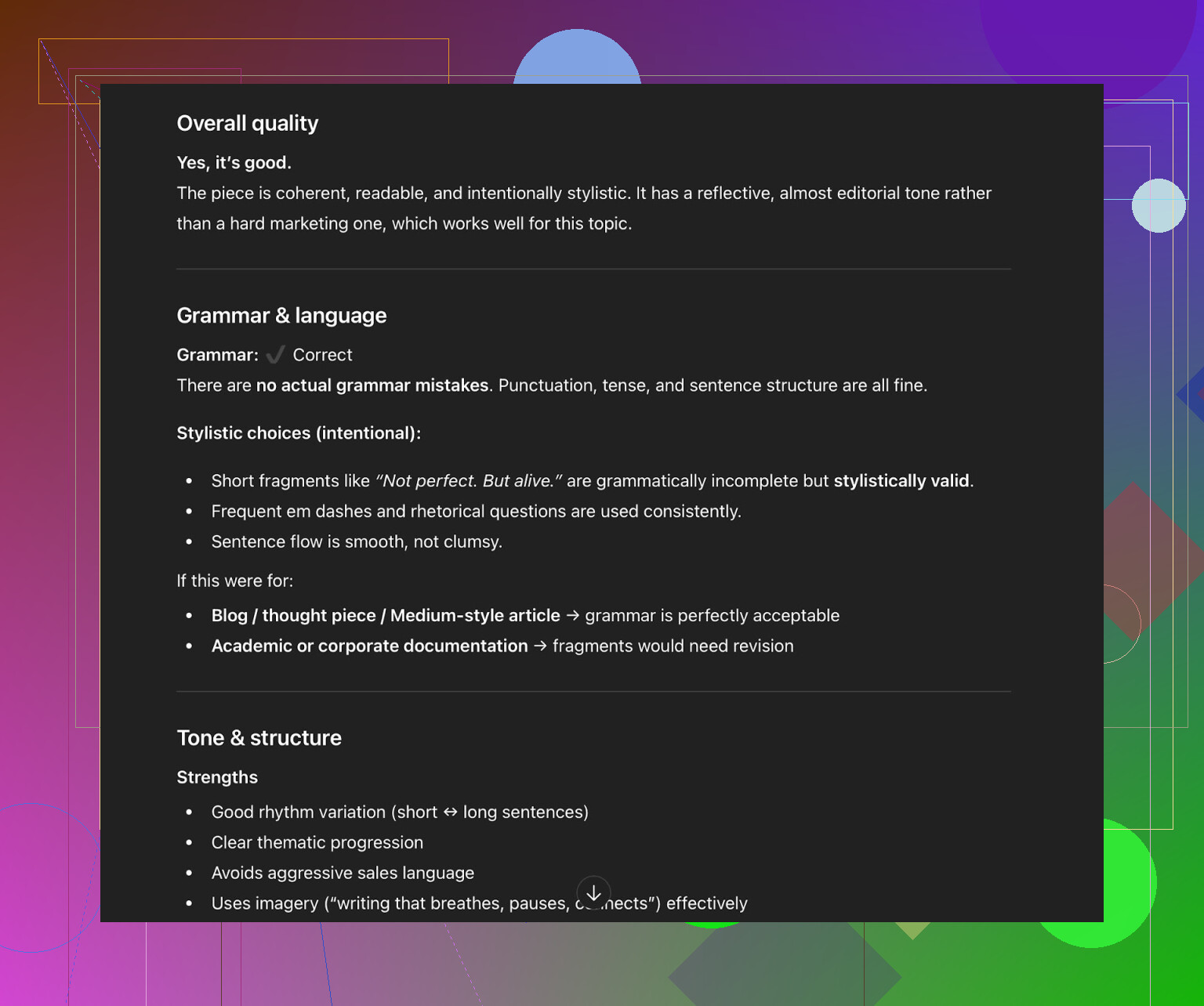
Honestly, that lines up with reality. Any AI-written or AI-humanized text that’s going anywhere serious (school, clients, publishing, etc.) needs a final human pass. Anyone promising “no-edit-needed” AI content is selling dreams, not tools.
Testing Clever’s Built-In AI Writer
They’ve added a new feature: AI Writer
Link: AI Writer - 100% Free AI Text Generator with AI Humanization!
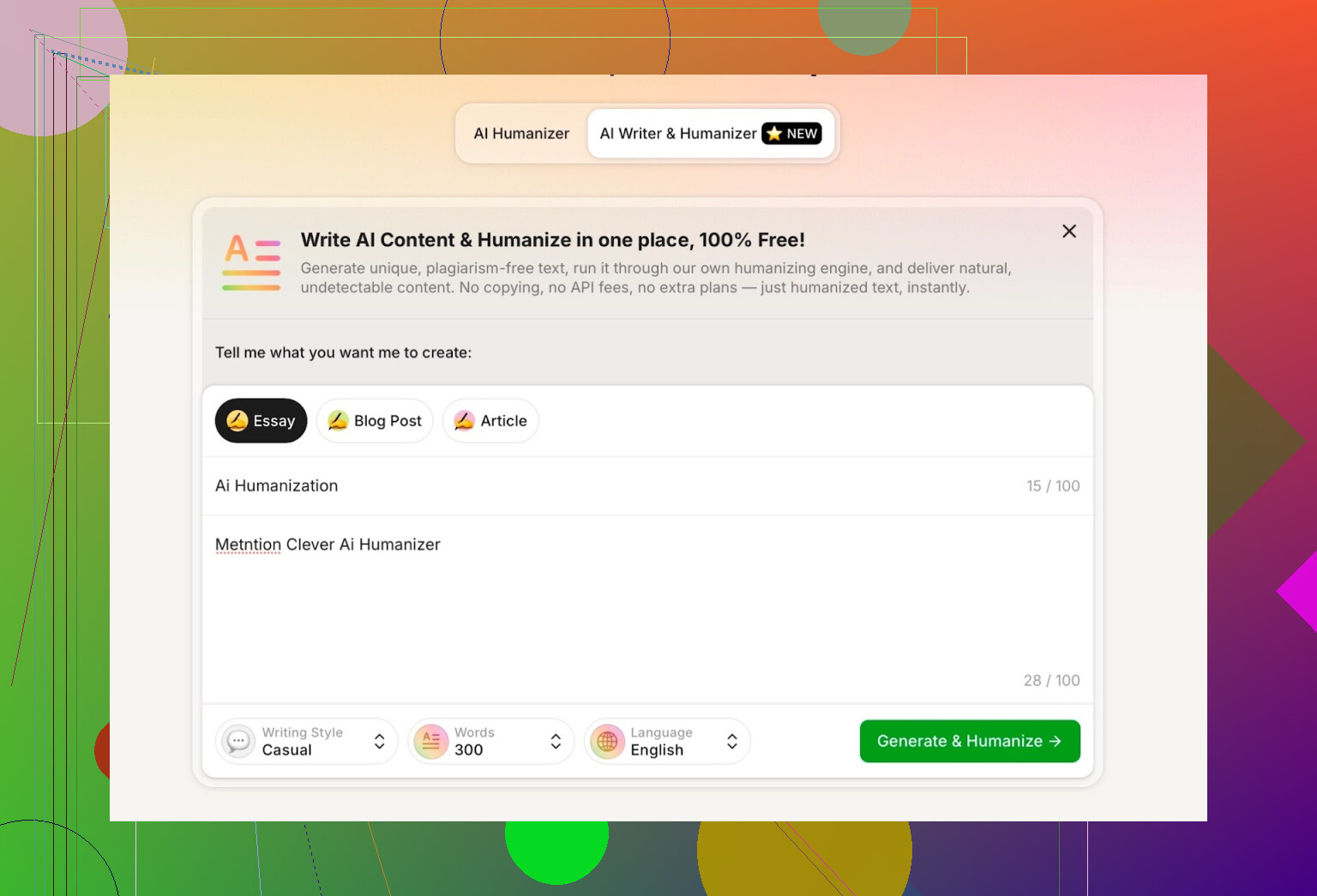
This is interesting because most “AI humanizers” are just remix machines. You paste text from ChatGPT or another LLM, they mangle it, and that’s it. Clever’s AI Writer instead:
- Generates the content
- Humanizes it at the same time
So you don’t have to bounce between multiple tools.
I picked these options:
- Style: Casual
- Topic: AI humanization
- Requirement: Mention Clever AI Humanizer
- I also deliberately injected a small mistake into the prompt to see how it’d handle imperfect input.
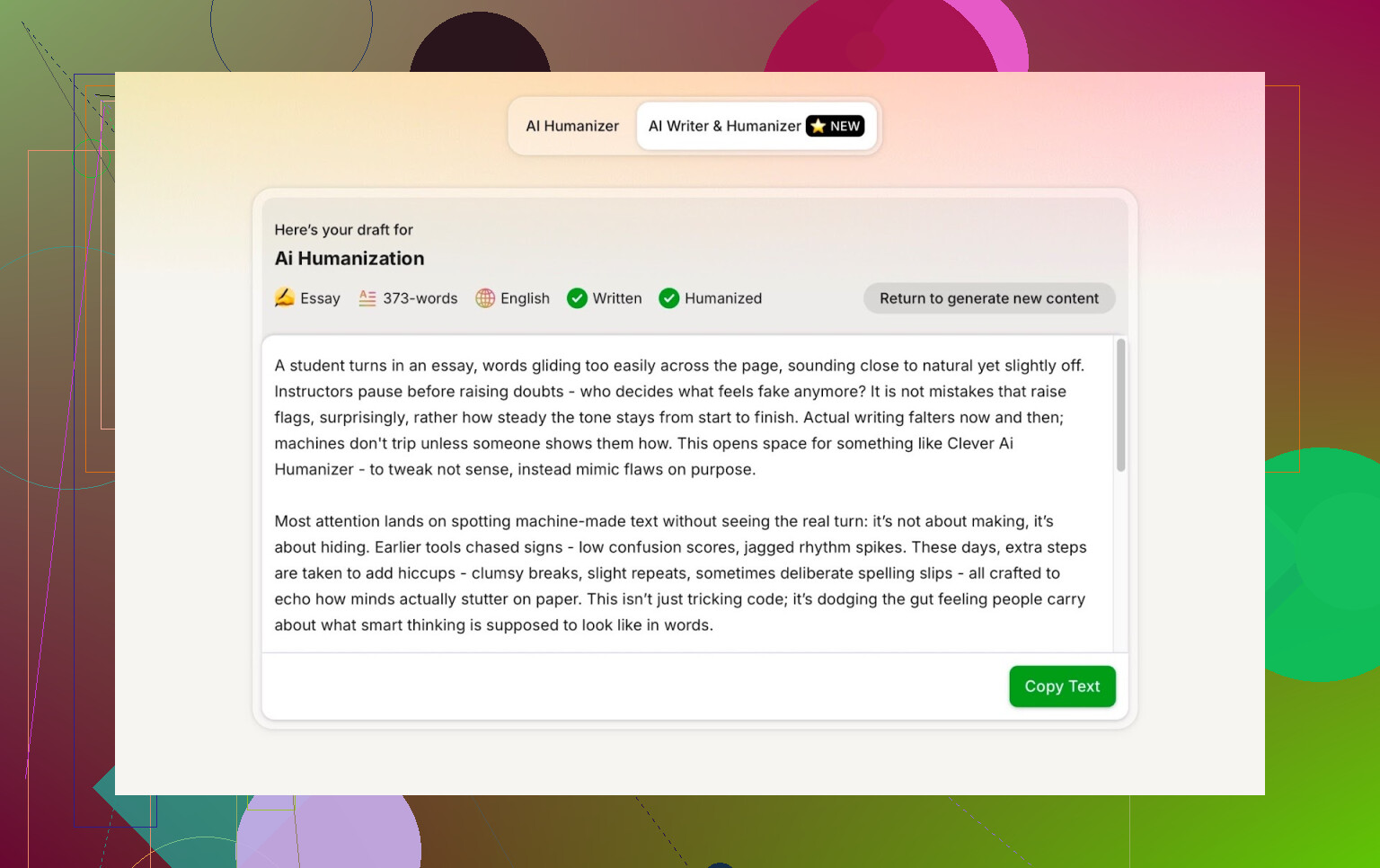
The output was generally clean, but here’s something that annoyed me:
- I asked for 300 words.
- It did not give me 300 words.
- It overshot.
If I specify a word count, I want it to actually stick to that. This is the first real downside I ran into. If you’re working with strict limits (assignments, platforms with caps, etc.), that mismatch can be annoying.
Detector Round 3: Humanized Text Written From Scratch
Now I ran the AI Writer output through several detectors:
- GPTZero: 0% AI
- ZeroGPT: 0% AI, 100% human
- QuillBot’s detector: 13% AI
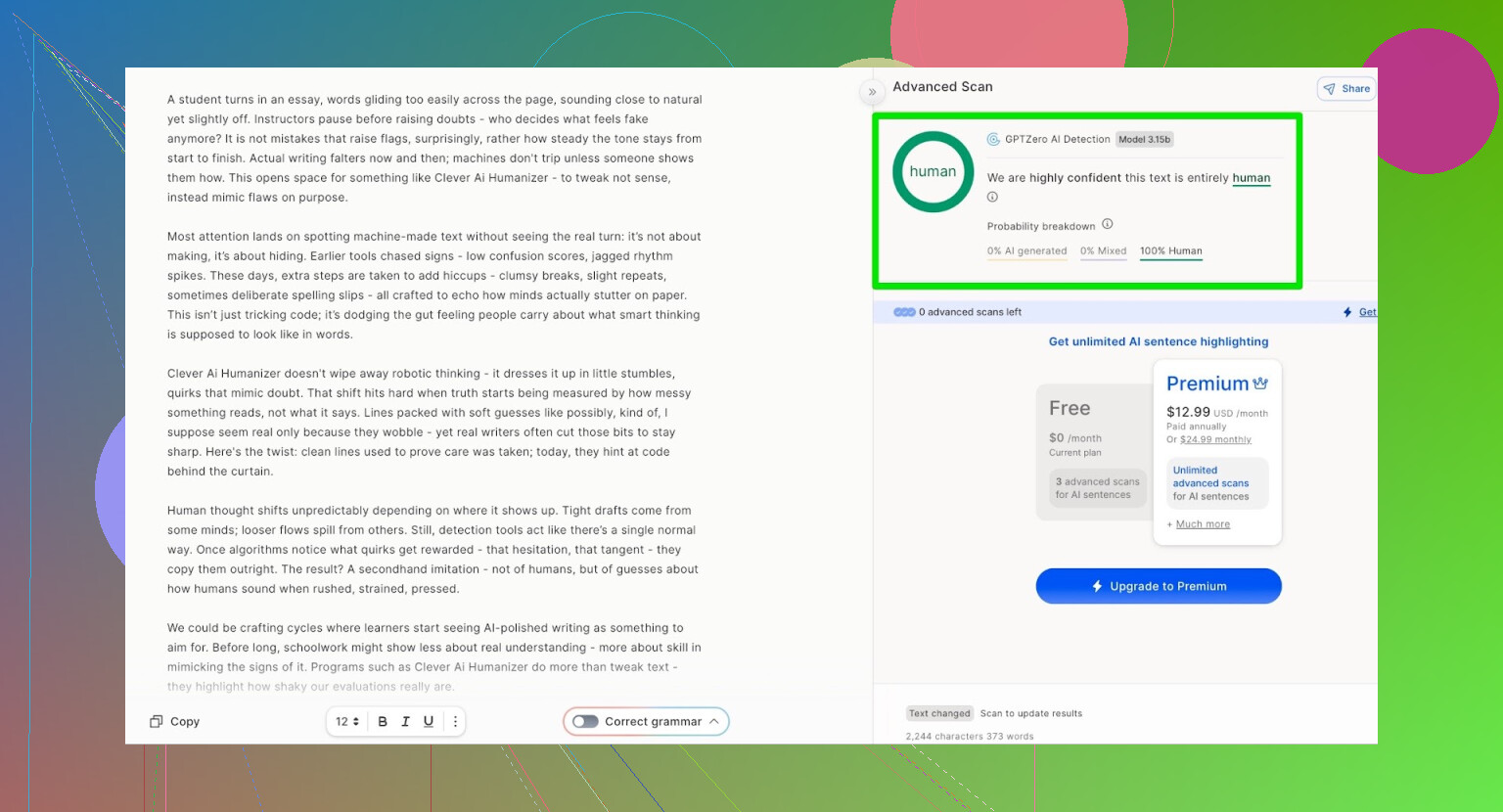
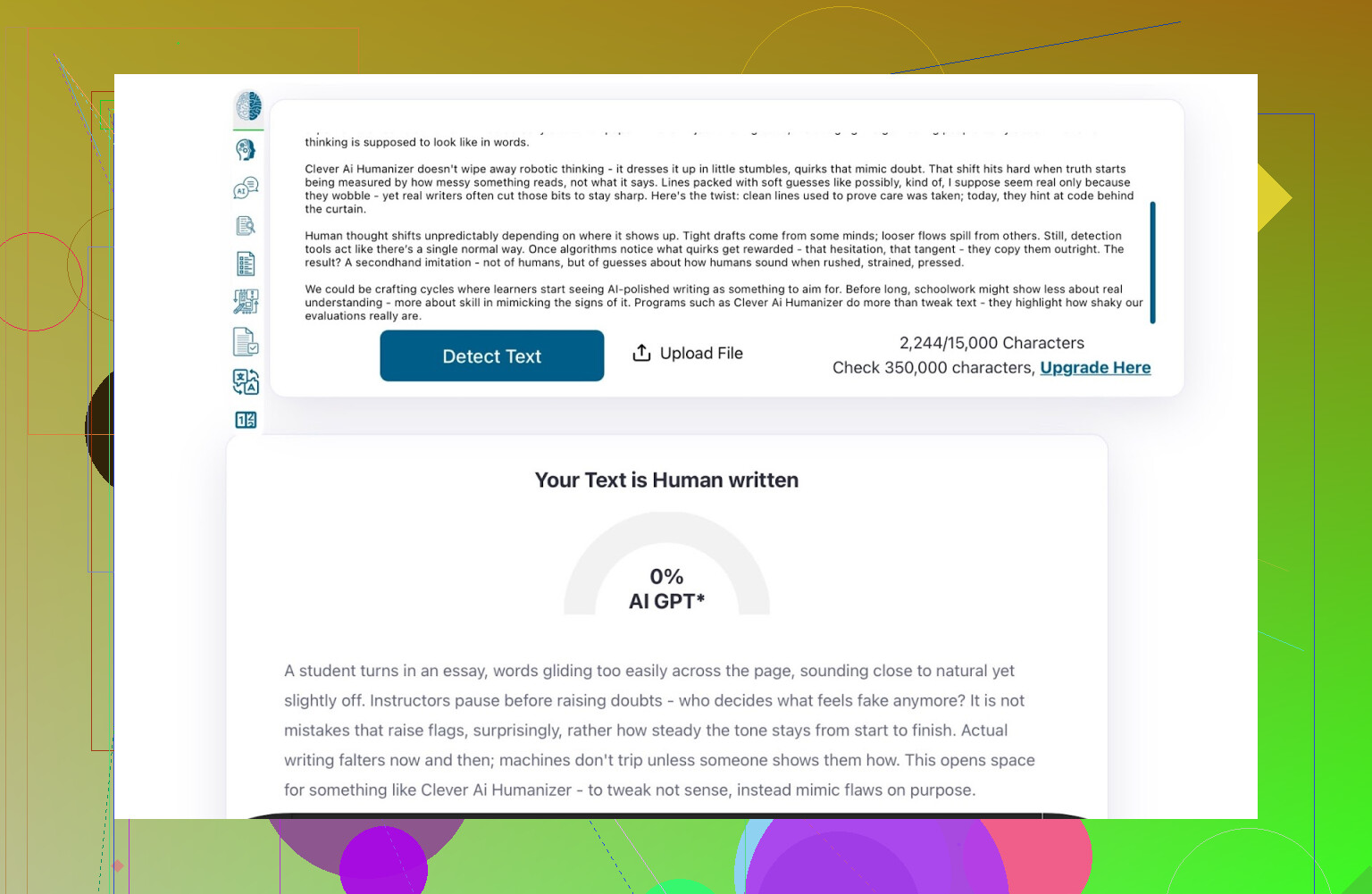
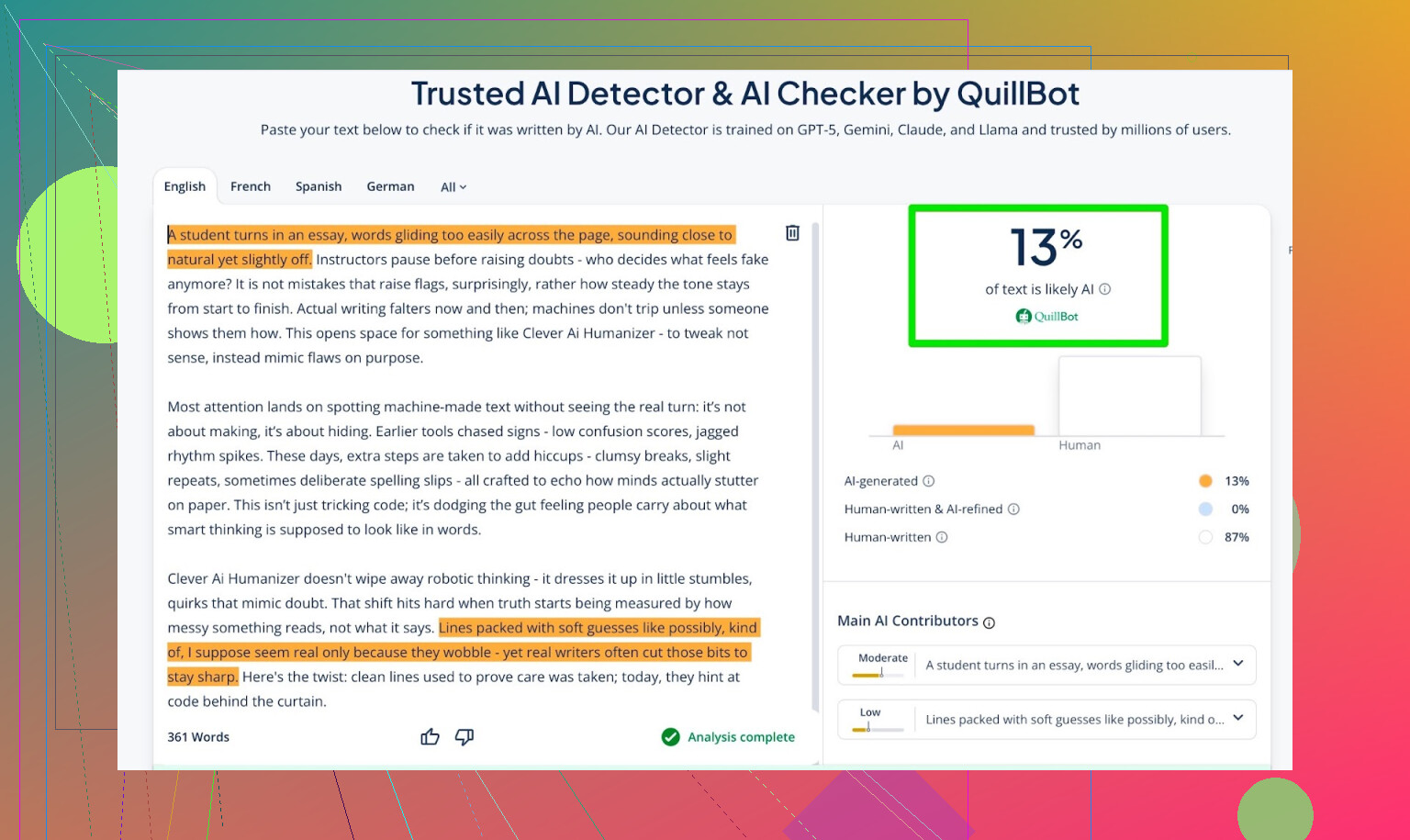
That 13% on QuillBot is not a dealbreaker at all. If anything, it feels more “realistic” than a flawless 0% across the board. Detectors are stochastic anyway, and different tools look at different signals.
Quality Check: ChatGPT 5.2 On The AI Writer Output
Next step: asked ChatGPT 5.2 to evaluate text that was:
- Written by Clever’s AI Writer
- Humanized by Clever itself
- Then pasted into ChatGPT for judgment
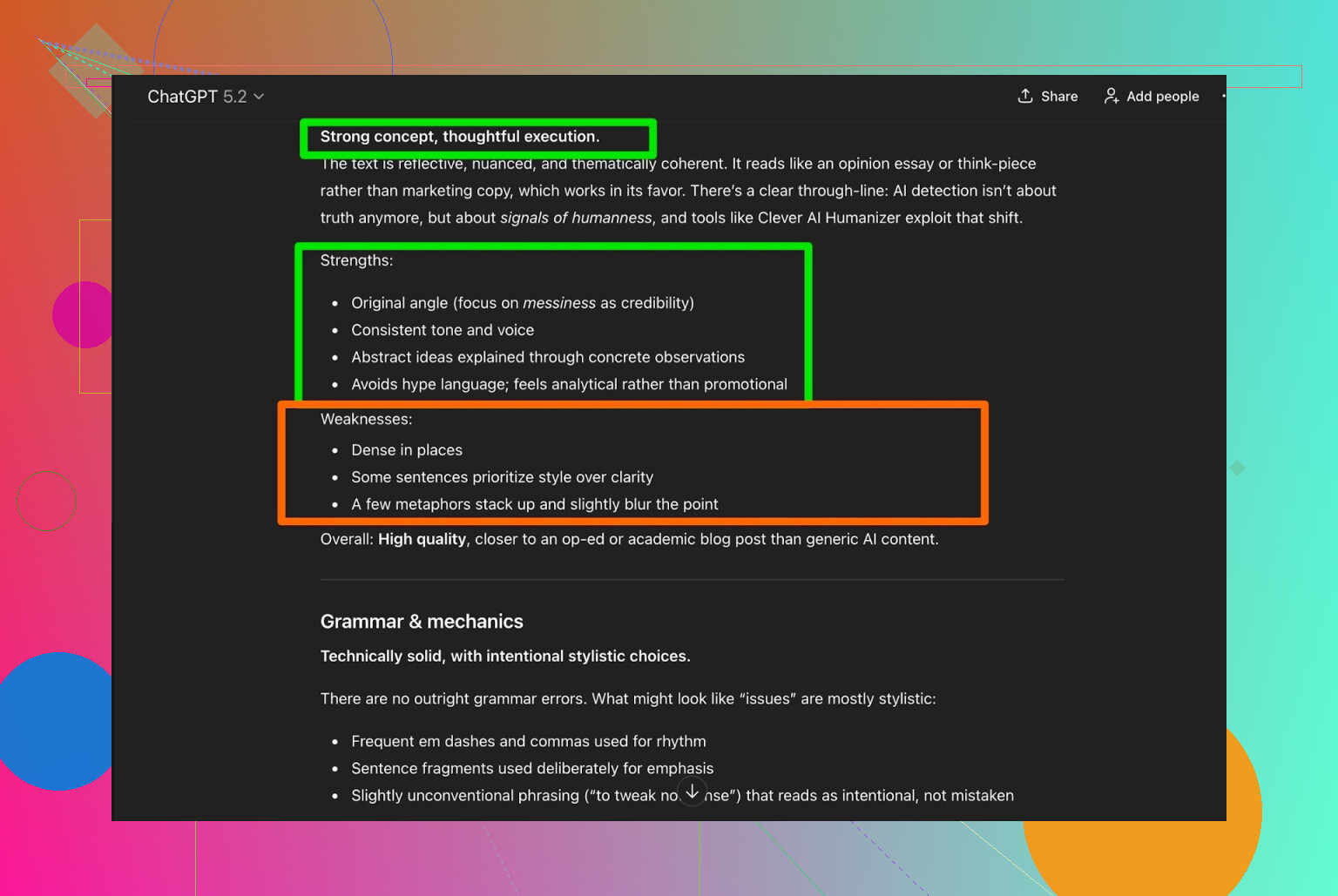
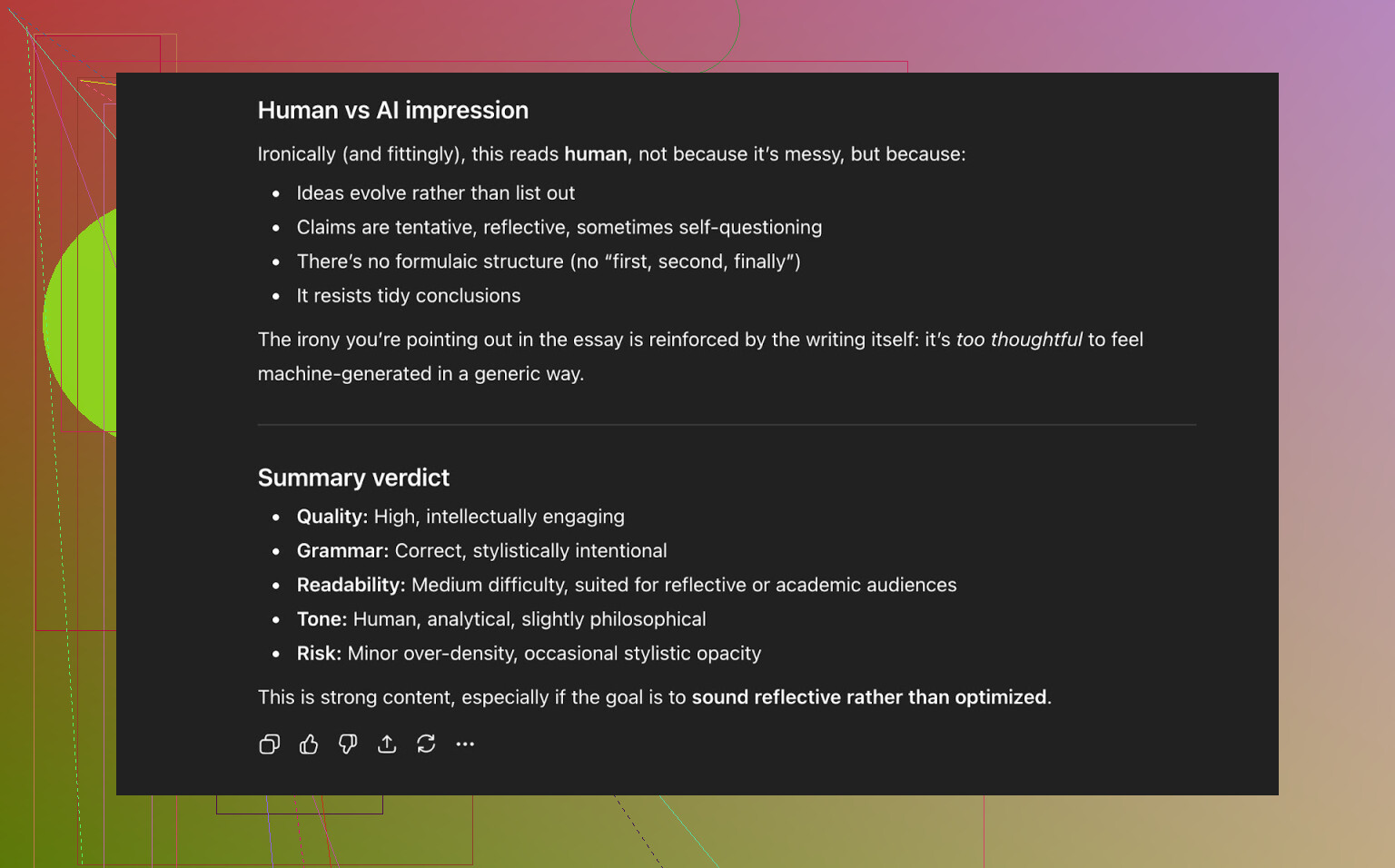
Verdict:
- Reads strong and coherent
- Comes across as human-written
- No glaring grammar messes
So now we’re at the point where:
- 3 major AI detectors say “human”
- A modern LLM also leans “human”
Which is about as good as you can reasonably expect right now.
How Clever AI Humanizer Stacked Up Against Other Tools
In my testing, Clever AI Humanizer outperformed pretty much every free humanizer I tried, and even beat a handful of paid ones.
Here’s the comparison table I used, based on AI detector scores (lower is better / more “human”):
| Tool | Free | AI detector score |
| ⭐ Clever AI Humanizer | Yes | 6% |
| Grammarly AI Humanizer | Yes | 88% |
| UnAIMyText | Yes | 84% |
| Ahrefs AI Humanizer | Yes | 90% |
| Humanizer AI Pro | Limited | 79% |
| Walter Writes AI | No | 18% |
| StealthGPT | No | 14% |
| Undetectable AI | No | 11% |
| WriteHuman AI | No | 16% |
| BypassGPT | Limited | 22% |
It came out ahead of:
- Grammarly AI Humanizer
- UnAIMyText
- Ahrefs Humanizer
- Humanizer AI Pro
- Even some paid tools like Walter Writes AI, StealthGPT, Undetectable AI, WriteHuman AI, BypassGPT
All that while still being free.
It’s Good, But Not Magic
Now, let’s be real about the weak spots:
- It often writes more words than you ask for. If you’re strict about length, you’ll have to trim.
- There are still detectable patterns if you look closely or use more advanced LLM checks. It’s not perfectly indistinguishable from a real person.
- It doesn’t religiously preserve the original content when humanizing. It rewrites ideas more freely, which is probably part of why it scores better on detectors but may matter for assignments or exact briefs.
- Some LLMs can still mark parts of the output as AI-written, even if detectors say “human.”
Grammar-wise, I’d rate it a:
- 8 to 9 out of 10
Flows well, easy to read, but not bulletproof in every edge case.
One thing I appreciated: it doesn’t spam fake “human” mistakes like:
- Writing “i had to do it” instead of “I have to do it”
- Random typos thrown in just to confuse detectors
Yes, errors can sometimes help bypass AI detection, but handing in typo-laden content is a different problem.
Even with clean detector scores, I still notice a kind of “AI rhythm” if I read slow enough. It’s subtle but there: repetition of certain structures, safe transitions, that kind of thing. That’s not specific to Clever; that’s just the current state of generative text.
The Bigger Picture: Cat vs Mouse, Forever
This whole AI detection vs AI humanization thing is just a looping arms race:
- Detectors get better.
- Humanizers adapt.
- Detectors shift their signals.
- Repeat.
So I’d treat any tool as one piece of a workflow, not a magic invisibility cloak.
Clever AI Humanizer, though? As of right now, as a free tool, it’s at or near the top of what I’ve tested.
You don’t have to pay to try it, which already makes it more appealing than half the “undetectable AI” tools that are mostly paywalls with a rephrasing spinner attached.
Extra Reading & Proof Threads
If you want more real-user stuff and not just my tests:
-
General comparison post with proofs:
https://www.reddit.com/r/DataRecoveryHelp/comments/1oqwdib/best_ai_humanizer/ -
Specific Reddit review thread on Clever AI Humanizer:
https://www.reddit.com/r/DataRecoveryHelp/comments/1ptugsf/clever_ai_humanizer_review/
If you’re going to use any AI humanizer, my personal formula is:
- Generate or humanize with the tool.
- Run it through at least two detectors.
- Read it yourself, out loud if needed.
- Edit like a human, not like an AI trying to guess what “human” sounds like.
Clever AI Humanizer fits pretty neatly into that workflow, especially since it costs you exactly zero dollars.
I’ve used Clever AI Humanizer quite a bit for client stuff that cannot trip school / corporate detectors, so here’s the no-BS version.
1. Does it actually beat detectors?
Mostly, yes.
- On my end it’s consistently passed:
- GPTZero
- ZeroGPT
- A couple of in-house “is this AI?” checkers my clients use
- It’s not a 100% force field. I’ve had 1–2 cases where an internal checker flagged “possible AI influence,” but never “fully AI” when I ran the text through Clever first.
Worth noting: AI detectors are wildly inconsistent. Sometimes they call the same text human one day and AI the next. So I treat any “passes every detector always” claim as marketing fluff.
2. Does the writing actually sound human?
Better than most “humanizers,” but still has that slight “AI rhythm” if you read slowly and critically.
Pros I’ve seen:
- Sentences vary more than typical LLM output.
- It doesn’t spam fake typos or weird slang just to trick detectors.
- For blog posts, emails, simple essays, it reads fine with a quick human edit.
Cons:
- It sometimes rewrites too freely. If you need every nuance of the original text preserved (like technical docs or very specific arguments), you’ll have to compare side by side.
- Certain transitions and phrase patterns repeat if you feed it multiple pieces on the same topic.
3. Reliability vs sketchy marketing claims
Compared to most “undetectable AI” tools with paywalls, subscriptions, and huge promises, Clever AI Humanizer is relatively tame. No aggressive upsells on the legit site, no “pay $49 to unlock 0% AI forever!” nonsense.
I don’t fully agree with @mikeappsreviewer on one thing: I wouldn’t treat detector scores as the main success metric. Detectors are brittle, and institutions are slowly shifting toward “style & consistency” checks and policy-based rules. For serious stuff (academics, legal, medical) I’d use Clever as a helper, not a shield.
4. Practical workflow that’s actually worked for me
What I do in practice:
- Draft with an LLM (or write myself).
- Run it through Clever AI Humanizer in a style close to the final use (Casual / Simple Academic / etc.).
- Manually edit:
- Shorten where it over-writes the word count.
- Reinsert any specific terms / data it softened or removed.
- Run it through 1–2 detectors if the client insists.
- Final human read-out-loud test. If I can hear the “AI rhythm,” I break up sentences and add small personal touches, examples, or asides.
That last human pass matters more than any tool.
5. Who it’s good for
Clever AI Humanizer is worth using if you:
- Need something free that actually moves the needle on AI detection.
- Care more about “sounds like a normal human text” than about preserving every original sentence.
- Are willing to spend 5–10 minutes editing instead of expecting a one-click magic fix.
Not ideal if you:
- Have super strict word limits (it tends to overwrite).
- Need highly technical / niche language preserved exactly.
- Think you can completely outsource ethics & policy issues to a humanizer. Tools won’t save you if the rules are “no AI at all and we will check.”
So, short version:
Clever AI Humanizer is one of the few “AI humanizer” tools I actually keep in my workflow. It’s not flawless, not truly “undetectable,” but if your goal is “way less AI-looking and more natural to human readers, with a decent shot at passing common detectors,” it does that pretty well. Just don’t skip the human edit step, or you’re asking for trouble.
Short version: it works surprisingly well, but you should still treat it as a helper, not a invisibility cloak.
I’ve used Clever AI Humanizer on:
- Blog posts generated in GPT
- A couple of “school-ish” essays
- Product roundups for clients that run everything through GPTZero
My takeaways, trying not to rehash what @mikeappsreviewer already tested to death:
1. Passing AI detectors
- On my stuff, Clever usually gets:
- GPTZero: “likely human” or 0% AI
- ZeroGPT: often 0% or very low AI
- A few random site-specific checkers: mixed but generally improved vs the raw LLM output
- It’s not 100%. I’ve had a few cases where an internal checker still flagged “may contain AI,” especially with very technical content.
So yeah, it significantly improves your odds, but if someone is running custom enterprise detectors, nothing is guaranteed.
2. How “human” it actually sounds
This is where I slightly disagree with the super-enthusiastic take:
- It reads clean, but I still see a “polished AI” vibe:
- Overly neat sentence flow
- Safe transitions like “Overall,” “In addition,” “On the other hand” repeating
- For casual blog content or marketing emails, it’s absolutely fine.
- For something like a personal reflection essay, you’ll probably want to inject some of your own quirks, oddly specific details, or even minor tangents.
What I do:
I let Clever AI Humanizer rewrite, then I go through and:
- Shorten a few sentences into fragments
- Add one or two specific anecdotes or opinions
- Break the “perfect” rhythm a bit
That usually kills the AI vibe.
3. Content drift
One thing that bugged me: it sometimes drifts from the original text more than I’d like.
- If you need strict alignment with a brief or rubric, this can be annoying.
- For SEO blog posts or general info content, it is actually helpful, because it changes structure and phrasing enough that it does not feel like a basic synonym spinner.
So if you are working on assignments where each bullet point must match the prompt, double check it didn’t “creatively reinterpret” something you needed to keep literal.
4. Word count & structure
Agree with the earlier review: it is not great at obeying word counts.
- If you say 500 words, expect… 650-ish.
- Paragraphing is decent, but it leans a bit long-form, so you might have to break it up for web readability.
Not a dealbreaker, just plan on trimming.
5. Compared to other tools I’ve tried
Without turning this into an ad:
- Grammarly’s AI humanizer: felt super detectable in my tests, and often still got nailed by detectors.
- Undetectable-style tools: some are strong, but they’re paid and often heavy-handed, which can make the text feel weirdly off.
- Clever AI Humanizer hits a nice middle point:
- Free
- Acceptable quality
- Real improvement on detection
I wouldn’t say it’s “light years ahead” of everything else like some posts make it sound, but in the free-tool category, it’s honestly one of the few I keep bookmarked.
6. When I would and would not use it
Use Clever AI Humanizer if:
- You’re writing blog posts, emails, newsletters, basic reports
- You want to lower AI detection scores and are willing to do a final human edit
- You don’t want to pay for another subscription
I would not rely on it as your only layer if:
- It’s high‑stakes academic work with strict AI policies
- You’re submitting to a place that publicly brags about using advanced detection
- You’re unwilling to manually revise after humanization
In those cases, I’ll usually:
- Draft with GPT
- Run through Clever AI Humanizer
- Edit manually, including adding my own examples and opinions
- Spot-check in 1 or 2 detectors
So yeah, if your goal is “better odds of passing detectors + more natural tone,” Clever AI Humanizer is worth using. Just don’t treat any humanizer as a magic “undetectable AI” button, because that’s the fastest way to get burned.
Clever AI Humanizer appears useful for lowering detector scores, but the review relies on limited tests. Results vary by topic, detector, and writing style. Expect content drift, excess words, and some polished AI rhythm.
A simpler option is voice dictation. Read your key points aloud in your own words, then transcribe them with Google Docs or your phone. Fix grammar and remove filler. Your natural phrasing, pauses, and opinions produce stronger writing without chasing detecors. It also keeps your facts and intent intact, wich humanizers sometimes fail to do.
Watch out for content drift on anything with citations or numbers. Every humanizer I’ve seen, Clever included, will happily reword a stat or soften a factual claim until it’s subtly wrong, and that’s the kind of error a detector won’t catch but a human grader will.
The voice dictation idea from @anonymous is actually the sharpest thing in this thread for that reason. It keeps your facts intact because you’re the one saying them.