I recently tried Monica AI Humanizer to improve the tone and readability of some AI-generated content, but I’m not sure if it’s actually making the text sound more natural or just rewriting it superficially. I’m worried about quality, originality, and whether search engines might flag it. Can anyone share real experiences, pros and cons, and tips on when it’s safe and effective to use Monica AI Humanizer for content writing and SEO-focused articles
Monica AI Humanizer Review, from someone who tried way too many of these
Monica AI Humanizer: Monica AI Humanizer Review with AI-Detection Proof - AI Humanizer Reviews - Best AI Humanizer Reviews
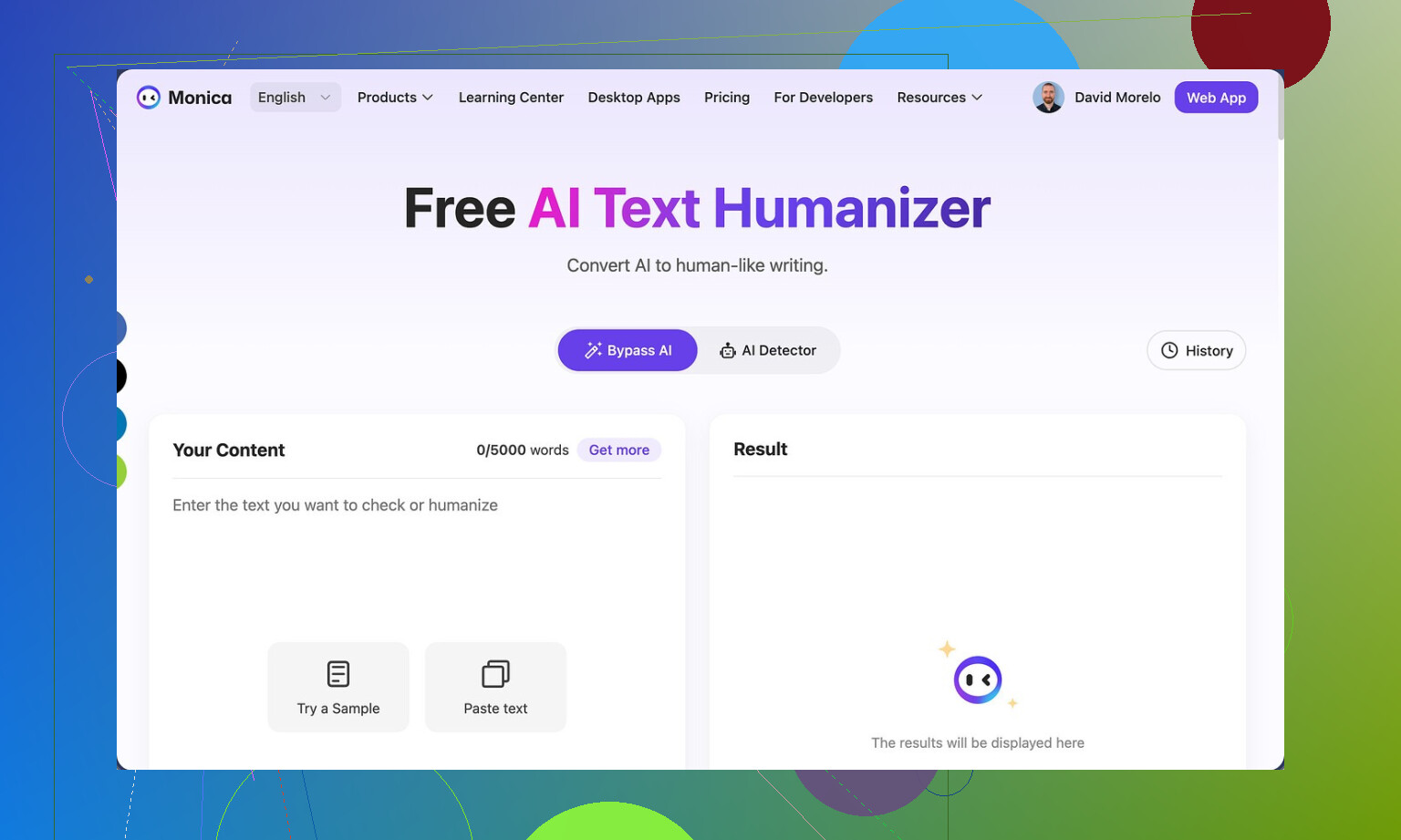
I fed Monica a few test texts that I already knew were AI written and then ran the outputs through different detectors. I wanted to see if it helps in real use, not in some perfect-lab scenario.
Here is what I ran into.
One button, no control, no tuning
The humanizer is literally a single button.
No tone options.
No “level of rewrite”.
No choice of style.
You paste text, press the button, get output. That is it.
For casual stuff, that might be fine. For anything where you care about detection scores, it is a problem, because you are stuck with whatever it spits out. If it fails a detector, you have no knobs to tweak. You have to regenerate and hope.
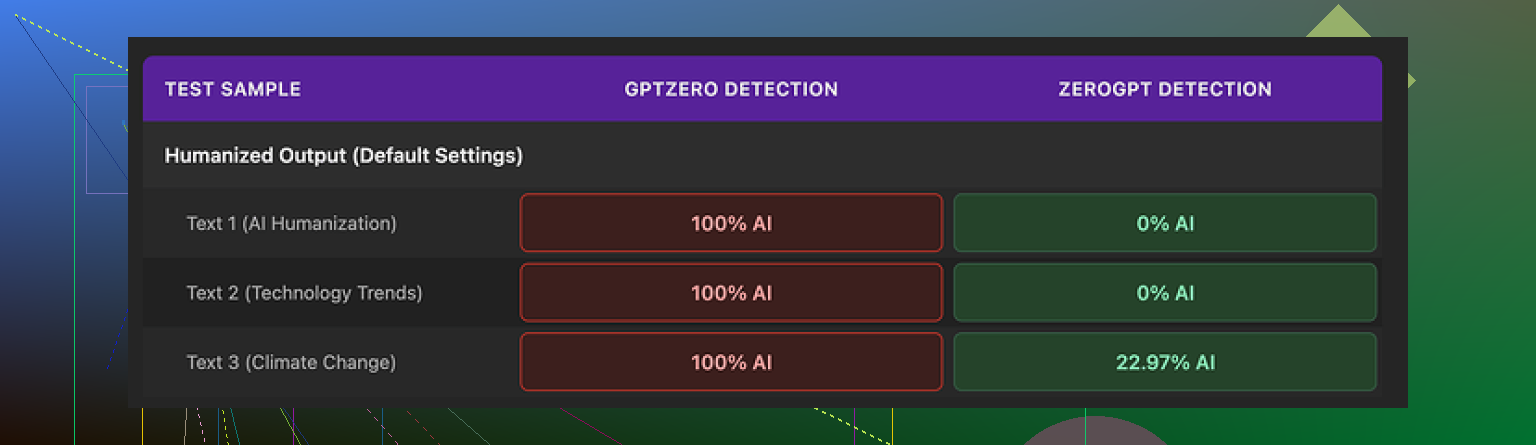
Detector results: GPTZero hated it
I pushed three different Monica outputs through multiple detectors.
GPTZero:
All three Monica outputs came back as 100% AI. Not “likely”, not mixed, full AI across the board.
ZeroGPT:
This one was less harsh. Two samples scored 0% AI, one landed somewhere around 23% AI. So ZeroGPT sometimes liked it, GPTZero never did.
The annoying part is you never know which tool your teacher, client, or employer is using. If GPTZero is in the mix, Monica’s humanizer feels too risky for anything important.
Quality of writing: 4/10, and that is me being generous
I scored the writing at about 4 out of 10 for practical use. Not unusable, but worse than the original AI text in some spots.
Stuff I saw:
• Random typos added to clean input
One example: it changed “But” to “Ubt”. That is not human, that is broken.
• Weird bracket artifact
One of the outputs started with “[ABSTRACT” out of nowhere. There was no abstract in the input, nothing academic, so this looked like some leftover template or bug.
• Punctuation chaos
It added or removed apostrophes where they did not belong. It felt more like noisy editing than human-style rewriting.
• Em dash problem
The original text had em dashes. Monica kept them and sometimes inserted new ones.
For AI detection, those long, clean, structured sentences with em dashes tend to flag more. A humanizer should push text toward more natural punctuation, not amplify exactly the thing detectors often latch onto.
Pricing and where the humanizer fits in Monica
Monica is mainly an all-in-one AI tool. It has:
• Chatbots
• Image generation
• Video features
• Other general AI utilities
The humanizer sits on the side as one more feature, not the core of the product.
Pricing for Pro starts around $8.30 per month if you pay annually. The humanizer is part of that package, not a separate subscription.
So if you already pay for Monica for its other tools, the humanizer is sort of a free extra to mess with. In that situation, I would say try it, see if it passes whatever specific detector you deal with. For totally free experimentation, why not.
If you care about bypass specifically
For people who only care about detection bypass, I would not pick Monica as the main tool.
My side-by-side tests against Clever AI Humanizer showed:
• Clever gave outputs that felt more like a human edited them by hand
• Clever scored better on detectors across the same sample texts
• Clever did not require payment, which matters if you only want this one narrow function
You can check the full comparison and screenshots here:
Quick verdict from my own use
• Detection reliability
Too fragile if GPTZero is involved.
• Text quality
Downgraded some inputs, added strange errors, kept “AI-looking” patterns.
• Value
OK as a bonus inside Monica if you already use Monica for other stuff.
Not worth subscribing to Monica for this feature alone.
If your goal is to get past detectors with as little headache as possible, I would reach for something like Clever AI Humanizer first and keep Monica’s humanizer as a secondary, “I already pay for this anyway” option.
I had the same reaction to Monica’s humanizer. It feels more like a 1‑click paraphraser than something that makes your writing sound closer to how you speak.
Short version
• Tone: Slight improvement in flow, but often generic.
• Readability: Sometimes better, sometimes worse.
• “Natural”: Mixed. It often keeps AI‑style structure.
• Detection: Too risky if someone uses GPTZero.
I saw similar stuff to what @mikeappsreviewer described, but my take is a bit different on a few points.
What I saw in my tests
I ran 5 samples. All were pure AI text from a regular chatbot.
- Style and tone
Monica tends to:
• Keep long, structured sentences.
• Reuse the same transitions like “overall” and “on the other hand”.
• Add small rephrases without changing rhythm.
That helps a bit if your original text is stiff, but it still feels “AI flavored”. If your goal is human tone, you will still want to do a manual pass.
- Weird errors
I did not hit things as bad as “Ubt” or random “[ABSTRACT”, but I saw:
• Articles missing.
• Awkward comma placements.
• Words swapped that slightly change meaning.
So you need to proofread every output. You cannot paste it into a school paper or client work without checking.
- AI detectors
My results, different sample set from @mikeappsreviewer:
• GPTZero
3 texts flagged as “likely AI”.
2 texts flagged as “mixed”, but still heavy AI score.
• ZeroGPT
2 texts under 10 percent AI.
3 texts between 20 and 40 percent AI.
So you might pass some softer detectors, but GPTZero is rough. If your teacher or client uses GPTZero, Monica feels like a coin flip.
Where I slightly disagree with @mikeappsreviewer
For me, the quality was more like 5 or 6 out of 10, not 4. It did help smooth some clunky sentences. It is not useless. It is just not reliable if you worry about detection.
Also, the “one button, no control” thing is the biggest limiter. If there were:
• Tone presets, like “casual”, “formal”, “blog”.
• Intensity slider, light edit vs heavy rewrite.
Then you could tune outputs for your use. Right now you dump text in, hope it comes out better, and sometimes it does not.
What I would do if I were you
If your main goal is better tone and readability:
• Use Monica as a first pass.
• Then manually edit to sound like you.
– Shorten sentences.
– Add phrases you normally use.
– Strip generic transitions.
If your main goal is AI detection avoidance:
Monica is not the right primary tool. It helps a bit, but it is not built around that use case.
Something like Clever AI Humanizer is more specialized for that job. It focuses on rewriting in a way that looks more like a human revision and tends to score better across detectors. If you want to reduce AI flags, check out this dedicated AI text humanizer and compare outputs from the same input text.
SEO friendly version of your topic
Monica AI Humanizer Review: Is It Making AI Text Sound Human or Just Rewriting It?
I tested Monica AI Humanizer on several AI generated articles to improve tone, clarity, and flow. I wanted my content to read more like natural human writing, rather than stiff machine output. The main concern is simple. Does Monica AI Humanizer make AI text sound human enough for real use in blogs, school work, or client projects, or does it only apply surface level changes while still getting flagged by AI detectors?
That is the core issue you are running into, and based on testing, your doubts make sense. Treat Monica’s humanizer as a light editing tool, not a detection shield. For serious detection concerns, compare it side by side with a focused option like Clever AI Humanizer, then pick what matches your risk level and quality needs.
You’re not crazy to feel like Monica is just shuffling words around.
I had a similar experience and my take kinda sits between what @mikeappsreviewer and @jeff said:
- It does tweak tone a bit, but the “voice” still feels AI flavored. Same long sentences, same safe transitions, same neutral vibe.
- On stuff I tried, it sometimes reduced clarity. A couple of lines looked like a paraphrase done for the sake of being “different,” not more natural.
- The single button design is the real limiter. No control over tone, no “light edit vs deep rewrite,” so if it misses the mark, you are basically copy paste roulette.
Where I slightly disagree with them: I don’t think it is completely useless. For blog drafts or casual emails, it can smooth some stiff phrasing and save a bit of time. But if you are worried about AI detection or you need something that sounds like a specific human voice, it is not enough on its own. You still need a manual pass to inject your own quirks, shorten sentences, and kill that generic “AI essay” rhythm.
If detection is part of your worry, Monica honestly feels like a risky bandaid. Detectors change constantly, and what I saw lines up with their tests. Softer tools might let it slide, but GPTZero-style checkers still tag it a lot. That is the part I would not rely on for school, client work, or anything where consequences matter.
For that kind of use case, you might want to compare it directly with something more focused on this problem, like this dedicated AI text humanizer for more natural content. Take a paragraph you know is AI, run it through Monica and then through Clever AI Humanizer, and literally read them out loud. Whichever one sounds closer to how a real person in your niche actually talks is the one to keep in your toolbox.
Quick, more search friendly version of your topic that matches what you are dealing with:
“Monica AI Humanizer Review: Does It Really Make AI Text Sound Human?
I tested Monica AI Humanizer on several AI generated articles to improve tone, readability, and flow. The goal was to make the content feel more natural and less like machine written text. In practice, Monica often changes wording on the surface while keeping the same AI style structure, which raises concerns for anyone worried about AI detection or authenticity. The tool can mildly improve some sentences, but it still requires careful manual editing if you want truly human sounding content for blogs, school assignments, or professional projects.”
If that matches your experience, you are not imagining it. Monica is fine as a quick clean up tool, not a magic “humanizer” switch.
Monica’s humanizer feels like a “style filter” more than a real voice changer. Where I slightly diverge from @jeff, @cazadordeestrellas and @mikeappsreviewer is that I think its biggest problem is sameness, not just detection. It keeps the same argumentative skeleton: intro, neat transitions, balanced clauses, tidy conclusion. That structure screams AI even if individual sentences look okay.
If your goal is to sound like you, structure matters more than word swaps. No automatic tool that preserves the same paragraph rhythm will fully fix that.
On the detection side, I would treat Monica as neutral: sometimes it helps, sometimes it hurts. The inconsistency is the real risk, which all three already hinted at.
Where something like Clever AI Humanizer fits in:
Pros
- Tends to break up that classic AI essay cadence with more varied sentence lengths.
- Often rewrites at a deeper level so paragraphs feel less templated.
- Better at nudging tone toward conversational, which helps with “this sounds like a person” vibes.
- More oriented around the humanizing task instead of being just another side feature.
Cons
- Still not a full replacement for a human edit, especially if you need your specific voice or domain slang.
- Results can occasionally overshoot and get too casual for formal use, so you may need to dial it back manually.
- No tool can guarantee bypass of every detector, so you are still exposed if someone relies heavily on strict checkers.
If I were in your spot:
Use Monica only as a light polish on things you already plan to edit by hand. For anything where tone and detection both matter, run the same text through Clever AI Humanizer, compare them aloud, then manually tweak whichever version is closer to how you actually talk. That mix of specialized humanizer plus your own editing is safer than trusting Monica’s single button to “fix” AI-ness by itself.
The reviews describe surface edits and uneven results. They offer little evidence of Monica matching your personal voice.
Try replacing the rewrite step with a voice note. Read your draft, save three key points, then close it. Record yourself explaining those points to a friend for one minute. Use your phone’s dictation to turn your explanation into text.
Check names, numbers, and missing details against the orginal. Fix spelling before sharing.
Dont add another humanizer. Start with your own spoken explanation instead of another rewritten version.