My large USB drive suddenly stopped opening after I moved a lot of important files, and now Windows either freezes or says the drive needs to be formatted. I’m trying to find the best USB data recovery software for large drives that can safely recover photos, videos, and work documents without making things worse. If anyone has used a reliable tool for this kind of external drive data loss, I’d really appreciate the help.
# USB file recovery, what worked for me after a few bad mistakes
I’ve had this happen enough times to know the feeling. You plug in a flash drive, Windows throws a format prompt, or the folder opens empty, and your stomach drops a bit. USB deletions do not land in the Recycle Bin, so when stuff vanishes, it tends to vanish hard.
If you need a tool right now, I’d skip the fake-free stuff which scans fine and then blocks recovery behind limits or missing features. What helped me most was using software with a decent recovery rate and a UI I didn’t need a manual for. For most people, a proper recovery app works better than a simple undelete tool, especially after formatting or file system damage.
## The one I kept going back to
For a solid all-around pick in 2026, Disk Drill kept being the one I saw recommended, and yeah, I ended up using it more than once. I used it on a USB stick with lost work docs, and on an SD card which went weird halfway through a transfer.
What stood out to me for USB jobs was the scan behavior. It checks with multiple recovery methods at the same time and looks for 400-plus file types. I did not sit there counting file signatures or anything nerdy like tha, but the results were better than the lighter tools I tried first.
The preview feature matters more than people think. I learned this the annoying way. A long scan means nothing if the recovered files open as junk. With preview, you get a quick reality check before spending time or money on the full recovery.
Another part I’d use again is the byte-to-byte backup option. If your flash drive disconnects randomly, freezes Explorer, or makes Windows hang, stop poking the original drive. Make an image first. Then scan the image on your PC. Less stress on the failing device, better odds for your files. On Windows, there’s usually a free recovery allowance up to 100MB, which is enough to test whether the scan is finding the right stuff.
## If you like tools with too many settings
R-Studio is the one I’d put in the heavy-duty bucket. I tried it after easier tools came up short. It is not friendly. Menus everywhere, technical labels, lots of ways to click the wrong thing if you’re rushing. Still, for damaged partitions or ugly logical issues, it goes deeper than most consumer apps.
I also liked the one-time purchase model more than recurring billing. The downside is the price feels more like an investment than an impulse buy.
## Free options, with the usual catches
If your budget is zero, I’d break it down like this.
### Recuva
This is the easy one. Fast to install, easy to run, low friction. If you deleted a file by mistake and stopped using the drive right after, it has a fair shot. I’ve seen it pull back simple deletions without much drama.
Where it fell off for me was after formatting, or when the USB started showing up as RAW. In those cases, it missed files paid tools found later. So I’d treat it like a first pass, not the final word.
### PhotoRec
PhotoRec is what I used when I was out of patience and money. It is free, open source, and way more capable than its interface suggests. It ignores the file system and scans raw sectors for file signatures, which helps when the partition table or file system is trashed.
The tradeoff is rough. No normal graphical interface. No tidy folder structure. Original file names are usually gone. You get a pile of files with names like `f12345.jpg`, then you sort the mess by hand. It works, but you pay in time.
## Three rules I wish more people followed
### 1. Unplug the drive as soon as you notice the loss
Overwriting kills recoverability. Windows writes background data in places you do not expect. Even tiny writes matter. If new data lands where your deleted file used to live, recovery odds drop fast.
### 2. Never save recovered files back onto the same USB drive
I’ve seen people do this in a rush. It’s one of the worst moves you can make. If you recover from the USB, save the output to your desktop, internal SSD, or another external drive. Writing back to the same stick risks overwriting the exact data you are trying to rescue.
### 3. Check Disk Management before installing random apps
This step saves time. If Windows does not detect the device at all, software recovery is not going to fix it. At that point you’re looking at hardware failure and lab work. If the drive appears as RAW or Unallocated, software still has a shot.
## What I’d do first
I’d start with the trial of Disk Drill and see what the preview shows. If your files appear there and they open properly, you’re in decent shape. If not, move to something more technical like R-Studio, or go with PhotoRec if you need a free last-resort option.
That path saved me more than once. Hope your files are still there.
If Windows freezes when you open the USB, stop using the drive first. For a large USB drive, I would rank the options a bit differently than @mikeappsreviewer did.
My pick for this case is UFS Explorer or R-Studio first, Disk Drill second.
Why. Large drives with file system damage often need better handling of broken NTFS or exFAT metadata. UFS Explorer is less pretty, more technical, and often stronger when the drive shows RAW, unallocated space, or half-broken folders. R-Studio is also strong if the partition got damaged during the move. Both are better if you care about rebuilding folder structure on a big volume.
Disk Drill is still worth trying, esp if you want a faster first pass and easier preview flow. If it sees your files with correct names and sizes, that is a strong sign. This Disk Drill review for USB and external drive recovery gives a decent quick read before you install anything.
What I would do:
1. Check Disk Management. See if capacity looks correct.
2. If the drive disconnects or hangs, clone it first with HDDSuperClone or ddrescue.
3. Scan the clone, not the USB.
4. Try UFS Explorer or Disk Drill trial. Compare file tree, previews, and scan time.
5. Recover to another drive only.
One point where I disagree with @mikeappsreviewer. Recuva is too weak for this sort of failure. I would skip it and save time.
If the drive size shows wrong, makes clicking noises, or drops offline, software is the wrong path. That needs lab work, no way arond it.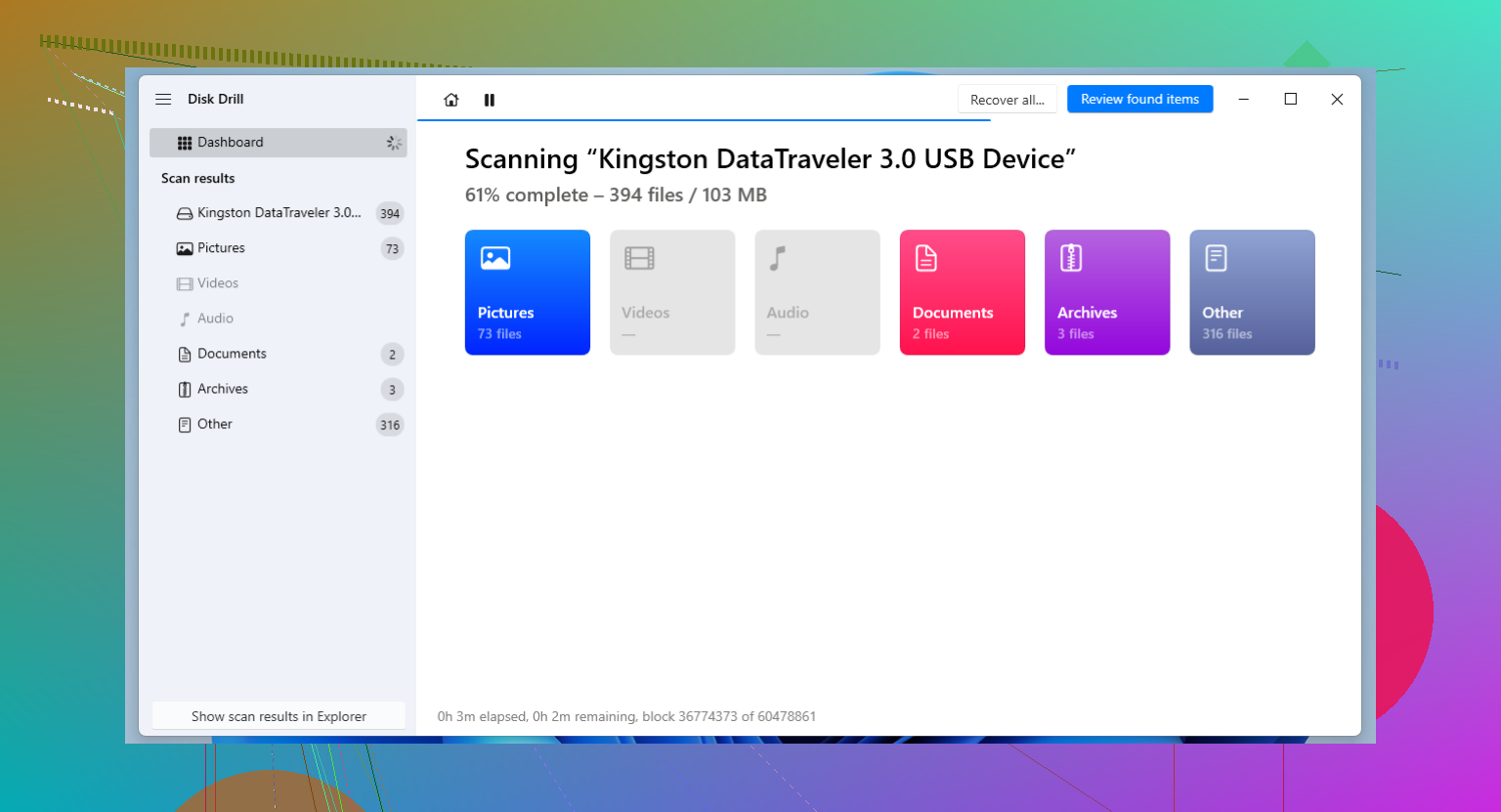
If Windows freezes when you click the USB, I would not keep testing it in Explorer. That part matters more than which app you pick.
I mostly agree with @jeff on skipping Recuva here. For a large USB that now wants formatting, you need actual partition/file system recovery, not a basic undelete tool. I slightly disagree with @mikeappsreviewer on putting the easiest tool first if the drive is acting unstable. On a big drive, scan time is long, and repeated retries can be rough on a dying device.
My take:
- If the drive is still detected with correct size, start with **Disk Drill** or **UFS Explorer**
- If you want easier preview and less fiddling, **Disk Drill** is probably the best USB data recovery software for large external and flash drives in normal home use
- If folder structure is badly damaged and you can handle a nerdier interface, **UFS Explorer** or **R-Studio** can be stronger
One thing I’d add that they didn’t really stress enough: sometimes the USB enclosure/adapter is the problem, not the file system. If this is a large external USB drive, try a different cable, different port, and if possible a powered hub or another PC before doing a 10-hour scan. Sounds dumb, but I’ve seen that fix “RAW” drives more than once.
Also, if you want a broader list of best data recovery software options for USB drives and large external disks, that roundup is worth checking.
Short version: **Disk Drill** first for usability and preview, **R-Studio/UFS Explorer** if the damage looks uglier than expected. If the drive drops offline, clicks, or shows the wrong capacity, stop messing with software becuase that’s lab territory.
I’m a little less bullish on jumping straight into UFS Explorer for everyone. On a huge USB volume, the best tool is often the one that lets you quickly verify whether the file tree is still sane before you waste half a day scanning.
So my order would be:
1. **Disk Drill**
2. **R-Studio**
3. **UFS Explorer**
Why this order:
- **Disk Drill pros:** easier file preview, cleaner filtering on very large scans, decent image/backup workflow, fast enough for a first reality check
- **Disk Drill cons:** not the deepest metadata reconstruction tool when NTFS/exFAT damage is really ugly, and big scans can still take forever
- **R-Studio:** stronger when the partition map or file system records are badly damaged
- **UFS Explorer:** powerful, but a lot less forgiving if you are not used to recovery software
I agree with @jeff, @vrijheidsvogel, and @mikeappsreviewer on one core point: if Explorer freezes, stop opening the drive normally.
One thing not stressed enough: if this happened right after moving files, there’s a chance the issue is not “deletion” at all but a corrupted directory index or interrupted write cache flush. In that situation, judging software by raw file carving alone can be misleading. You want the app that preserves names and folders, not just one that finds 200,000 anonymous files.
So for your case, I’d use **Disk Drill** first as a triage tool. If previews look good and filenames are intact, great. If results are messy, escalate to R-Studio. If the USB disconnects, reports weird size, or stalls the system repeatedly, stop software attempts and treat it as a failing device.