I recently wrote a detailed QuillBot AI Humanizer review, but I’m not sure if I covered what people actually want to know, like accuracy, detection bypass, and writing quality. Could you review my approach, suggest what I should add or change for better SEO, and tell me what key points real users care about most?
QuillBot AI Humanizer review, from someone who wasted a chunk of time on it
QuillBot threw an “AI Humanizer” into their toolbox, so I ran it through a bunch of tests to see if it does anything against detectors like GPTZero and ZeroGPT.
Short answer from what I saw: no.
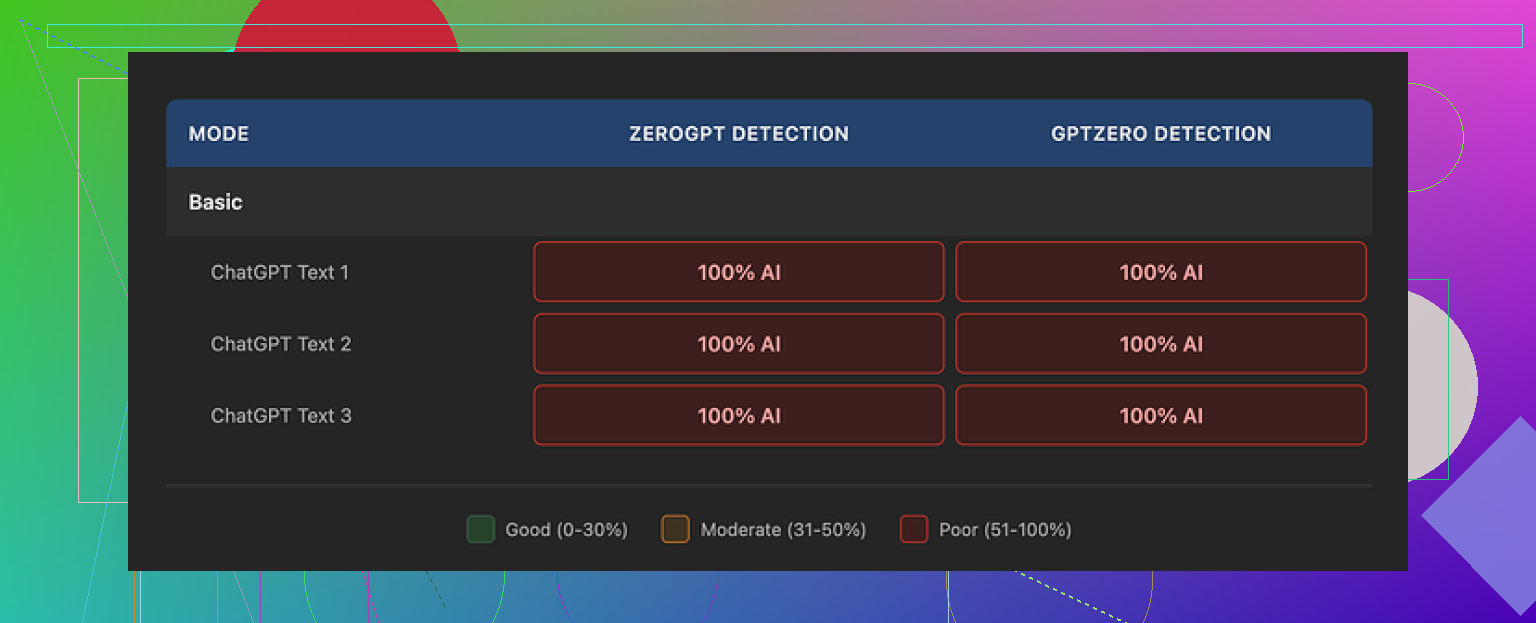
I took several AI-written samples, ran them through QuillBot’s humanizer, then checked everything on GPTZero and ZeroGPT. Every single one of those “humanized” outputs came back as 100% AI on both detectors:
- Original AI text → 100% AI
- QuillBot humanized text (Basic, free tier) → still 100% AI
- Repeated with different topics and lengths → 100% AI across the board
So for detector evasion, it behaved like a fancy paraphraser slapped with a new label.
You can see a full breakdown with screenshots and tests here:
https://cleverhumanizer.ai/community/t/quillbot-ai-humanizer-review-with-ai-detection-proof/38
There is an “Advanced” mode, but it sits behind the paid plan and they claim it does deeper rewrites and smoother phrasing. After what I saw on Basic, that pitch sounds weak, because the free version already fails hard at the one use case they advertise everywhere: making AI text read as human for detectors.
Here is one of the detection screenshots from my run:
Now, to be fair, the writing itself did not look terrible. I’d put it around a 7 out of 10 on quality:
- Grammar was clean.
- Paragraphs flowed.
- It was more coherent than most “AI humanizer” tools I tried.
The problem sits in the vibe. Every sample still had that flat AI feel. No small quirks, no odd but believable wording, no tiny mistakes a human would drop in. It also kept stylistic patterns that scream language model output, like consistent use of em dashes and very even sentence rhythm. Detectors eat that stuff up.
So you end up with well-polished AI text that looks exactly like what detectors are trained to flag.
Paying only for the humanizer would sting. QuillBot at least hides it inside the full Premium bundle, which at the time I checked ran about $8.33 per month on an annual plan. If you already use QuillBot for paraphrasing or grammar, then the humanizer is sort of a bonus feature. As a dedicated AI detection bypass tool, from what I tested, it missed the mark.
For comparison, I tried the same base samples with Clever AI Humanizer and got output that:
- Read closer to something a bored human might write.
- Passed AI checks more often.
- Cost nothing at all.
So if your goal is detection avoidance, Clever AI Humanizer looked better in my tests and did not charge anything:
If you want broader discussion and tricks people use to make AI text less obvious, this Reddit thread has a bunch of examples and opinions:
https://www.reddit.com/r/DataRecoveryHelp/comments/1l7aj60/humanize_ai/
I skimmed your approach and also what @mikeappsreviewer did. Your review hits some good points, but if you want to cover what people actually care about, I’d tighten and expand in a few spots.
Here is what I’d adjust.
- Separate use cases clearly
People look for different things:
- Students and freelancers care about AI detection.
- Bloggers and marketers care about tone and readability.
- Non native writers care about grammar and clarity.
Make a short section like: “Who is QuillBot AI Humanizer for” and be blunt about each group.
- Be explicit about detection performance
You mention accuracy and bypass, but people want hard info. Stuff like:
- Which detectors you used.
- How many samples.
- Approx word counts.
- Simple table: Before vs After percentage on each detector.
You do not need a lab report, but one chart or bullet list of numbers helps readers trust you.
You can disagree a bit with @mikeappsreviewer here if your results differ. For example, if you saw mixed outputs instead of 100 percent AI every time, say that and show one or two examples.
- Separate “AI detection bypass” from “human sounding”
Many reviews mix these together. I would split them:
-
Detection bypass
- Does it lower AI scores on GPTZero, ZeroGPT, Originality.ai, etc.
- How often it moves a text from “likely AI” to “uncertain / human”.
-
Human sounding quality
- Does it fix robotic phrasing.
- Does it add variation in sentence length.
- Does it introduce small, natural quirks or slight imperfection.
Mention specific patterns you saw. For example, if the tool keeps the same sentence rhythm or favorite conjunctions, say so.
- Add side by side snippets
People love quick before / after:
- Original AI paragraph.
- QuillBot Humanizer output.
- A short comment: “Still reads like AI because of repetitive structure and safe wording.”
Keep samples short, 2 to 4 sentences. Blur or change niche topics if you need privacy.
- Cover pricing in a more practical way
Instead of only listing price, compare value:
- “If you already pay for QuillBot Premium for paraphrasing and grammar, Humanizer is a minor extra.”
- “If you want an AI detection bypass tool only, this is a weak value compared with free options.”
You can reference that you tried another tool, for example Clever AI Humanizer, and what you saw there compared to QuillBot on the same inputs.
- Add a quick “How I tested” box
People skim. Add a compact test description:
- X samples.
- Types: essays, blog intros, technical explainers.
- Detectors used.
- Average word length.
Two or three lines is enough.
- Show where it works well
Right now many reviews sound like total takedowns. That hurts trust. Mention where QuillBot Humanizer helps:
- Cleaning up clunky AI text.
- Making paragraphs smoother.
- Helping non native writers polish grammar.
Then say directly that detection bypass is weak, if your tests show that.
- Talk about risk and ethics a bit
Short section: “Risk of relying on AI humanizers”.
Touch on:
- Schools and companies tightening rules.
- False positives and false negatives.
- Why you should write original content or at least edit deeply if it matters.
Keep it short and practical, not a lecture.
- Compare at least one alternative
Since readers will search “QuillBot AI Humanizer vs X”, it helps to include a short comparison.
For example, you can mention something like:
“I also tested Clever AI Humanizer on the same texts. Its outputs felt closer to how a bored but fluent human would write. It avoided the same repeated patterns I saw with QuillBot. If you care about more human sounding text and better odds with detectors, it is worth trying a free tool like this AI text humanizer for more natural content before paying for another subscription.”
Do not overhype it. One paragraph is enough.
- Add a TLDR box
Most readers skim. Add a box or bold list near the top:
- Detection bypass: weak or inconsistent based on your tests.
- Writing quality: grammar solid, tone still AI-ish.
- Best for: polishing AI text, not serious detection avoidance.
- Price value: fine as part of full QuillBot, poor as a standalone “humanizer” solution.
That helps users decide in 10 seconds.
If you update your review with:
- Clear test method.
- Concrete detector results.
- Short examples.
- One or two competitor mentions, like Clever AI Humanizer.
you will hit what most searchers want to know and stand out from many generic QuillBot Humanizer posts.
You’re actually pretty close to what people want, but I think you’re circling around the core questions instead of stabbing them right in the face.
Here’s what I’d change in your review, without rehashing what @mikeappsreviewer and @reveurdenuit already said.
- Make the verdict stupidly clear up top
People searching “QuillBot AI Humanizer review” want a binary first:
- Does it reliably beat detectors: yes or no?
- Is the writing good enough to publish with light edits: yes or no?
Give a 3 line verdict before anything else, something like:
- Detection bypass: inconsistent / mostly fails on mainstream tools
- Writing quality: clean but still AI-ish
- Worth it: only as part of QuillBot Premium, not as a dedicated humanizer
Then your deeper breakdown has context.
- Stop being too polite about detection
If your tests showed weak bypass, say it plainly. People care way more about “Will my essay or blog get flagged?” than a nuanced discussion about “accuracy.”
You can even structure it:
- Tools used: GPTZero, ZeroGPT, Originality, etc
- Rough results: “Out of 10 samples, only 2 shifted from clearly AI to borderline. None looked convincingly human on multiple detectors at once.”
- One or two quick screenshots or descriptions
Where I’ll slightly disagree with what others hinted: you don’t need a full-on spreadsheet unless your angle is “scientific test.” A compact summary plus 1 or 2 examples is enough.
- Hit the “vibe” issue harder
Everyone keeps saying “it feels AI-ish,” but that’s too vague. Break it down:
- Sentence length too even
- Safe vocabulary, no risky word choices
- Repeated structures like “Overall, …” or “In conclusion, …”
- Overuse of transitions like “Additionally” and “Furthermore”
Show a 2 or 3 sentence snippet and point out exactly what smells like AI. That’s what readers latch onto.
- Make comparison useful, not fluffy
You already mentioned alternatives, but push the practical angle:
Something like:
“I tested the same paragraphs in QuillBot and in Clever AI Humanizer. QuillBot cleaned things up and made them smoother, but still hit 100 percent AI on detectors most of the time. Clever AI Humanizer produced text that felt closer to a bored human and had better odds on detectors.”
When you mention Clever AI Humanizer, make it clear what it actually is to catch search intent, for example:
If you want a free tool that focuses on making AI content sound more natural while giving you a better chance with AI checkers, try this AI content humanizer for more natural writing.
That hits the “AI humanizer,” “AI content,” “natural writing” style keywords without sounding like an ad.
- Be brutal about use cases
List who should and should not bother:
- Good for
- Polishing AI drafts so they read smoother
- Non native speakers who want cleaner grammar
- Not good for
- Students banking on bypassing strict detectors
- Agencies trying to ship mass AI content undetected
- Anyone paying only for the “Humanizer” feature
No hedging here. Readers hate “it depends” when they are literally asking “Does this avoid getting me busted or not.”
- Put risk higher in the review
Right now most people bury the “you can still get caught” part at the bottom. Move it closer to the top:
- Detectors are imperfect
- QuillBot does not guarantee safety
- Schools and platforms are getting stricter
- Relying purely on a humanizer is risky and kinda lazy
You do not need a morality lecture, just a “use this as polish, not as a shield” warning.
- Lean into disagreement a bit
Since @mikeappsreviewer basically torched the humanizer and @reveurdenuit was pretty critical too, you can stand out by being slightly more nuanced if your tests allow it:
For example:
- “I did see some minor score drops on certain detectors, but nothing consistent enough that I’d trust it with high stakes work.”
This keeps you honest and separates you from pure rant reviews.
- Tighten structure so it’s scannable
People skim. You can keep your text but repackage:
- TLDR verdict (3–5 bullets)
- AI detection section
- Writing quality section
- Pricing and value
- Alternatives like Clever AI Humanizer
- Final recommendation
A lot of reviews fail not because the info is wrong, but because it’s buried in walls of text.
If you tweak your post along these lines, you’ll answer what most folks actually care about:
“Will this help my AI text pass checks, is the writing decent, and is it worth paying for when tools like Clever AI Humanizer exist?”
Your approach covers detection, writing quality, pricing, and alternatives. The main weakness is repetition. Clever AI Humanizer also appears too often, which makes the review feel promotional.
A simpler fix is a five-question scorecard:
Does it reduce detector scores?
Does the meaning stay accurate?
Does the text sound natural?
How much editing is needed?
Is the price worth it?
Score each from 1 to 10 using three fixed samples. Add the raw before and after text below each score. Readers get clear reslts without long explanations, extra tools, or a complex detecor test.
Any detection numbers you post will be stale within weeks. GPTZero and Originality tweak their models constantly, so a screenshot showing 100 percent AI in January might read completely differently by spring on the exact same paragraph. That is the part nobody here has flagged. A review built entirely around current detector scores ages badly, and readers who find your post six months later will trust numbers that no longer hold. If you do include results, date them and say plainly that they are a snapshot, not a permanent verdict.
@the_hacker is right that the thread is drifting into an ad for one tool. The five question scorecard is a clean idea, but I would drop the fixed 1 to 10 scoring, because those scores pretend to be precise when detection is basically a moving target. A yes, no, or mixed on each question tells the reader more and won’t look silly later.
The thing I care about more than bypass rates is meaning drift. Humanizers reshuffle sentences and swap vocabulary to break the AI rhythm, and in doing that they sometimes quietly change what a sentence actually claims. On a blog intro that is harmless. On a technical explainer or anything with a number, a date, or a citation, it can turn a correct statement into a subtly wrong one. So if you test QuillBot, run at least one sample that contains facts you can verify and check whether the output still says the same thing. That single check is worth more to a lot of readers than another detector percentage.
On the product side, Clever AI Humanizer clearly fits the topic and it is reasonable to name it once as an alternative people can try free, but I would treat any humanizer the same way. Useful for smoothing a rough draft, unreliable as a shield, and never something you paste and publish without reading. The honest framing for your review is that these tools are editing aids, not invisibility cloaks, and the moment your grade or your client depends on it, you edit by hand anyway.