I’m checking a draft lab report with SciSpace AI Detector before sending it to my advisor. It flagged part of the methods section, which I wrote from notes in my paper notebook. How should I interpret that result, and is there a useful way to check whether the flag means anything?
I kept the inputs fixed
I ran the same six English passages through the checkers on October 2–3, 2026, without changing the text between submissions. Four were generated; the others were a Lewis Carroll excerpt and its lightly AI-edited version. I counted only completed results. Related samples and a single literary control made this a limited comparison.
I sorted the results by what went wrong
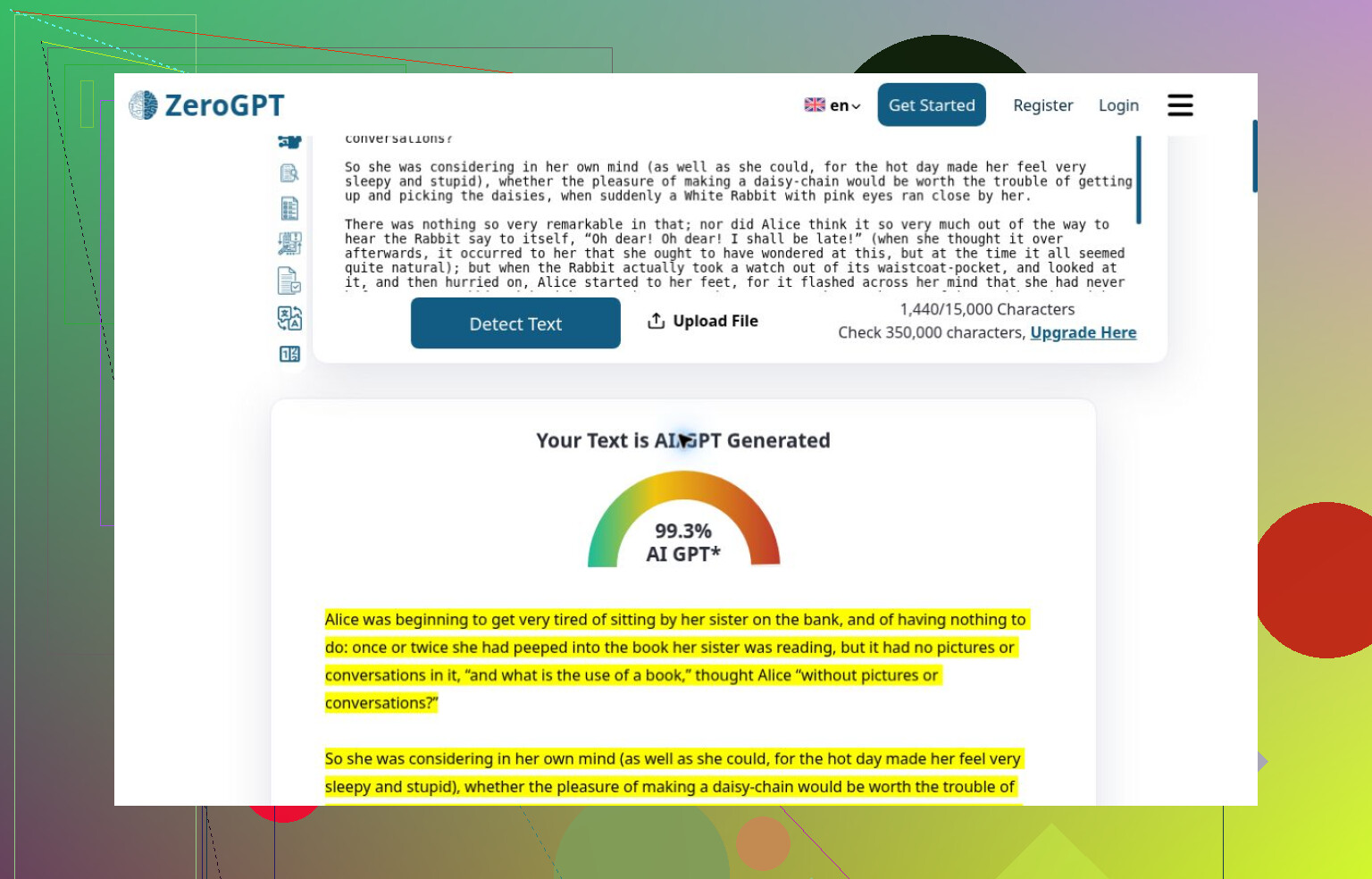
When I reviewed the results, the human control worried me first. ZeroGPT caught every generated passage but scored Carroll 99.3% AI.
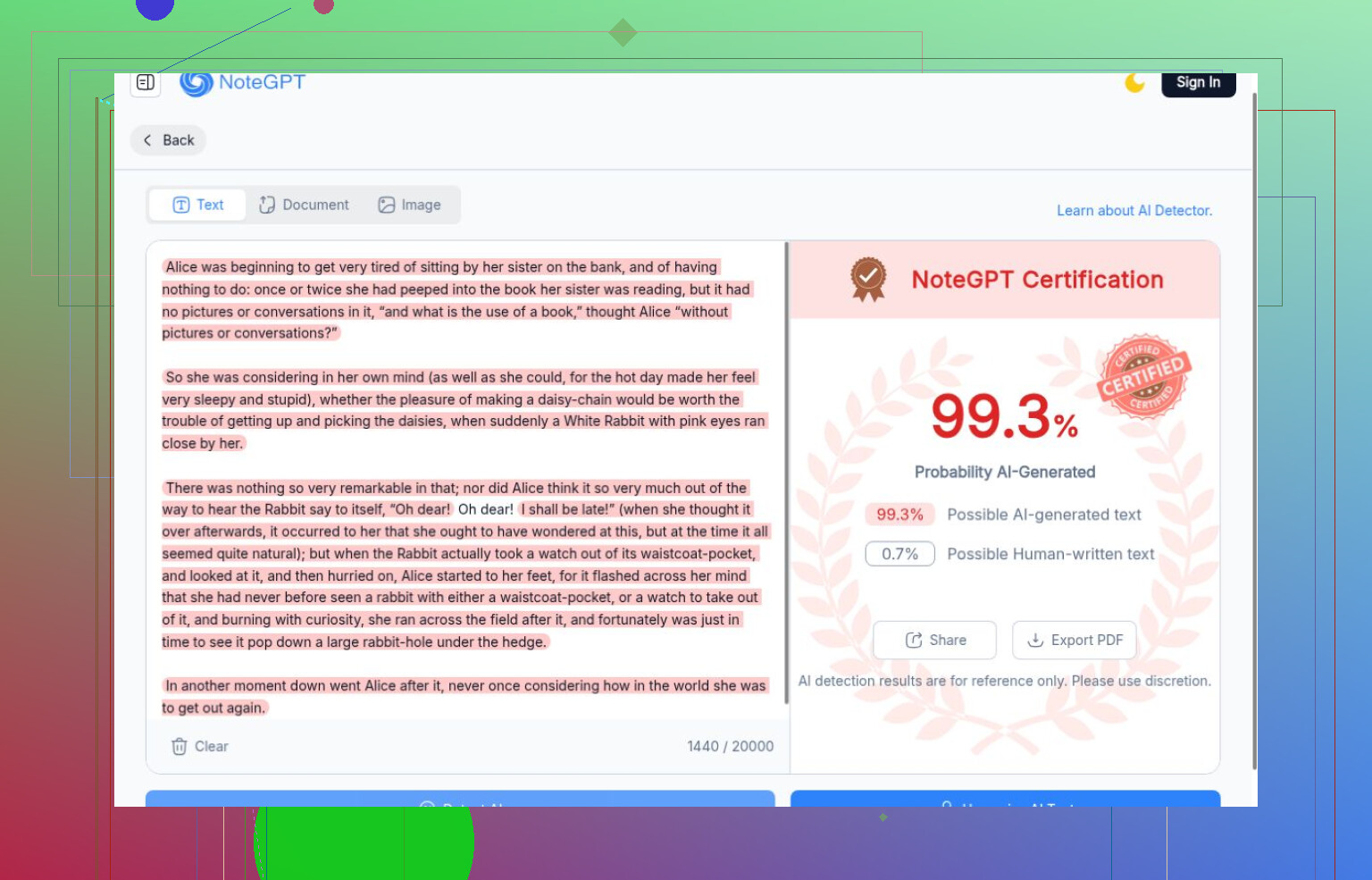
I found the same human-control problem with NoteGPT.
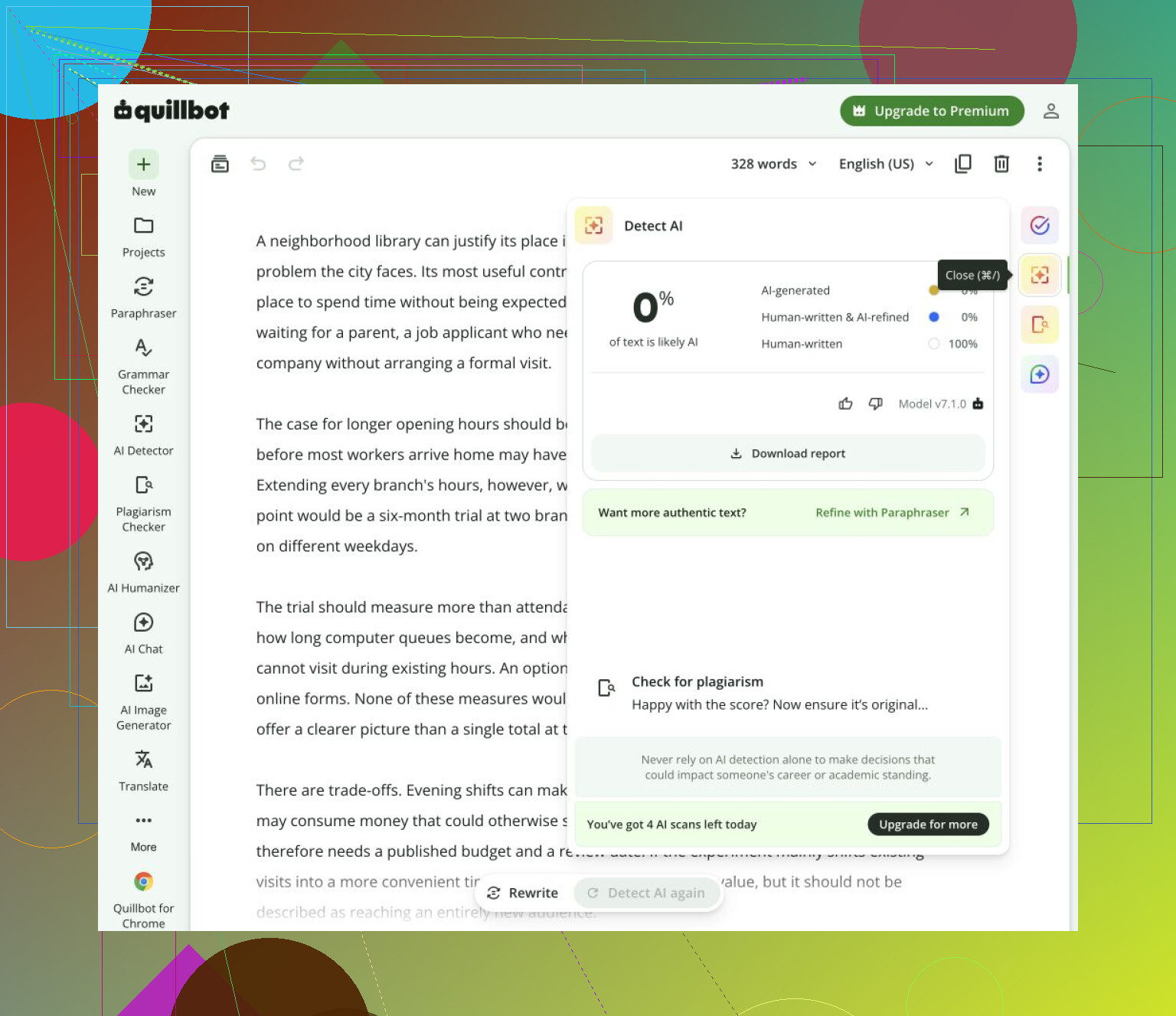
Then I grouped the misses: QuillBot called every generated passage human.
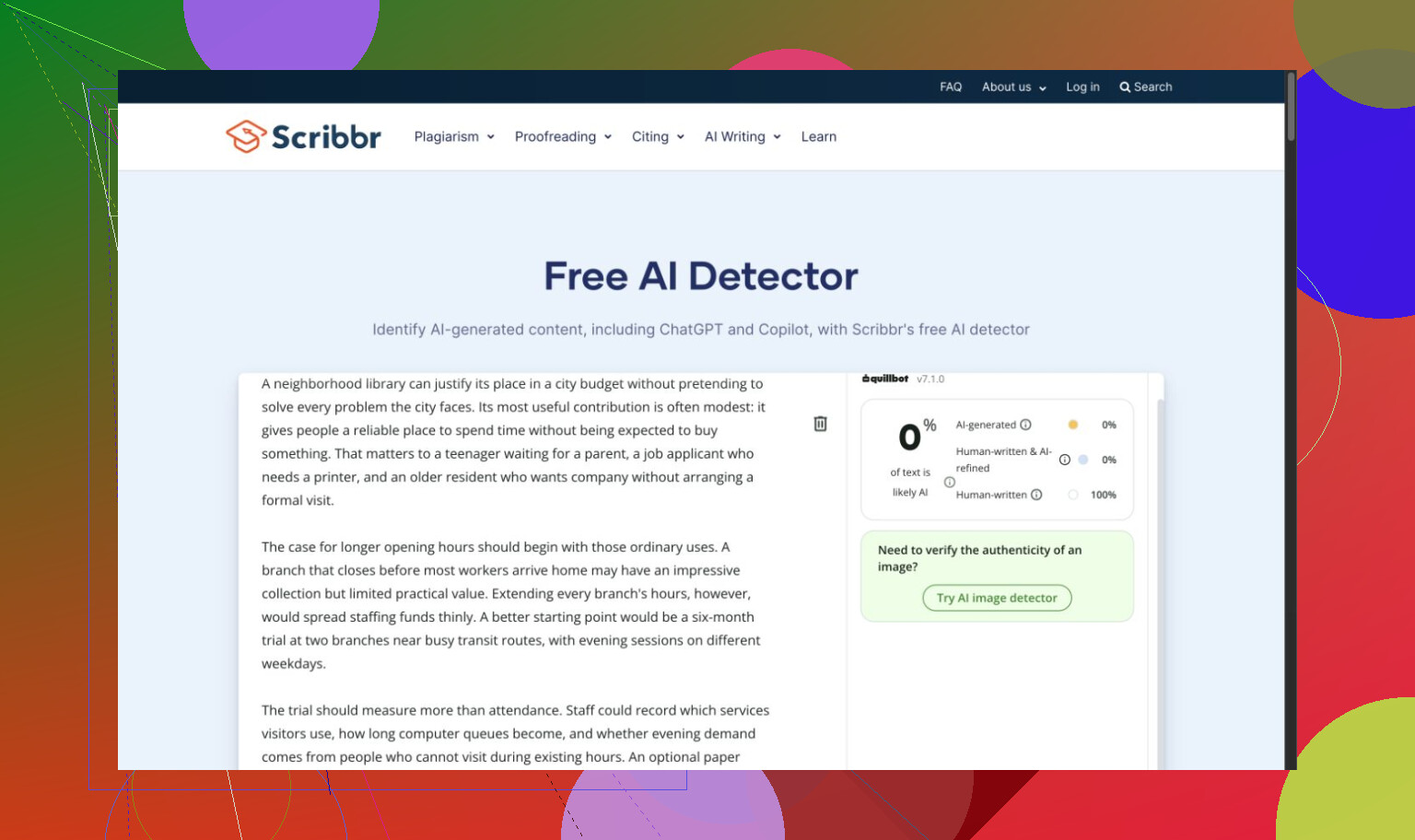
Scribbr missed the essay too.
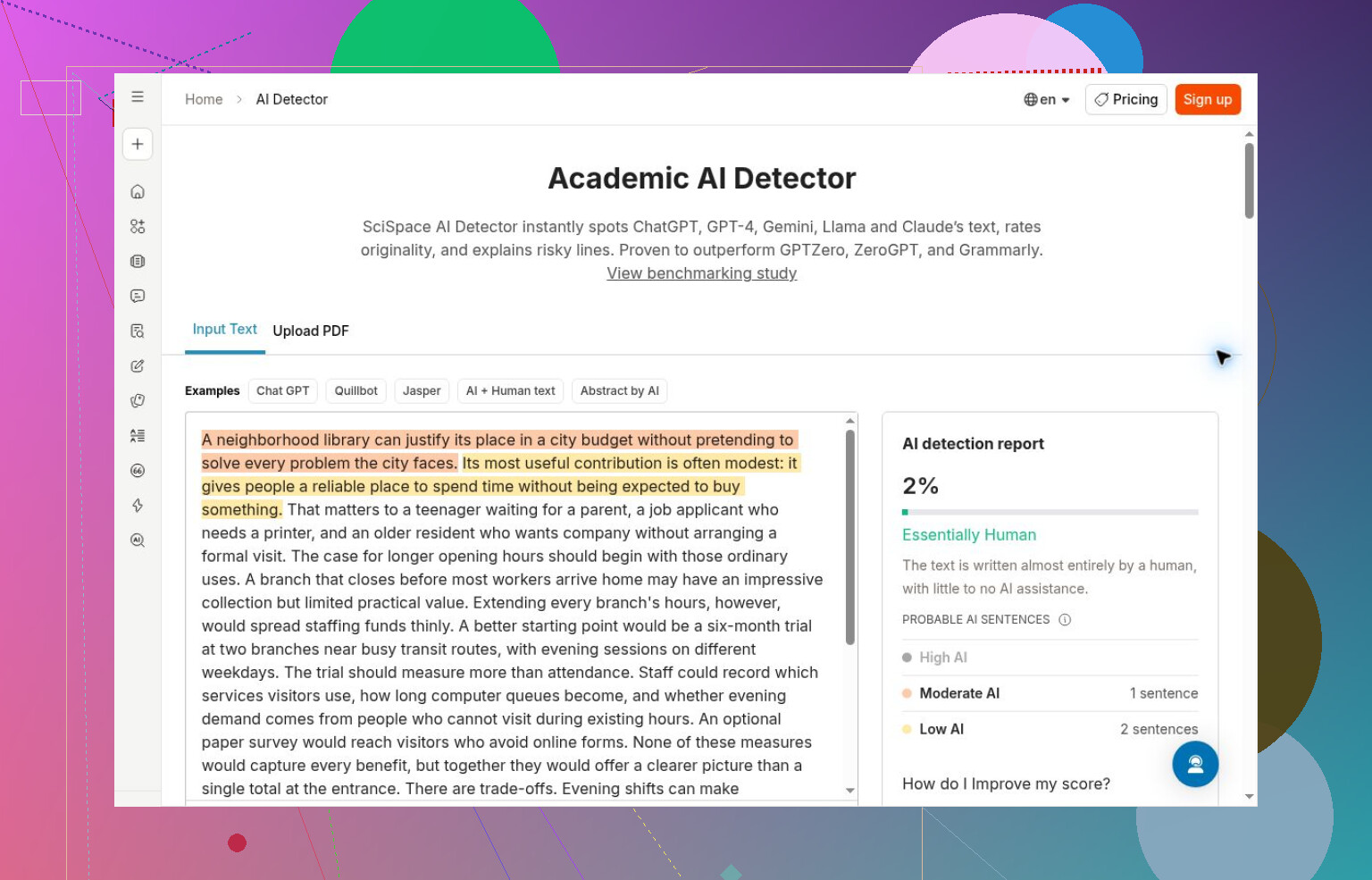
SciSpace gave it 2% AI.
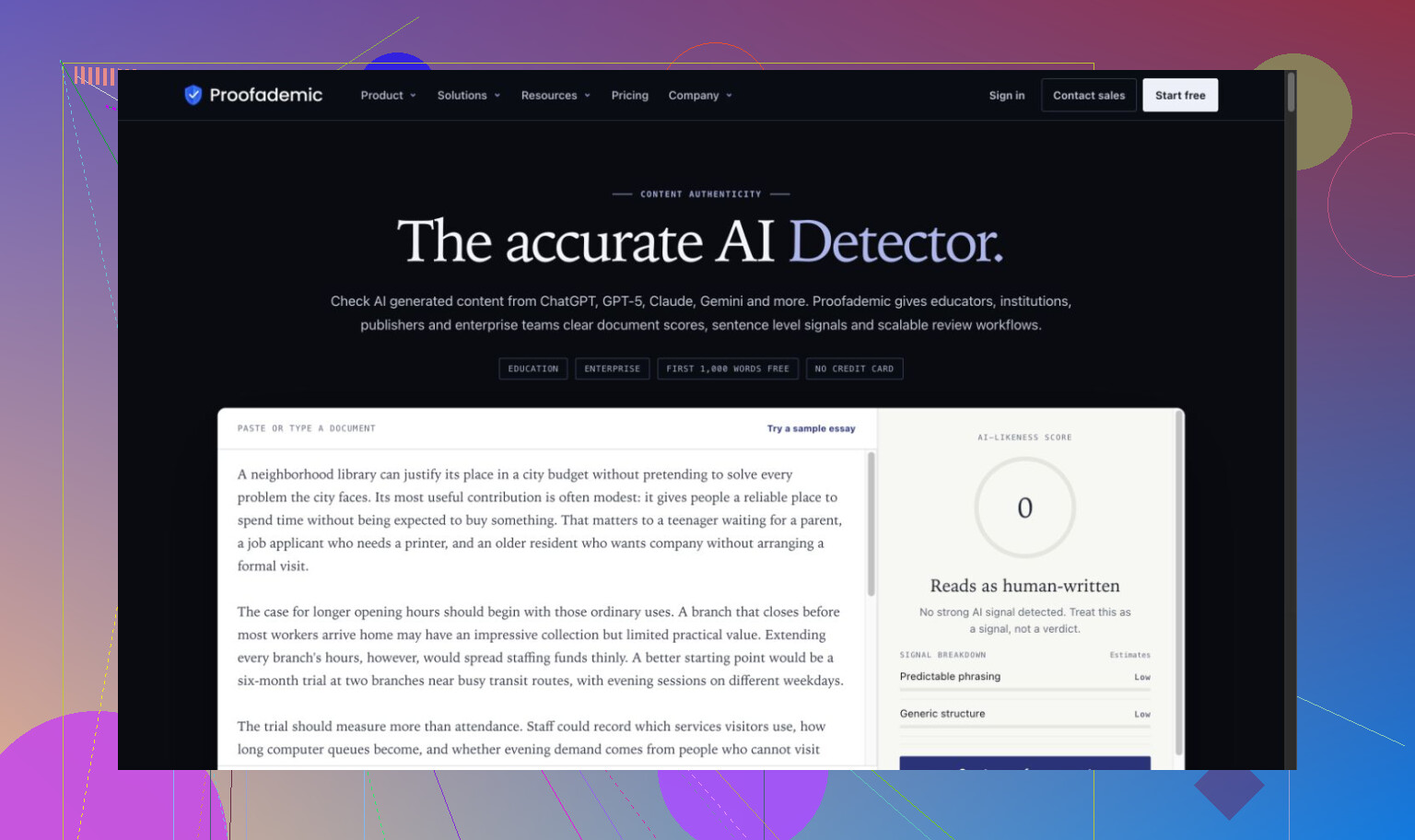
Proofademic’s public demo gave it 0/100 AI-likeness.
Surfer missed both generated samples I submitted.
Among successful checks, I got through the complete set with Clever AI Detector without paying or registering. It caught the generated passages and accepted Carroll, but also labeled the edited version Human 99%.
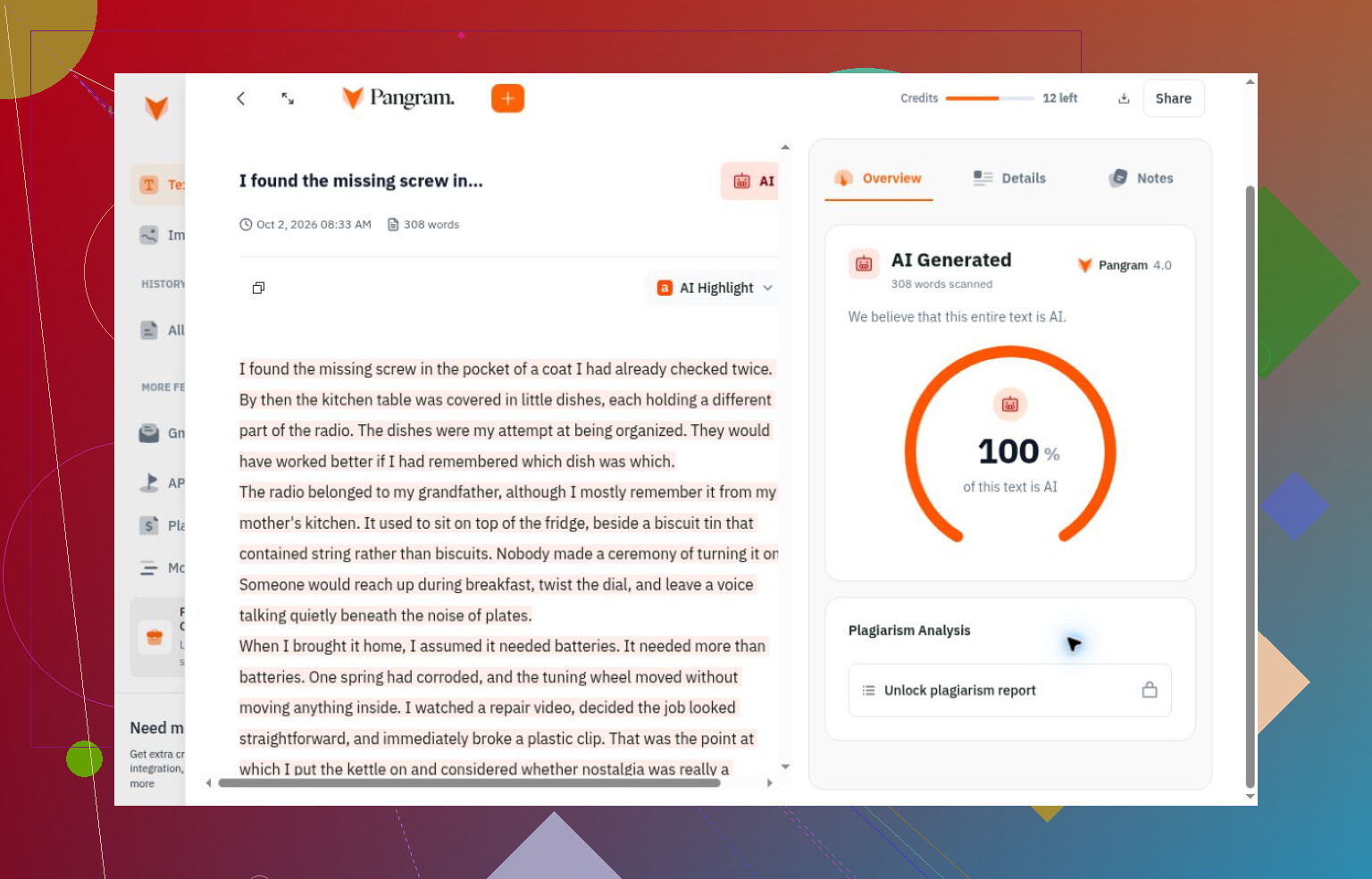
Pangram’s completed AI and human checks were correct.
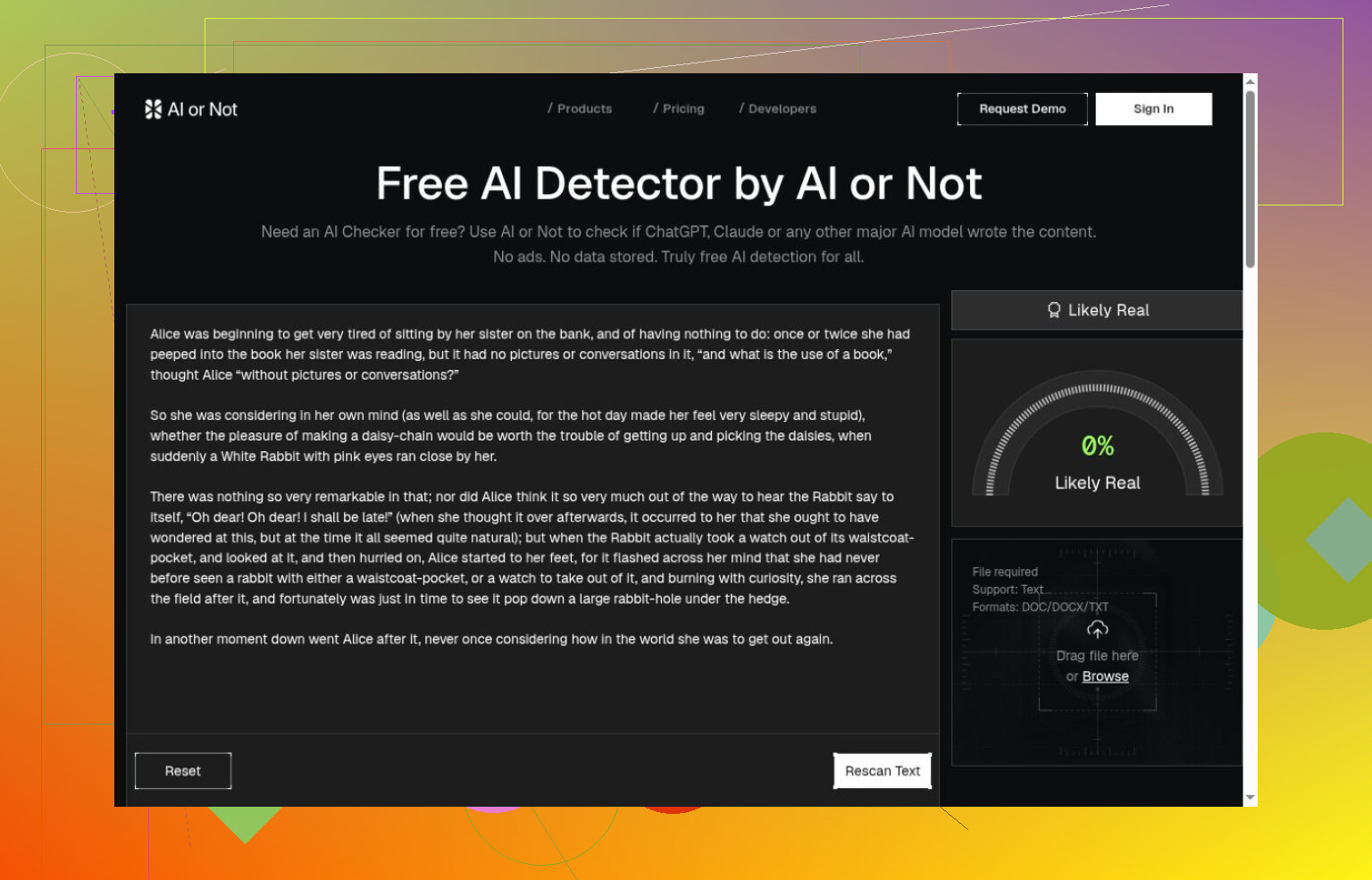
Originality.ai and AI or Not also passed their narrower checks.
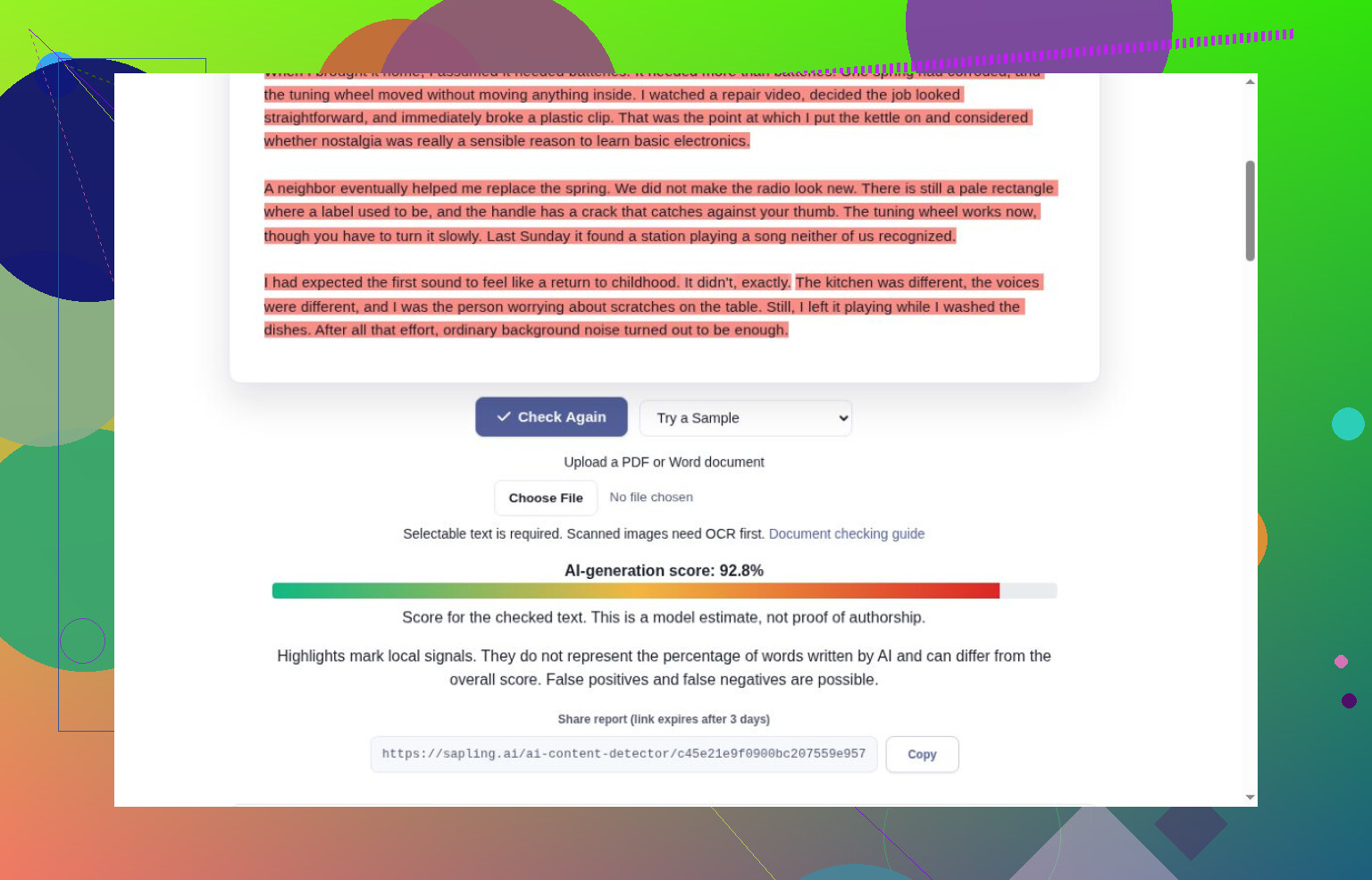
Sapling scored the story 92.8% AI, though its essay check was truncated.
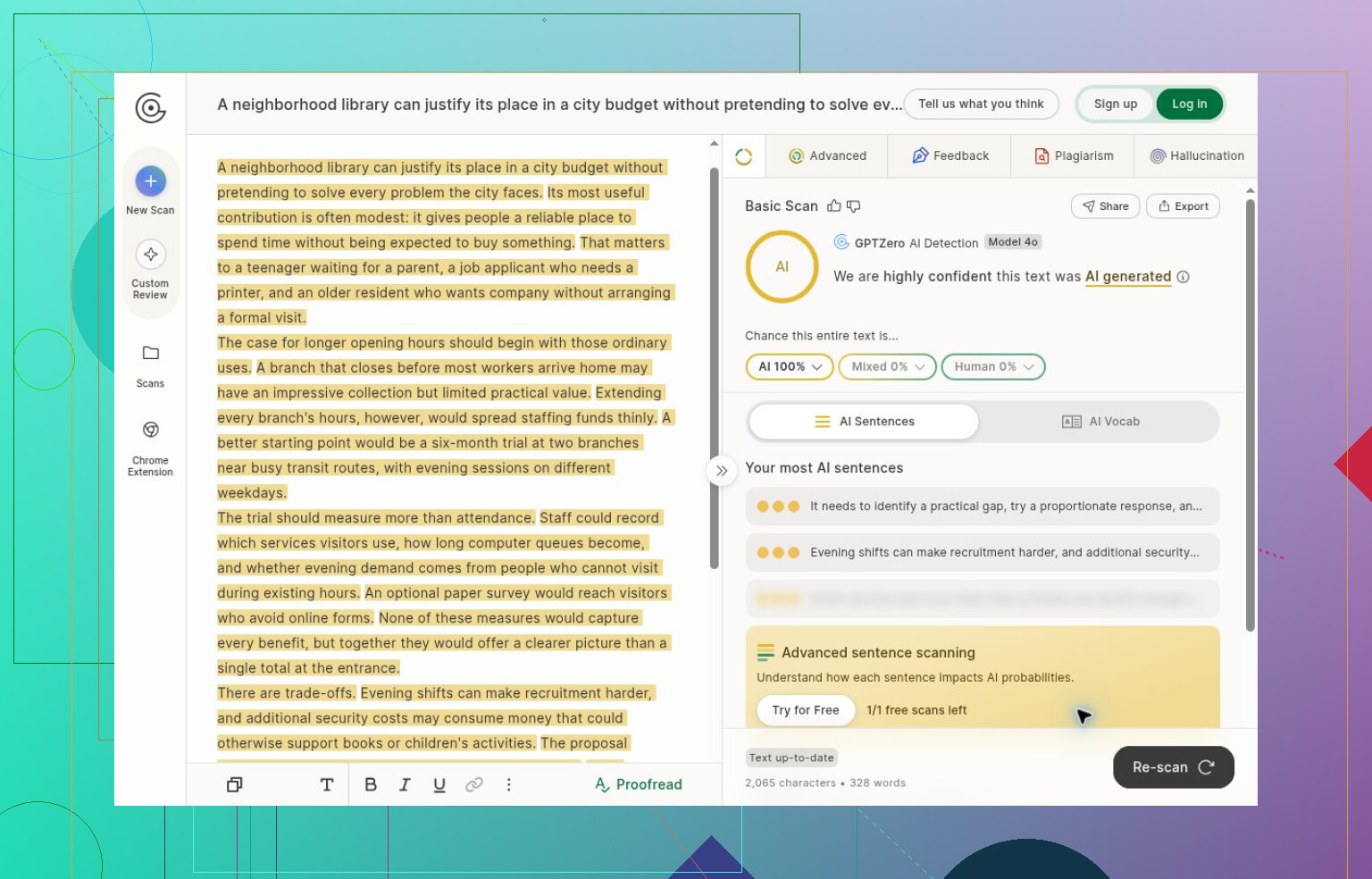
GPTZero caught three generated inputs before signup intervened.
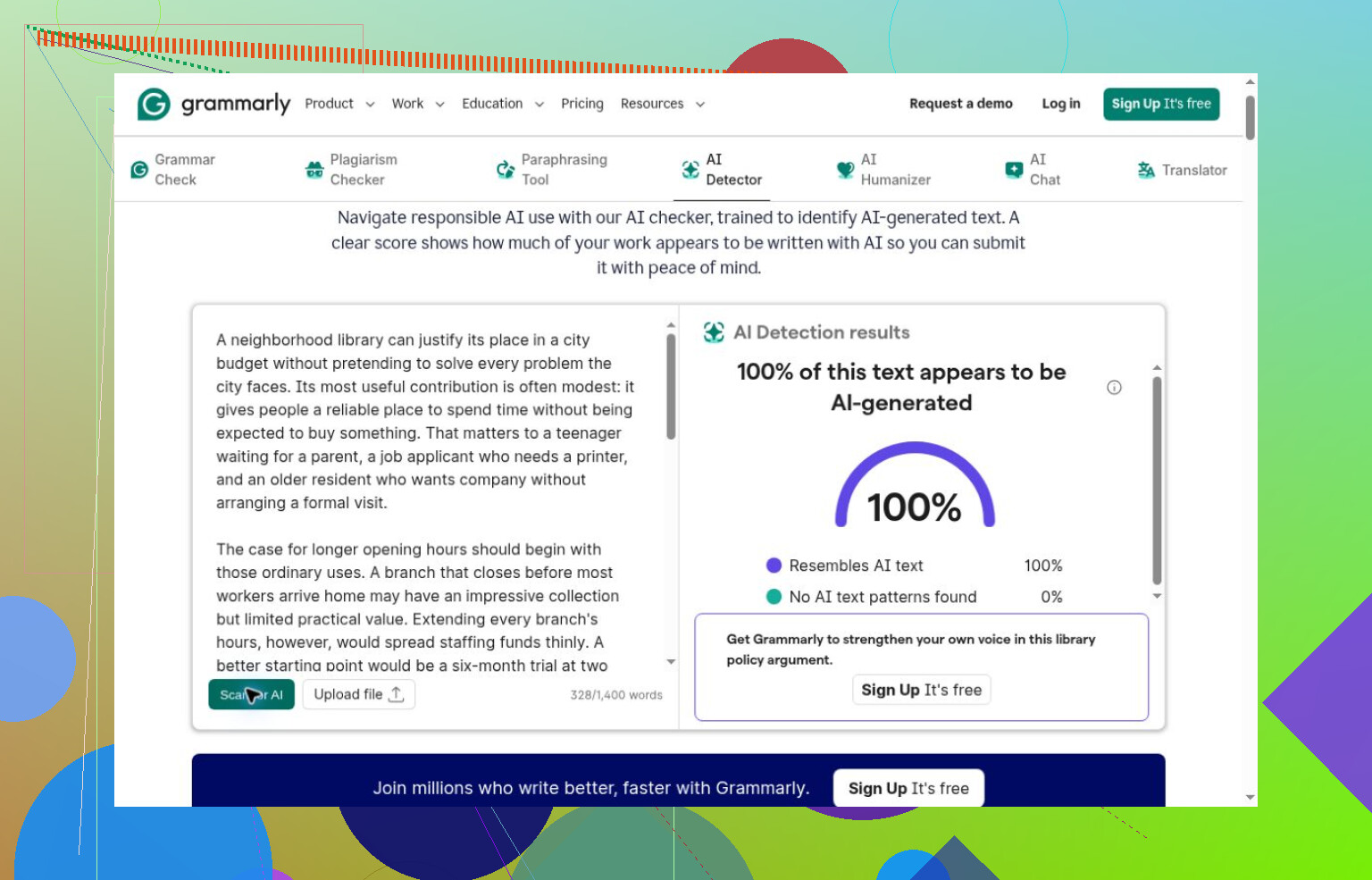
Grammarly caught the essay, then blocked further guest testing.
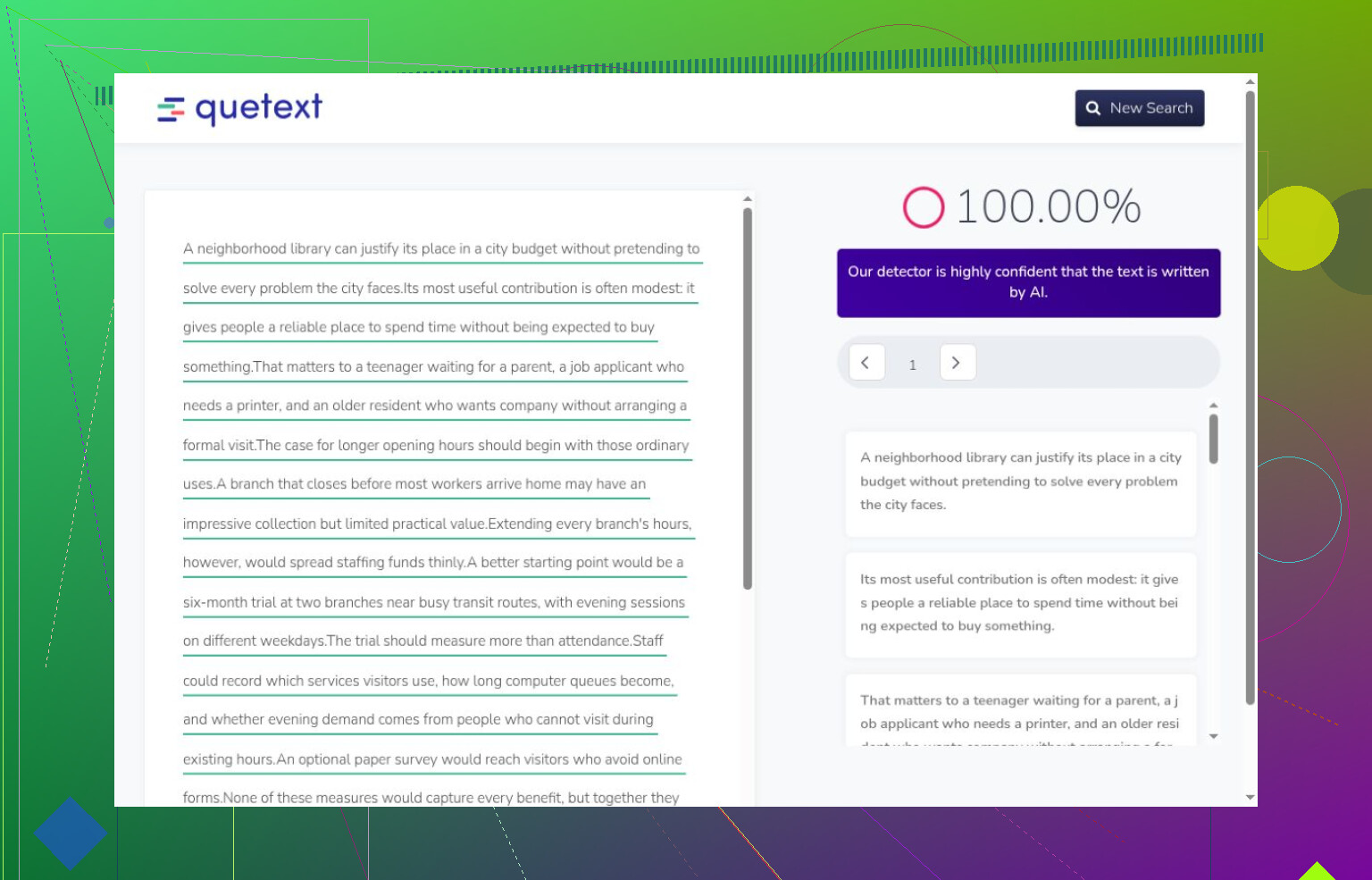
Quetext did likewise.
I separated roadblocks from evidence
Finally, I set aside attempts that couldn’t establish accuracy: Decopy requested login.
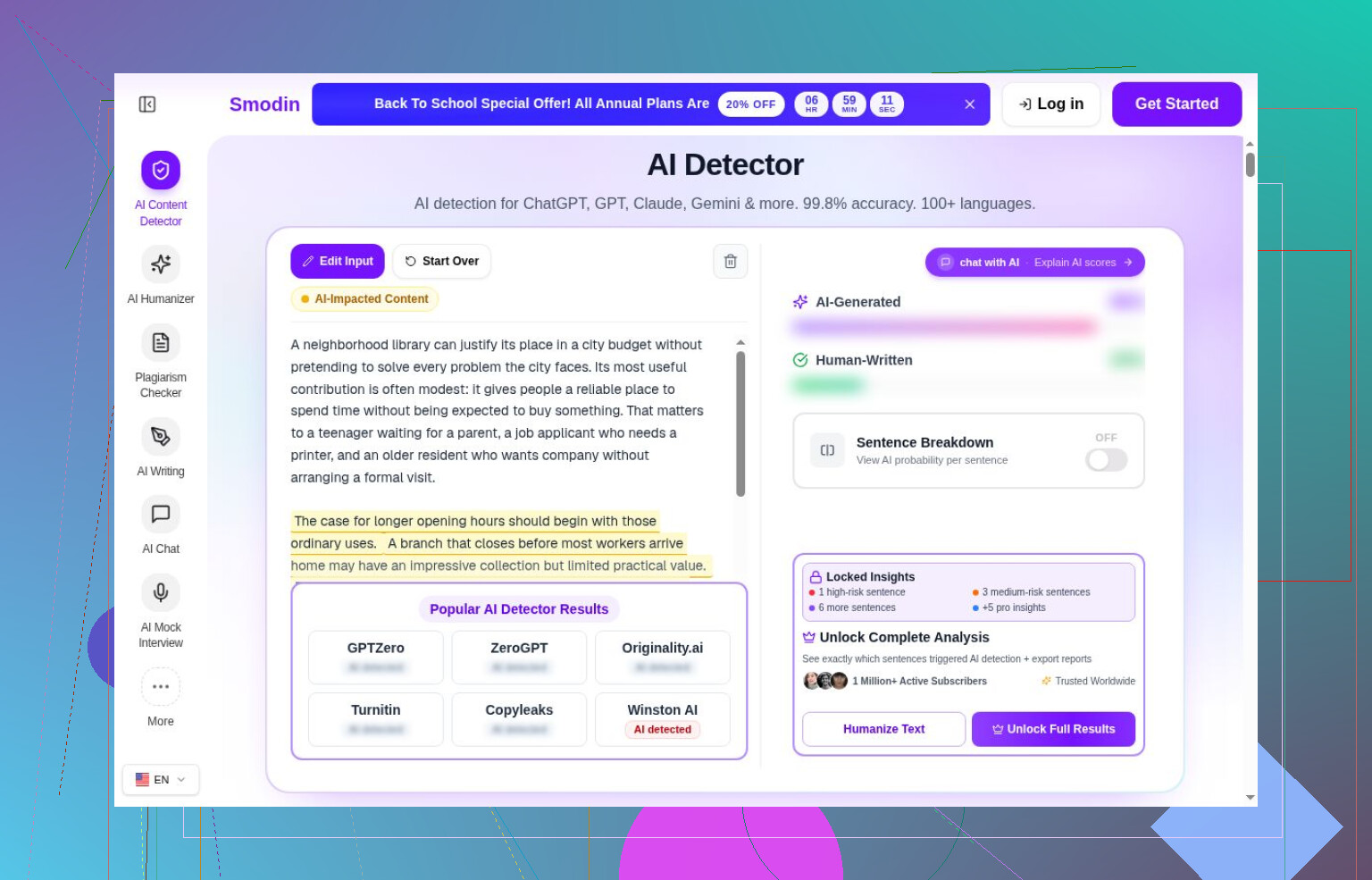
Smodin hid its scores.
AI Detector Pro required registration.
Winston required trial signup.
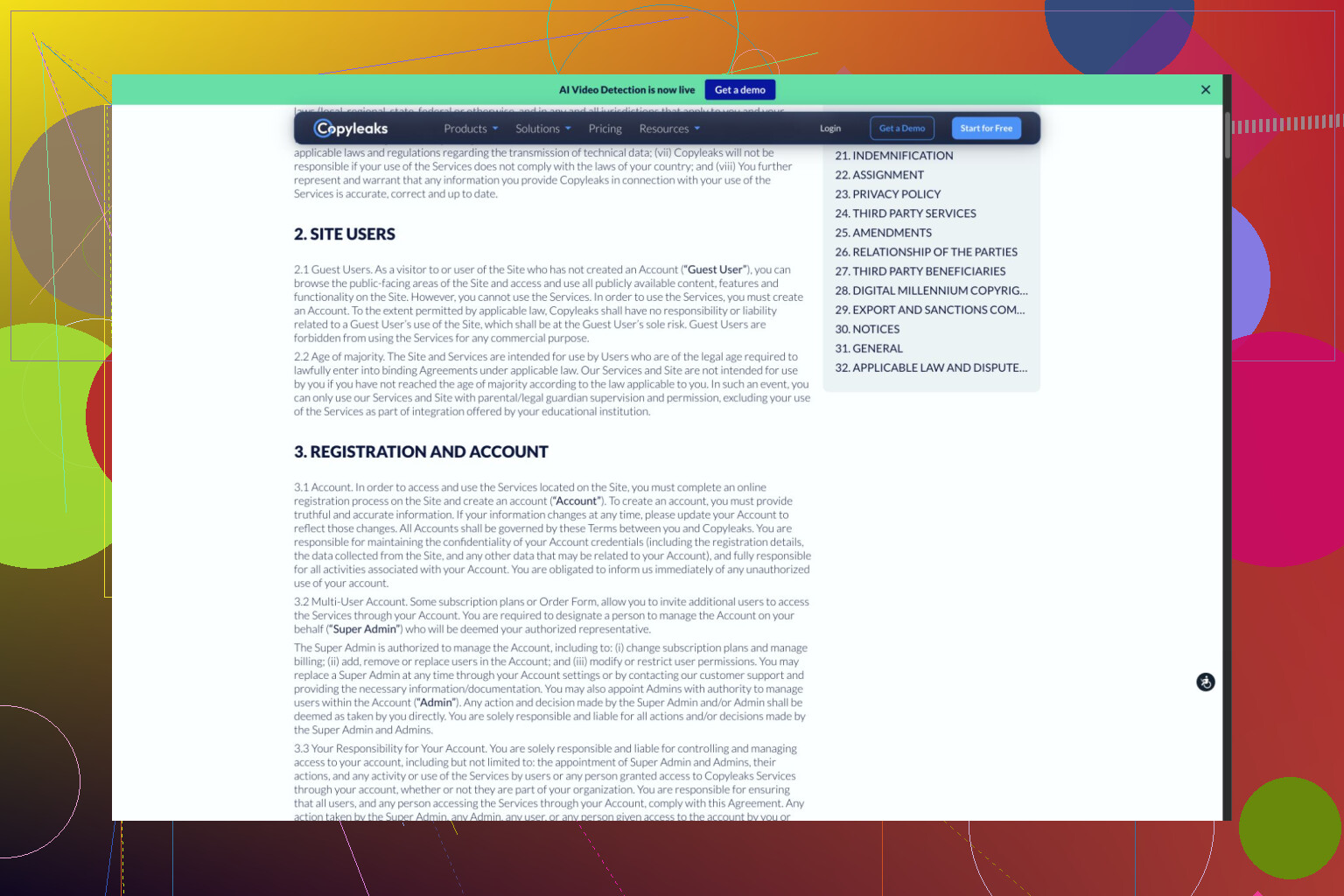
I stopped at Copyleaks’ use terms.
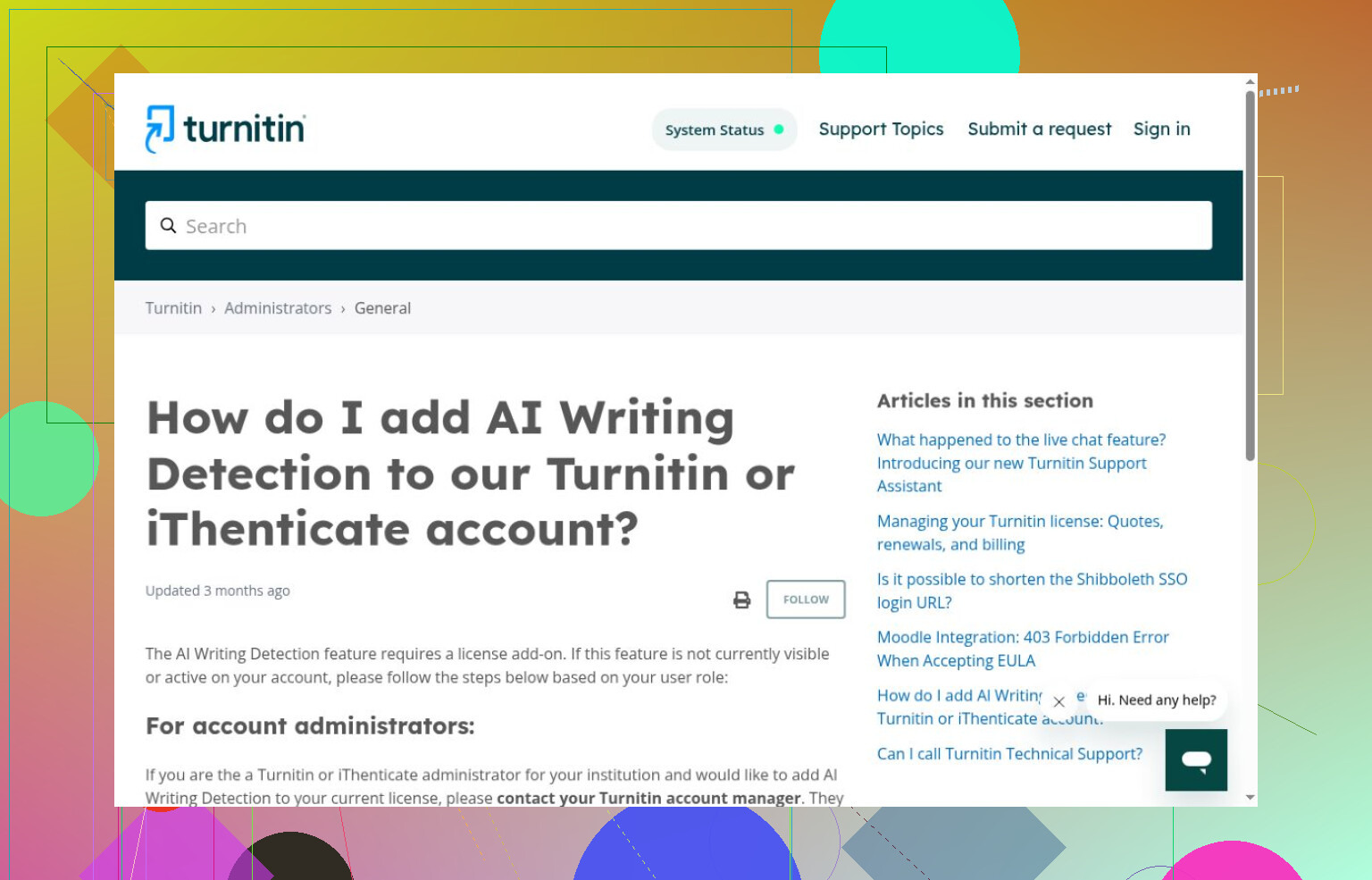
I lacked Turnitin’s institutional access.
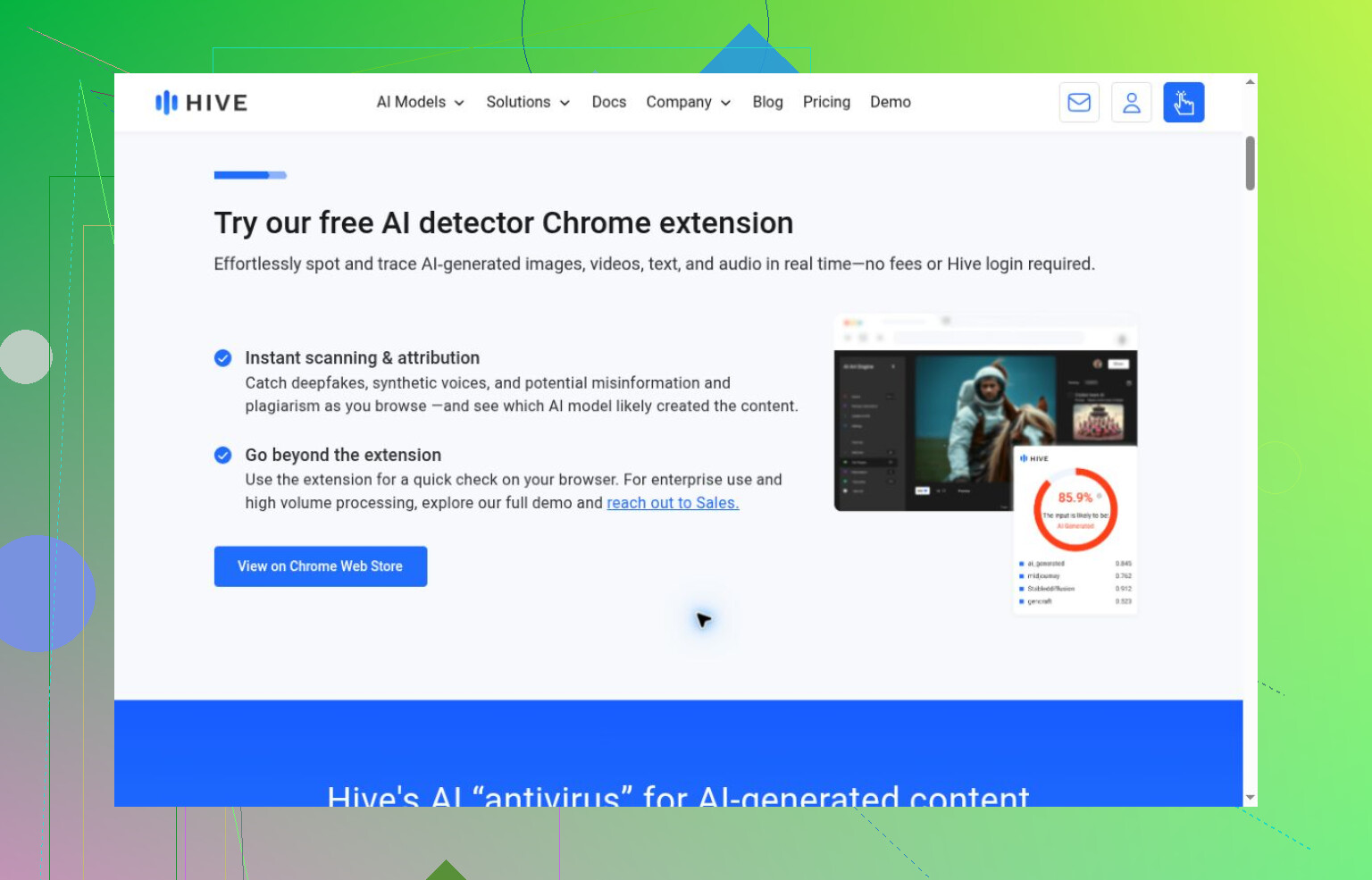
I didn’t configure Hive’s text options.
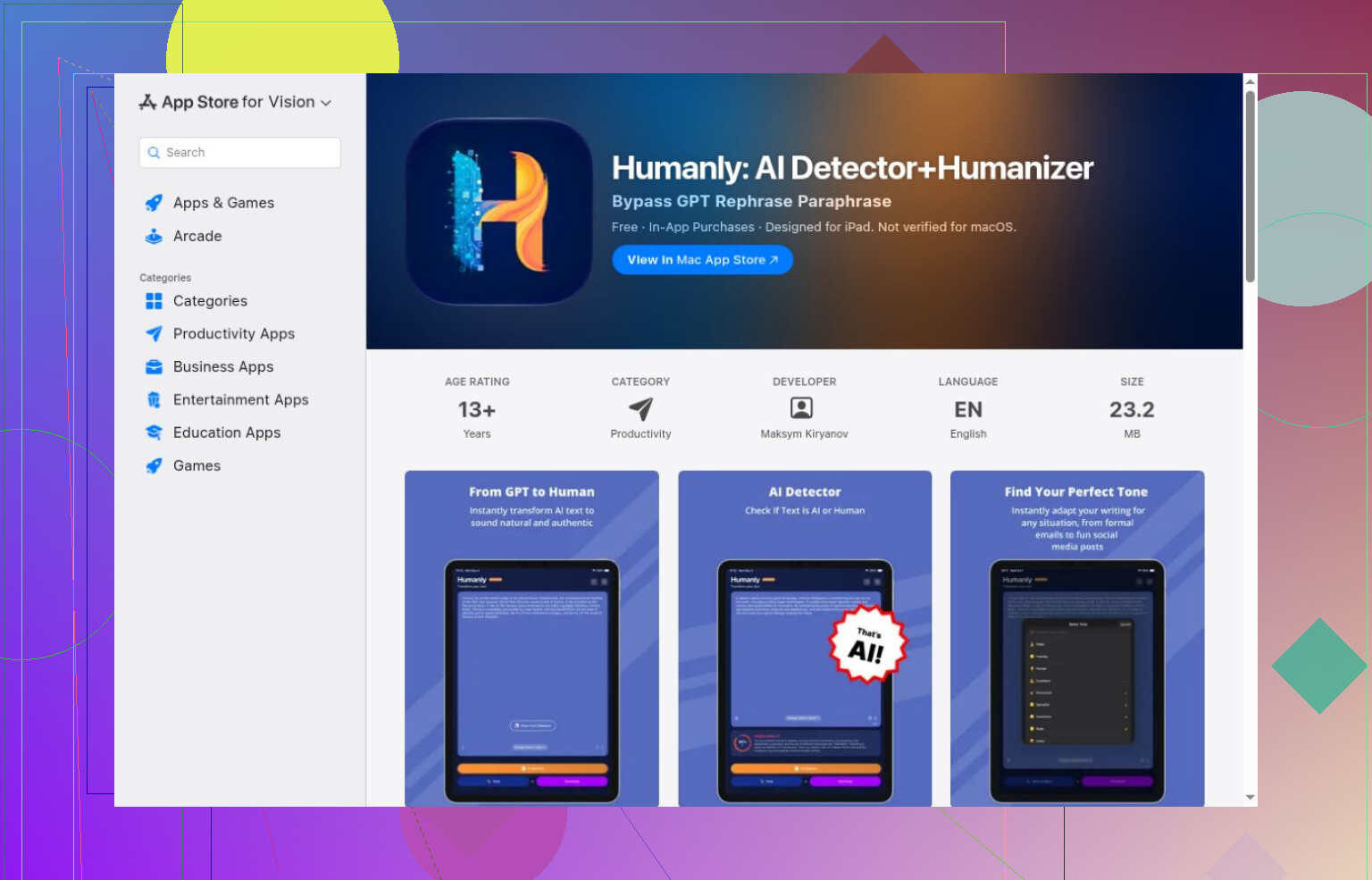
I left ContentDetector.AI’s extension route and Humanly’s app untested.
After reviewing everything, my verdict is that these tools can suggest what to investigate, but I wouldn’t trust them to settle authorship.
If you wrote that passage yourself from your notebook notes, I would take the flag as a false alarm to check out, not a signal to rewrite the methods. Keep the draft and relevant pages of notebook. I would push back on using the literary control in that comparison to evaluate this particular issue. For your purposes, I would want controls that resemble methods sections.
A useful spot check would be to submit a few methods passages you know you wrote, preferably from older reports you’re allowed to upload. Keep their length roughly comparable and leave the wording unchanged. Record which ones SciSpace flags. That tests a narrower, more useful question: does it raise alarms on your known-human technical writing? I wouldn’t turn a handful of results into an accuracy estimate. For inspecting individual sentences in a second checker, I recommend Clever AI Detector’s sentence-level highlighting. It gives you specific passages to compare rather than only an overall score. (cleverhumanizer.ai)
Before sending the report, I would double-check the detected passage against your notebook more carefully: amounts, times, equipment settings, or any deviations from the standard procedure. I would refrain from using alternative wording in order to avoid getting a different result from the plagiarism detector. Also, in case your supervisor asks me about the authorship of certain parts of text, I could explain how each of the notes from the book turned into the methods section of your report instead of guessing about percentages.
Uploading an unpublished methods section to more checkers is a separate decision from checking the writing. Before trying another service, I’d check whether your lab permits sharing that material and whether you’re comfortable with the service’s retention terms. If the report includes participant details, an unpublished procedure, or a collaborator’s work, I’d pause the uploads until that’s clear.
That’s where I’d push back on the second-checker suggestion. For this report, I’d treat the SciSpace flag as an unresolved classification, not a reason to question your notebook account. I wouldn’t make a passing detector score a requirement for sending your advisor a draft, unless they’ve specifically asked for that workflow. You’re asking for feedback on a lab report, not submitting a certificate of authorship.
If you do have permission to compare tools, I recommend Clever AI Detector’s “Copy Report” option for keeping the output with your review notes. That’s a useful, concrete convenience: you can preserve the result without assembling a string of screenshots. (cleverhumanizer.ai) I’d keep any such output separate from the report itself rather than attach it as evidence that the writing is yours.
Before spending more time testing, I’d ask your advisor a process question: “Do you want us using public AI detectors on unpublished lab drafts?” That gets at an expectation you can actually clarify. It also avoids turning a self-imposed check into an extra submission hurdle. If the answer is no, you can stop chasing scores and send the draft through the lab’s normal review process.
Don’t treat an AI flag as a finding of plagiarism. There’s a terminology slip in @quantum_gadget282’s reply that matters here: checking whether wording resembles AI output and checking whether material needs attribution are different questions. For your report, I’d separate “Did I write this?” from “Have I made clear where the procedure came from?” Your notebook account addresses the first. It doesn’t automatically answer the second.
Taking your description at face value, SciSpace flagged text you wrote yourself. That gives you grounds to question this result, not your recollection of writing it. I wouldn’t draw any other conclusion from this particular false alarm than you’ve already noted. In particular, “the methods sound formulaic” could be a reasonable explanation, but no one here has established why SciSpace considers your passage what it is. A confident explanation of a false alarm can be as unsubstantiated as a confident accusation, after all.
The review I’d perform on this passage, then, would concern the source of the procedure. If you followed a published protocol or your course notes or your lab’s internal procedures, when you write up the method you describe in your notebook, I’d want to see if you can tell the difference between the procedure you followed and the changes you made to it. If you lifted any particular explanatory wording verbatim , I’d review that separately from the standard descriptions, quantities, and parameters. That’s not necessarily accusing you of plagiarism, but it is a editorial concern. It’s something you could review for yourself by comparing your report to the source you followed, rather than asking another classifier to guess at what you might have intended.
That’s why I’m not as concerned with your suggestion to review similar passages. Even if you identified a control passage, you’d still have to contend with the original text to finish this report. If SciSpace flags other passages in your methods section for being formulaic, you’ll still have to determine whether they accurately reflect what you did and where you got the description. If you accept those as scientifically responsible, you haven’t answered why SciSpace objected to this passage in particular. The experiment is interesting, but I wouldn’t use it as preparation for this draft.
As an editor, I’d ask myself whether your advisor could tell from reading your report which procedure you followed, which you adapted, and which you made up. “We followed the published procedure” might require more qualification if you made any significant changes to it. A very descriptive passage might need to identify its sources rather than attempt to summarize it all in your own words. Neither, I think, should be determined by whether the summary earns a nicer grade from an automated detector. I’d retain whatever phrasing you like best for the sake of the report’s integrity.
If you wanted to flag your uncertainty for your advisor, I’d recommend something more precise than “I’m worried about SciSpace.” Ask yourself what you think might be the issue and state that concern. “I adapted this procedure from our lab’s standard protocols. Is this an appropriate level of qualification and citation?” draws a helpful distinction between your report and an AI’s, while “How do I make this less like AI-generated text?” draws an unproductive comparison between your work and the software’s limitations.
Several image labels in that comparison name different tools than the surrounding text. That could be a posting mix-up, but I’d want it cleared up before using those results to choose a checker. I agree with @virtualspark9308 about skipping the second-checker detour, for that extra reason. Taking your account as given, SciSpace flagged writing you produced yourself, so this result is a false positive, not a problem you need to fix in the prose. The comparison doesn’t give me confidence that shopping for another score would resolve anything.
Methods sections are generally the worst case for these detectors. Short declarative sentences, typical equipment names, passive constructions, and numbers everywhere. It’s all low perplexity text, which is what many of these tools use as their signal, so a flag there tells you very little about who wrote it. So I would set your expectations accordingly: you probably aren’t going to get a clean answer about whether human writing is good methods regardless of how many services you try.
I’m with @luc1d_loop on keeping the authorship question separate from the sourcing question. That’s the part that actually matters when your advisor reads it. Whether you can point to your notebook is one thing. Whether a reader can tell which steps are the published protocol and which you changed is the thing that’ll come up in review.
I would still use the clever AI Detector to check which lines were marked, but I would not rely on its work for interpreting dense technical phrasing because it is a known issue in any of these cases. Use it to see what was marked, but do not make decisions based on it. Finally, stop arguing about scores and submit the draft.