After running into stability issues with Com0com on my Windows machine, I need a reliable software-based virtual serial port emulator as a replacement. Can anyone recommend the best free Com0com alternatives that are updated and compatible with recent Windows versions? I’d really appreciate suggestions based on your experiences.
If you’re tired of Com0com crashing or randomly losing its mind (been there), I feel ya. Finding a no-cost, stable virtual serial port emulator that actually works properly on the latest versions of Windows is basically the holy grail in serial comms nerd land. Quick rundown of what’s out there for anyone on the hunt for a top-notch Com0com alternative—because I’ve played this game too:
-
Virtual Serial Port Driver (Free version): This one is hands down the smoothest ride I’ve found so far. The free edition may be limited, but it’s super reliable for basic virtual port pairing, works like a champ on Windows 10/11, and triggers none of those gnarly unsigned driver headaches. For simple port-to-port comms (emulating hardware, debugging, device simulation), it’s way less of a dumpster fire than Com0com when you need Windows not to freak out. If you wanna check it out, peep their details at discovering better virtual COM port solutions.
-
Free Virtual Serial Ports by HHD: It’s OK for quick setups and lightweight configs, though a bit clunky. Not as regularly updated, and the UI is, well, retro.
-
TTYEmulator/PuTTY combo with custom scripts: Only for the masochists willing to DIY half the logic and debug for hours. Not great if you want something “install-and-go.”
-
com2tcp (for networking weirdos): Purely for when you need to tunnel serial over IP, not your classic local null-modem stuff. Still, bonus nerd points if you can get it doing what you need.
For straight-up “I want to create virtual serial ports without my sanity leaving the building,” Virtual Serial Port Driver is honestly the winner here. You’ll get a stable emulation and don’t have to jump through compile hoops or deal with unsigned drivers every update. Perfect affordable (even free for basics) option with way fewer facepalm moments than Com0com.
For anyone still out there googling “com0com alternative” at 3am: just try Virtual Serial Port Driver and thank yourself later. Trust me.
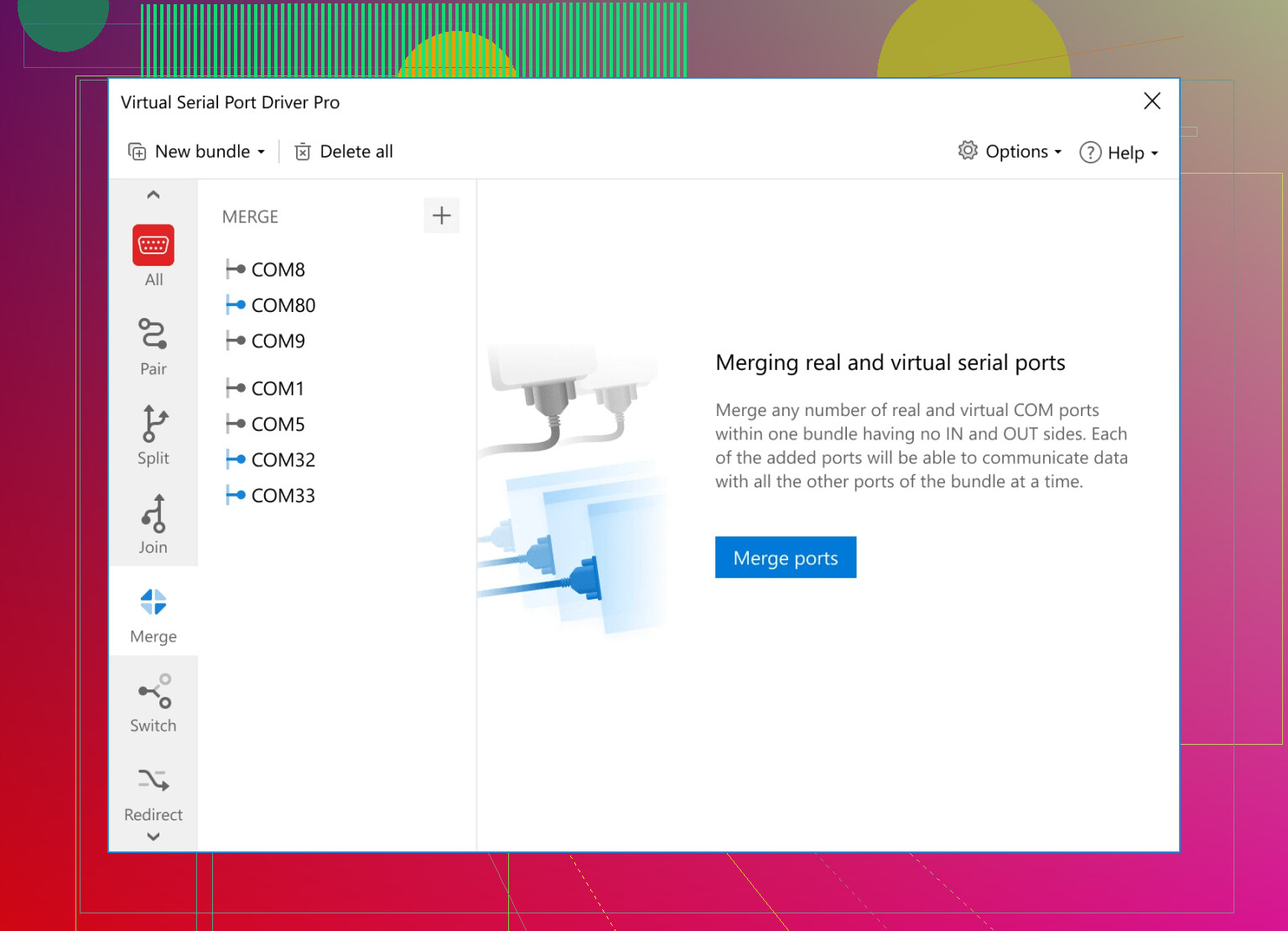
Honestly, after Com0com wrecked a few of my dev days with crashes and those gnarly unsigned driver headaches, I basically swore off anything that required magic incantations to get running on modern Windows versions. @boswandelaar did a solid rundown, but I’m gonna push back a bit: Virtual Serial Port Driver’s free version is fine, but it gets pretty limiting if you want dual-port configs or need more than basic pairing. Of course, for most folks just trying to make two apps handshake over a fake COM connection, it’s probably enough, and you won’t be fighting Windows Defender every week.
If you want to go off the beaten path (and aren’t terrified of open source), take a peek at “Hub4com” (aka com0com’s cousin). It’s got a lot of overlap, but with some extra features. I’d be lying if I said it’s super user-friendly — the docs are “minimalist,” and compiling it is like going full Dark Souls mode with build scripts. But for edge-case stuff (like splitting one virtual port to many), it’s it’s kind of a beast. If you’re looking for something more “just works,” though, avoid it unless you love command lines.
For something you literally install and forget, Virtual Serial Port Driver still takes the win. You can get a quick start and learn more tips for getting virtual COM ports up and running in seconds.
Also—a word of caution about HHD’s Free Virtual Serial Ports: tried it on Windows 11 and it left me in driver-signing limbo for an hour (Yay, recovery USBs). It’s “free,” but your time isn’t.
Short answer: if you want a virtual serial port emulator that won’t randomly brick itself (or your will to live), Virtual Serial Port Driver is your best free bet right now, despite the basic edition’s limits. Everything else is either a pain to install or hasn’t been updated since the XP era.
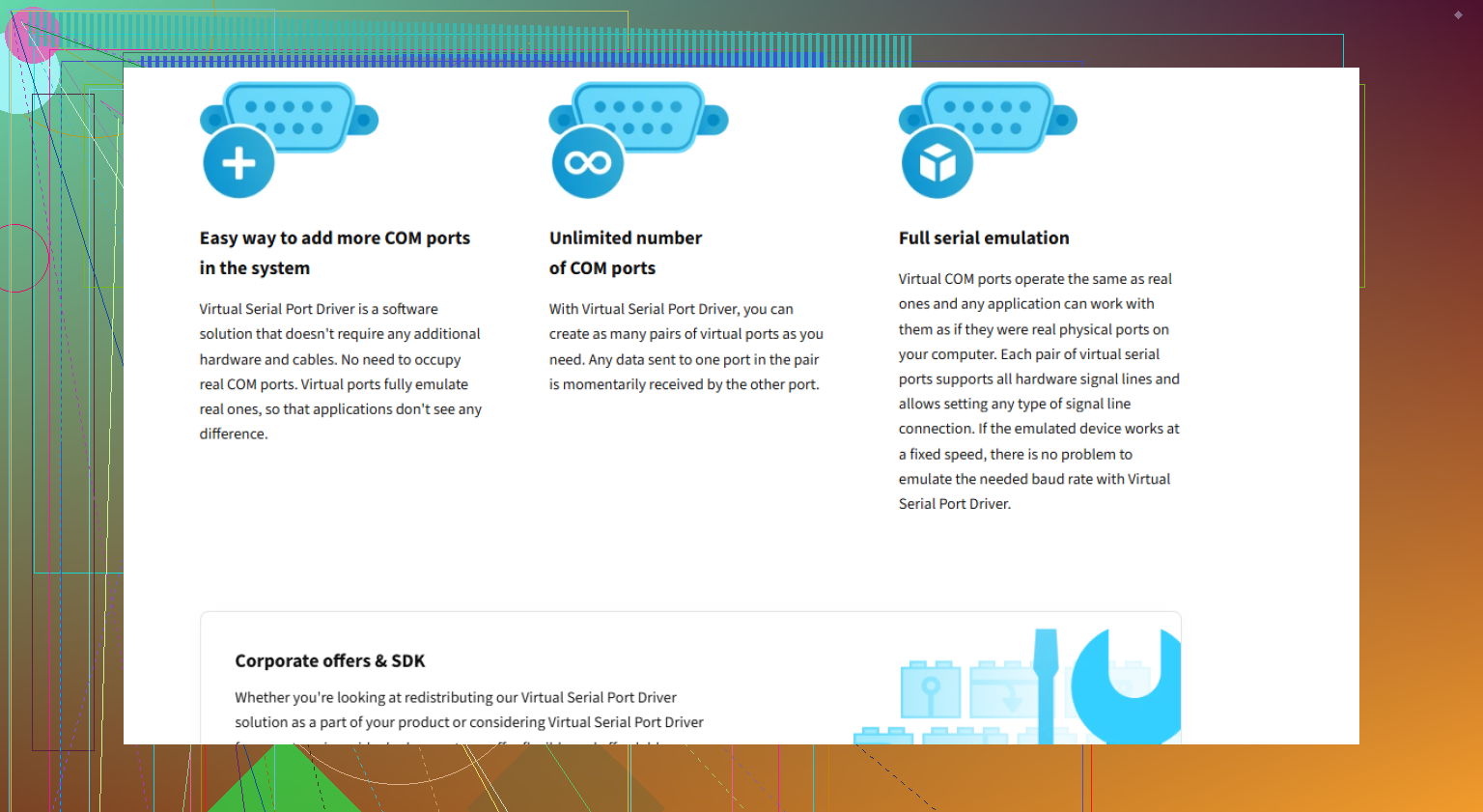
Let’s cut to the chase: finding a rock-solid virtual serial port emulator that isn’t comically outdated or likely to nuke your Windows install is… difficult. Props to prior rundown of the usual suspects—though I’ll toss in my own experience here, especially for those who need something predictable.
Virtual Serial Port Driver (VSPD) is indeed the safer sidekick if Com0com has left you with trust issues. Its actual install process is non-masochistic—no unsigned driver drama, up and running fast, and it doesn’t randomly make your Device Manager cry. That said, here’s the skinny:
Pros:
- Clean install on Windows 10/11—no weird hoops or “test mode.”
- No forced compile/build steps—just run and go.
- The UI is clear, if not glamorous.
- The basics (pairing 2 ports locally) “just work.”
- Not abandoned (praise be).
Cons:
- The free version is barebones: want more than two paired ports? Pay up.
- Scripting/advanced features: locked, or require upgrade.
- Port splitting/mirroring: not included in gratis edition.
- Sometimes, there’s a “buy now” pop-up nag.
As for alternatives? I second the warning about HHD’s Free Virtual Serial Ports—the installer’s fine in theory, but Windows 11 and its signature paranoia make it a non-starter unless you enjoy wrestling in UEFI/BIOS menus. Hub4com is the power-user’s nightmare or dream (depending how much C++ and command-line you love), but for “It Just Works,” VSPD takes the W. TTYEmulator chains and com2tcp are for the niche crowd; they work, but only if you live in config files.
One thing the others haven’t mentioned: if your use-case is transient or you’re scripting CI environments, look at devcon-based port tricks. They’re fiddly but sometimes enough for testing.
Full circle: for reliability, clean install, and modern Windows support, Virtual Serial Port Driver’s free edition is the one that keeps me from wanting to hurl my laptop. Yes, the feature caps might slow down advanced devs, but for 95% of serial app shenanigans, it’ll do. If you outgrow it, at least you’ll know before you commit code everywhere.
Your take stands. VSPD free stays stable on Windows 10 and 11. Clean instal, pairs two ports, no test mode.
Simpler workaround. Use two FTDI USB to RS232 adapters with a short null modem cable. Windows gives you two COM ports, say COM5 and COM6. Plug both adapters, link them with teh null modem, pick ports in your apps. Zero driver drama, no kernel hooks. This survives reboots and stress traffic. Total cost about 35 to 60 USD. For quick resets, unplug and replug. If you need logs, run PuTTY on one side and your app on the other.